Guide
How often should automatic bollards be serviced, and what does a service cover?
Service intervals, what a planned visit checks, the duties behind it, records to keep, contracts and typical costs for automatic rising bollards.
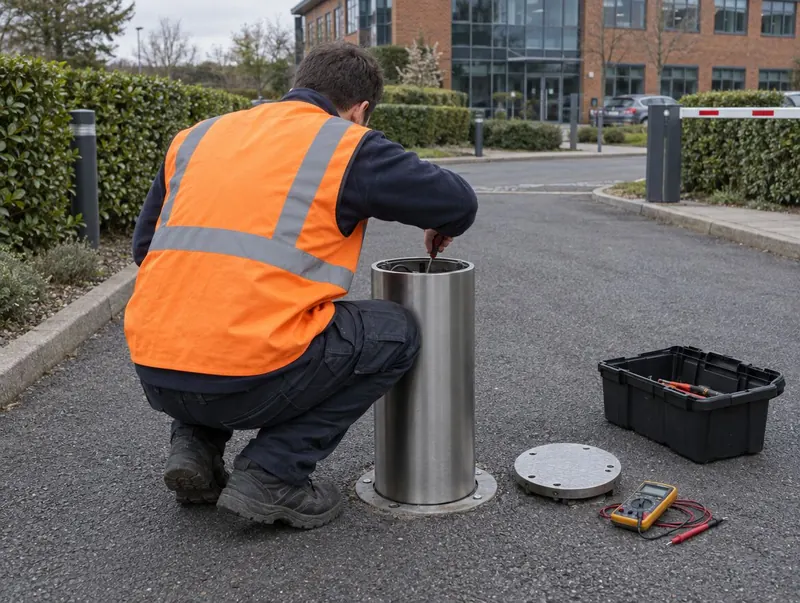 Computer-generated image
Automatic rising bollards should be serviced at the interval the manufacturer sets, which is typically at least once a year, with busy or public entrances serviced twice a year or more. A planned service cleans and inspects the bollard and its foundation box, checks the hydraulics or drive, tests the safety loops, photocells, signals and emergency release, and ends with a written report. HSE expects powered gates and barriers at workplaces to be kept safe and inspected regularly, and the same approach is sensible for bollards.
How often do automatic bollards need servicing?
Follow the manufacturer's interval, which is typically at least once a year. Busy entrances, public roads and security installations are commonly serviced every six months, and the busiest every three. Bring a visit forward after an impact, a flood, resurfacing near the loops, or a change in how the entrance is used, such as longer hours or heavier delivery vehicles. Rated automatic bollards should be maintained exactly as the manufacturer requires, so they continue to perform as tested.
What does a planned service include?
It checks every part that moves, drains or keeps people safe. A typical visit covers:
- the head, sleeve, reflective bands and lights, for damage and visibility
- the foundation box, cleared of silt and grit, with the drain tested by running water into it
- hydraulic fluid, hoses and seals, or the motor and gearbox on electro-mechanical units
- rise and fall speed, timing and full travel
- safety loops, photocells and signals, tested to confirm the bollard won't rise with a vehicle above it
- the manual release and the power-failure setting
- access control inputs such as ANPR, fobs and keypads
- the controller, its settings and its fault log
- the road surface around the head and loops, where cracks point to foundation or loop problems
Faults are recorded in the report and quoted separately in writing before any repair.
Who is responsible for keeping automatic bollards safe?
The owner, supported by whoever maintains them, following the duties HSE sets out for powered gates and barriers at workplaces. HSE cites the Health and Safety at Work etc Act 1974, section 3 (others, including the public) and section 6 (suppliers), and the Workplace (Health, Safety and Welfare) Regulations 1992 on maintenance and inspection. Owners must keep the installation safe and inspect it regularly, maintainers must leave it safe and report faults, and unsafe equipment should be taken out of use. HSE's pages don't mention bollards, so this is the closest HSE guidance rather than a rule written for them. HSE also says health and safety law doesn't apply to privately owned domestic gates, though it advises regular checks.
What records should we keep?
A file that shows the system has been looked after and is safe. It should hold:
- service reports, including the safety device and emergency function tests
- a fault and impact log with dates, times and what happened
- repairs, parts fitted and any changes to settings or controls
- the manufacturer's instructions and the documents handed over at commissioning
- the risk assessment, updated when the entrance or its use changes
- emergency service access arrangements, and who holds keys or cards
Records are your evidence that the duties have been met. For bollards in the highway, TAL 1/11 adds that vehicle security barriers should be on the highway authority's asset register, because later street works can damage their foundations.
Should we take out a service contract?
For any entrance used daily, yes, because a contract fixes the visits in the diary and the price in advance. Before signing, check how many visits a year are included, which bollards and controls are covered, whether parts are included, how fault visits are charged and what the report contains. Public bodies show how these costs add up across a fleet: Liverpool City Council extended its hydraulic bollard maintenance contract by 12 months for £135,776.80 including VAT in 2025, fleet size not stated (council decision), and Cambridgeshire County Council bundled three years' maintenance into a 2024 award for two rising bollards (Bidstats).
What does automatic bollard servicing cost?
Planned servicing typically costs £95–£345 per planned service visit, first bollard, plus VAT, with further bollards on the same site priced in the same written quote. Repairs run from £145 to £2,495 plus VAT, from a diagnostic visit at the low end to a replacement hydraulic unit or head at the top. The number of bollards, the type of drive, the access control equipment and whether parts are proprietary all affect the figure. Every servicing and repair visit is priced in writing before we attend; see automatic bollard servicing.
What goes wrong when automatic bollards aren't maintained?
Most failures start with water, dirt or a damaged loop. A blocked drain leaves the foundation box flooded, which harms the drive and electrics and can freeze in winter. Silt and leaves wear seals and slow the post. Cracked or patched road surfaces break loops, so the bollard either won't lower or loses its safety detection. Hydraulic leaks sap performance until the post won't rise fully, and a seized manual release leaves you stuck in a power cut. Between visits, keep the head clear, report changes in speed or noise, and never bypass a safety device to keep an entrance open; if one fails, take the bollard out of use and book an automatic bollard repair.
Prepared by the Bollard Installers team · Last reviewed 01 November 2026 · Prices and rules change; check the rules pages and your written quote.
Questions
Can you service automatic bollards that someone else installed?
Yes, for common makes of hydraulic and electro-mechanical bollard, rated and unrated. Proprietary parts are sourced through the manufacturer or their distributor where available, and photos of the bollard and controller help us prepare.
What should we do if a safety loop or photocell fails?
Take the bollard out of use in a safe position until the fault is repaired. HSE's guidance for powered gates and barriers is that unsafe equipment should be taken out of use, and the same applies here.
Do domestic automatic bollards need servicing?
Yes, even though HSE says health and safety law doesn't apply to privately owned domestic gates. Follow the manufacturer's interval, usually at least yearly, and check whether your warranty depends on servicing.
What should we do after a vehicle hits an automatic bollard?
Stop using it, record the date, time and vehicle, and have it inspected before it moves again. An impact can damage the head, cylinder, cassette or foundation even when the bollard still looks straight.
Related services
Automatic bollard servicing
Planned servicing visits and maintenance contracts for hydraulic and electro-mechanical rising bollards, priced in writing.
Learn more →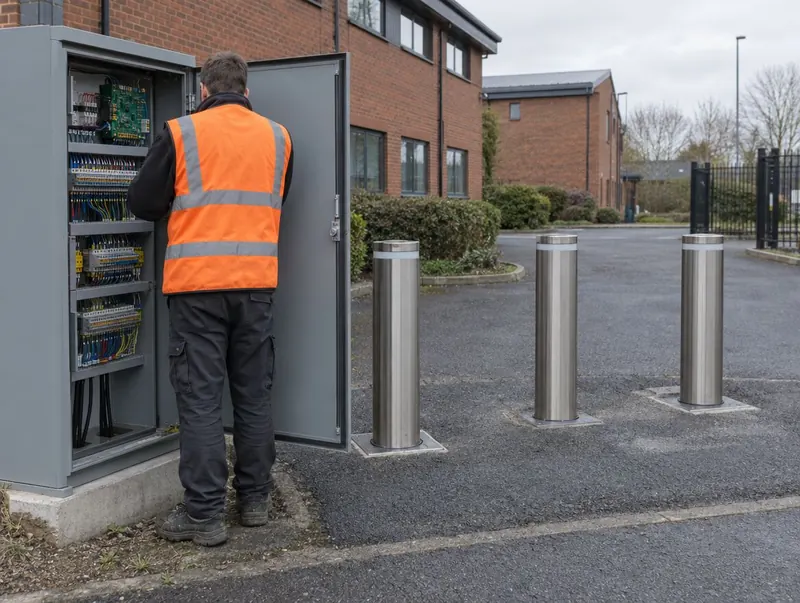
Automatic bollard repairs
Paid repair visits for rising bollards: hydraulics, motors, controllers, loops, flooded pits and heads damaged by vehicles.
Learn more →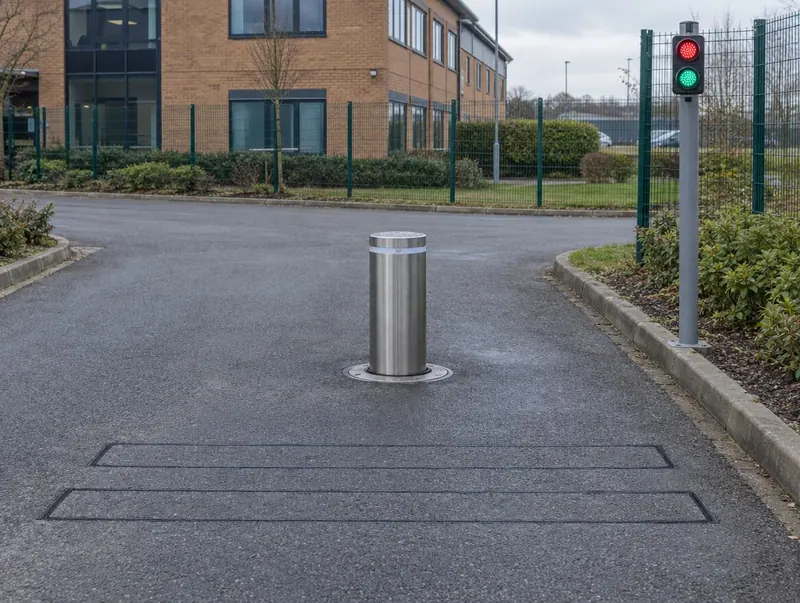
Automatic rising bollards
Hydraulic and electro-mechanical rising bollards installed with controls, safety loops, signals and power, for managed vehicle access.
Learn more →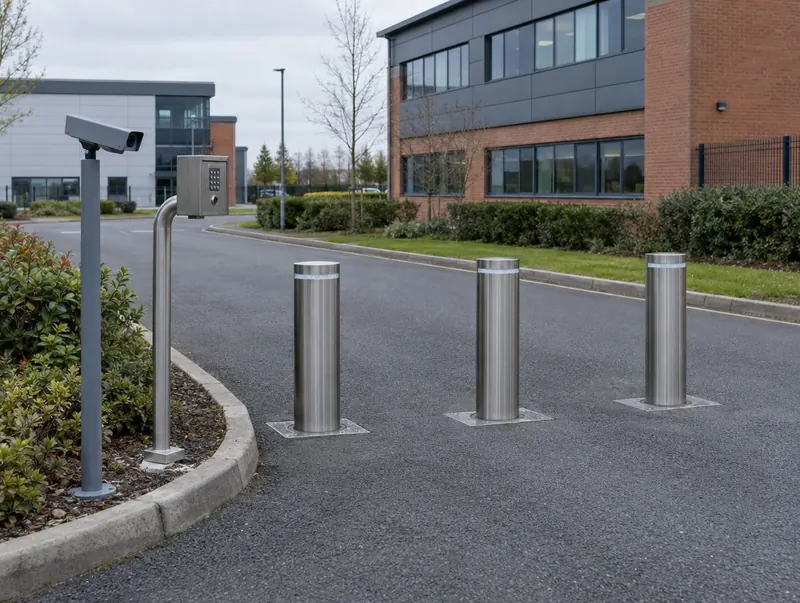
Bollard access control
ANPR, fob, keypad, intercom and remote control systems that decide who can lower an automatic bollard, and when.
Learn more →