Repairs, servicing & removal
Bollard repairs
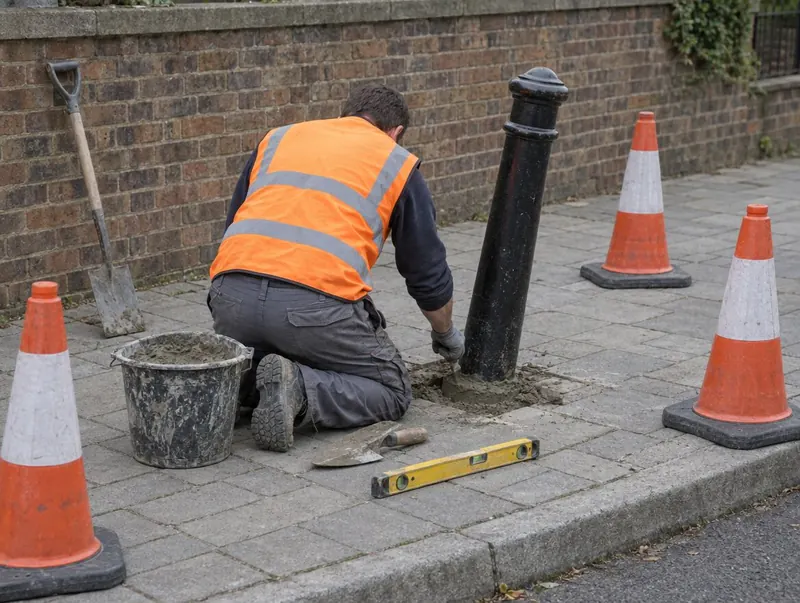
Paid repair visits for loose, leaning and damaged bollards: re-bedding, re-fixing, new sockets, locks, caps and reflective bands.
- Typically £115–£445 per visit + VAT (£135–£525 inc VAT for homes)
- Visit price confirmed in writing first
- Surface made good afterwards
 Computer-generated image
What is it?
What are bollard repairs?
Bollard repair is the work needed to return a damaged or failing bollard to safe, working condition without replacing it entirely. Typical repairs include re-bedding a loose or leaning post, re-fixing a base plate with new anchors, replacing a seized socket, lock, cap or hinge, clearing a blocked cassette and renewing reflective bands. Repairs are carried out as paid visits, priced in writing before any work starts.
Bollards take knocks, weather and daily use, and they rarely fail all at once. A post starts to lean after a car nudges it, a removable bollard's lock seizes, a telescopic post fills with silt and refuses to lower, a fold-down post's hinge bends. Left alone, each of these becomes a trip hazard, a security gap or a post that nobody can use. Most can be put right without replacing the bollard.
Repairs are paid visits. We ask for photographs and a description first, then give you a written price for the visit and the likely work before anyone attends. If something different is found on site, we tell you and price it in writing before carrying it out. The work is done by installation crews working under our management.
When posts need repairing
- Posts leaning or rocking after a vehicle knock
- Base-plated bollards with loose or sheared anchors
- Removable bollards with seized locks or damaged sockets
- Telescopic posts that will not lower or lock
- Fold-down posts with bent hinges or broken locks
- Missing caps, worn paint and faded reflective bands
- Lost keys and mismatched locks across a site
How it works
Every repair starts with finding the cause rather than the symptom. A leaning post usually means the foundation has cracked or moved, not that the post itself is bent; straightening the post without fixing the base just means it leans again. A base plate that keeps loosening usually means the anchors were set in weak concrete, too close to an edge or in a crack, so new anchors go in fresh positions or the slab is repaired first.
Re-bedding means breaking out the old foundation around the post, setting the same post plumb in new concrete and reinstating the surface. Sockets for removable bollards that have seized or been crushed are cut out and replaced. Locks, keys, caps, hinges and reflective bands can usually be renewed on site. Telescopic and semi-automatic cassettes are emptied, cleaned and their drainage checked, because a blocked drain is behind most stiff or seized posts.
Some damage is not worth repairing. Steel that has been bent sharply is weakened, and a post with a crease or torn wall should be replaced rather than straightened. Crash-rated bollards are a separate case: after an impact they should be assessed with the manufacturer and are usually replaced to the tested detail rather than repaired.
Options and finishes
| Option | Detail |
|---|---|
| Re-bedding | Breaking out a failed foundation and resetting the existing post plumb in new concrete, then reinstating the surface. |
| Re-fixing base plates | New resin anchors in fresh positions, a larger plate to spread the load, or a slab repair before re-fixing. |
| New sockets | Replacing seized, crushed or loose sockets for removable bollards, set flush with a working lid. |
| Locks and keys | Replacement cylinders, padlocks and keys, including keyed-alike sets across a site. |
| Cassette clearing | Emptying silt and water from telescopic and semi-automatic cassettes and clearing their drainage. |
| Caps, hinges and bands | Replacement caps and heads, hinge pins or assemblies on fold-down posts, and new reflective bands. |
| Coatings | Touch-up or full repainting of steel and cast iron posts to stop corrosion taking hold. |
Typical specification
| Item | Typical |
|---|---|
| Visit type | Paid visit, priced in writing before work |
| Information needed | Photos, bollard type, number of posts and location |
| Typical repairs | Re-bedding, re-fixing, sockets, locks, caps, hinges, bands |
| Bollard types | Fixed, removable, telescopic, fold-down, semi-automatic, timber and cast iron |
| Rated bollards | Assessed with the manufacturer; usually replaced, not repaired |
| Automatic bollards | See automatic bollard repairs |
| Records | Before and after photographs on request |
Typical values only — the survey and the product's data sheet set the final specification.
How we do it
Send photos and details
Tell us what has happened and send photographs of each affected post, close up and from a distance, with the location. That lets us identify the bollard type and the likely repair.
Receive a written price
We confirm the cost of the visit and the expected work in writing before anyone attends. Nothing is done until you have agreed it.
Make safe if needed
Where a post is a hazard now, the first step can be to make it safe by removing or capping it, priced separately in writing so you can approve it on its own.
Carry out the repair
The crew carries out the agreed work. If they find something different, such as a cracked slab under a base plate, they stop and we price the extra work in writing before continuing.
Record and hand back
The repaired posts are checked, the surface is made good and photographs are sent so you have a record for your maintenance file.
Ground, foundations and buried services
Many repairs are really foundation repairs. Re-bedding a post means breaking out old concrete, which may be larger or deeper than expected, and checking for services before digging further. Base-plate repairs depend on the slab: if the concrete has cracked or crumbled around the anchors, it is cut back and repaired before new fixings go in. Sockets and cassettes are reset to the exact finished surface level, with drainage restored beneath. Reinstatement matches what is there, whether tarmac, block paving, flags, resin or turf, though older or weathered surfaces may show a visible patch.
Rules and checks before you order
- Make damaged posts safe promptly, as a leaning post or open socket on a footway is a trip hazard.
- Do not repair crash-rated bollards in ways that change the tested product; involve the manufacturer.
- Check whether the bollard is on public highway or council land; the highway authority may need to authorise work or carry it out.
- On heritage bollards in conservation areas, repair and reset rather than replace where the conservation officer expects it.
See rules and standards by nation for highway consent, accessibility and security standards.
Maintenance
Most repair call-outs come from small problems left too long. Lubricating locks a few times a year, lifting removable and telescopic posts periodically, keeping cassettes clear of grit, touching up chipped paint and checking for lean after knocks will prevent many of them. Keep a record of bollard types, suppliers, key numbers and colours on site, so a repair can be quoted and matched quickly when it is needed.
What affects the price
- Type of repair and number of posts
- Whether foundations or slabs need breaking out
- Availability of matching parts, locks and caps
- Surface type and reinstatement
- Access, traffic management and working hours
- Making safe before the main repair
Guide prices: bollard repairs
Three typical specifications. The middle one is the specification we usually recommend for durability and visibility.
Standard
per visit + VAT · homes £135–£305 inc VAT
- Straighten or re-bed one post
- Surface made good
- Price confirmed in writing first
Upgraded
per visit + VAT · homes £255–£425 inc VAT
- Several posts
- New socket, lock or reflective band
- Everything in Standard
Premium
per visit + VAT · homes £375–£525 inc VAT
- Larger repair
- New foundation where needed
- Everything in Upgraded
Guide prices for the UK base region; local pages adjust for your area. Per visit, typically one to three posts. The visit price is confirmed in writing before we attend.
Bollard repairs: questions answered
How much does bollard repairs cost?
Typically £115–£445 per visit, typically one to three posts, plus VAT. For homeowners that's £135–£525 including VAT. Ground conditions, access, buried services and consents move the figure; the fixed price comes in writing after survey.
Is a bollard repair visit free?
No. Repairs are paid visits, and we give you the price in writing before anyone attends. Sending photographs first helps us price accurately and bring the right parts.
Can a bent bollard be straightened?
Only if the bend is slight and the steel has not creased or torn. A sharply bent post is weakened and should be replaced. Often the post is fine and it is the foundation that has moved, which re-bedding fixes.
Can you free a seized removable bollard?
Usually, by working the lock free or drilling it out, then lifting the post and cleaning the socket. If the socket is crushed or corroded, it is cut out and replaced. A new lock and keys can be fitted at the same time.
Why does our base-plated bollard keep working loose?
Usually because the anchors are in weak, cracked or thin concrete, or too close to an edge or joint. Re-tightening does not last. New anchors in fresh positions, a larger plate or a slab repair is the lasting fix.
Can you repair a bollard we did not install?
Yes. We repair fixed, removable, telescopic, fold-down and other manual bollards whoever installed them. Photographs help us identify the type and find matching parts.
What happens if the crew finds more damage than expected?
They stop and tell you, and we price the extra work in writing. You decide whether to go ahead. Nothing beyond the agreed price is carried out without your approval.
Related bollard services
Bollard replacement
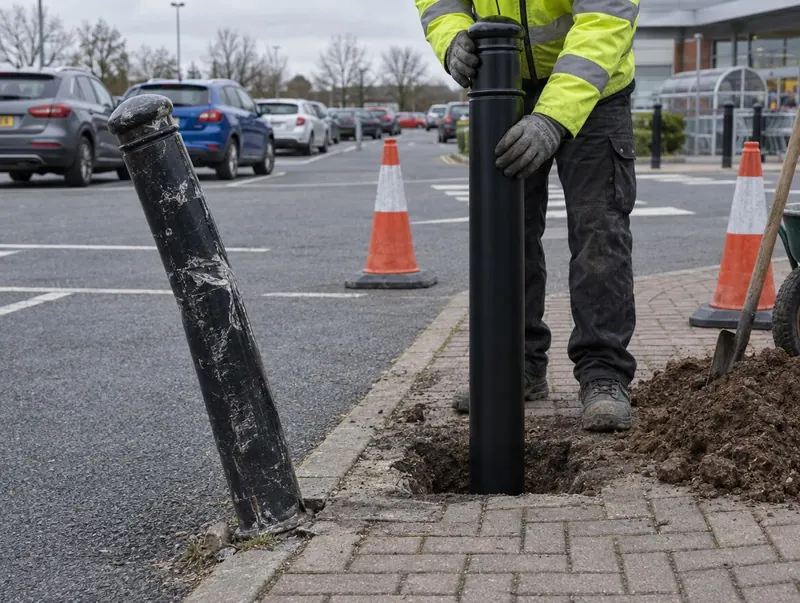
Like-for-like or upgraded replacement of bollards damaged by vehicles, corrosion or wear, matched to the existing line.
Learn more →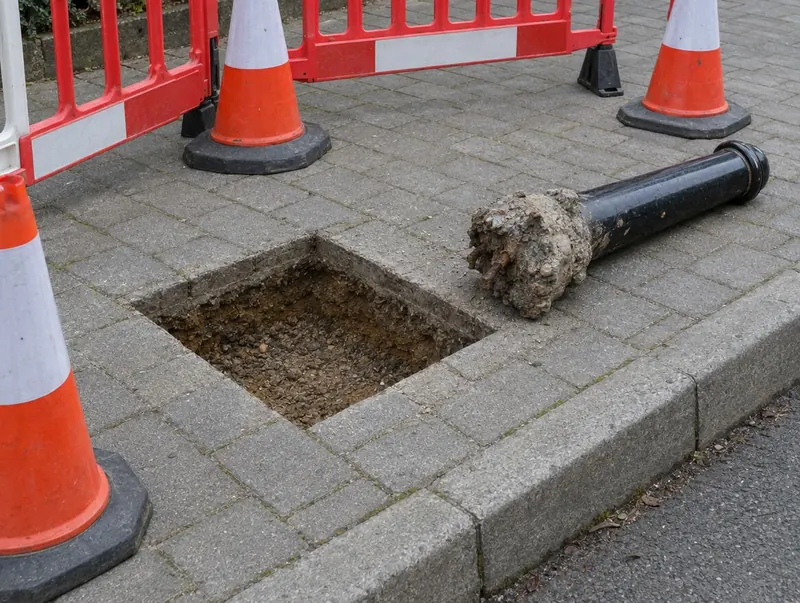
Bollard removal
Removal of fixed, removable, telescopic and automatic bollards, including foundations, with the surface made good to match.
Learn more →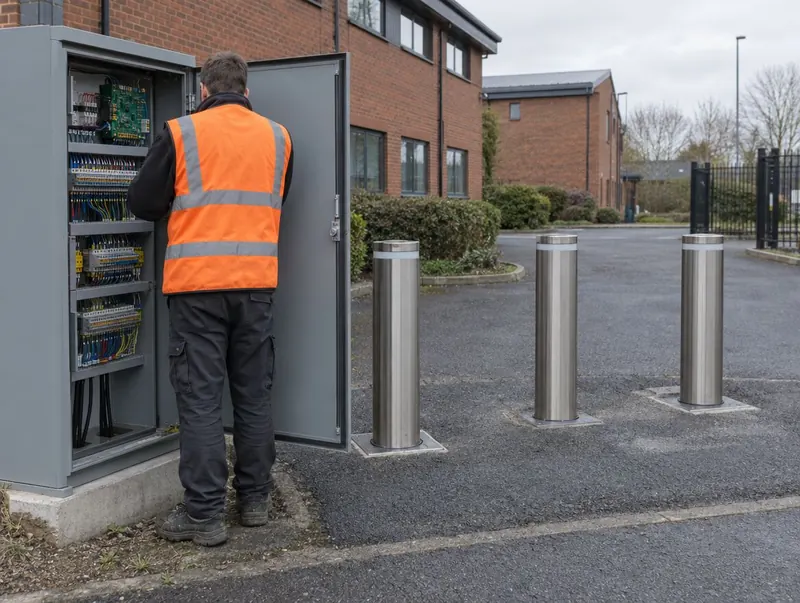
Automatic bollard repairs
Paid repair visits for rising bollards: hydraulics, motors, controllers, loops, flooded pits and heads damaged by vehicles.
Learn more →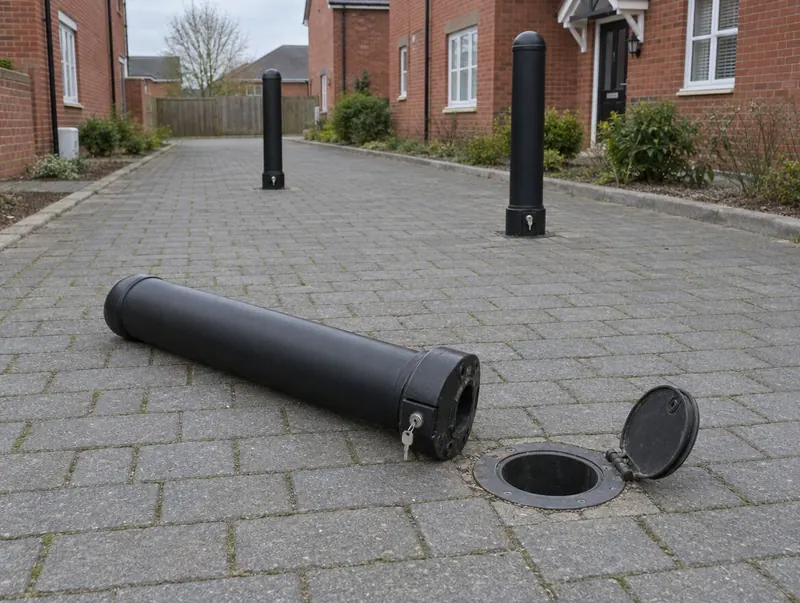
Removable bollards
Lift-out bollards in lockable ground sockets for driveways, delivery routes, access roads and emergency access points.
Learn more →Bollard repairs near you
Local pages show the highway authority, postcodes covered and regional prices.
- Bedfordshire
- Berkshire
- Bristol
- Buckinghamshire
- Cambridgeshire
- Cheshire
- Cornwall
- County Durham
- Cumbria
- Derbyshire
- Devon
- Dorset
- East Riding of Yorkshire
- East Sussex
- Essex
- Gloucestershire
- Greater Manchester
- Hampshire
- Herefordshire
- Hertfordshire
- Isle of Wight
- Kent
- Lancashire
- Leicestershire
- Lincolnshire
- London
- Merseyside
- Norfolk
- North Yorkshire
- Northamptonshire
- Northumberland
- Nottinghamshire
- Oxfordshire
- Rutland
- Shropshire
- Somerset
- South Yorkshire
- Staffordshire
- Suffolk
- Surrey
- Tyne and Wear
- Warwickshire
- West Midlands
- West Sussex
- West Yorkshire
- Wiltshire
- Worcestershire
- Blaenau Gwent
- Bridgend
- Caerphilly
- Cardiff
- Carmarthenshire
- Ceredigion
- Conwy
- Denbighshire
- Flintshire
- Gwynedd
- Isle of Anglesey
- Merthyr Tydfil
- Monmouthshire
- Neath Port Talbot
- Newport
- Pembrokeshire
- Powys
- Rhondda Cynon Taf
- Swansea
- Torfaen
- Vale of Glamorgan
- Wrexham
- Aberdeen City
- Aberdeenshire
- Angus
- Argyll and Bute
- City of Edinburgh
- Clackmannanshire
- Dumfries and Galloway
- Dundee City
- East Ayrshire
- East Dunbartonshire
- East Lothian
- East Renfrewshire
- Falkirk
- Fife
- Glasgow City
- Highland
- Inverclyde
- Midlothian
- Moray
- North Ayrshire
- North Lanarkshire
- Perth and Kinross
- Renfrewshire
- Scottish Borders
- South Ayrshire
- South Lanarkshire
- Stirling
- West Dunbartonshire
- West Lothian
- Antrim and Newtownabbey
- Ards and North Down
- Armagh City, Banbridge and Craigavon
- Belfast
- Causeway Coast and Glens
- Derry City and Strabane
- Fermanagh and Omagh
- Lisburn and Castlereagh
- Mid Ulster
- Mid and East Antrim
- Newry, Mourne and Down