Access & parking control
Driveway security posts for homes
Telescopic, fold-down and removable security posts for home driveways, to deter car theft and stop unwanted parking.
- Typically £385–£845 per post inc VAT; minimum job £395
- Free survey and fixed written quote
- Foundations and reinstatement included
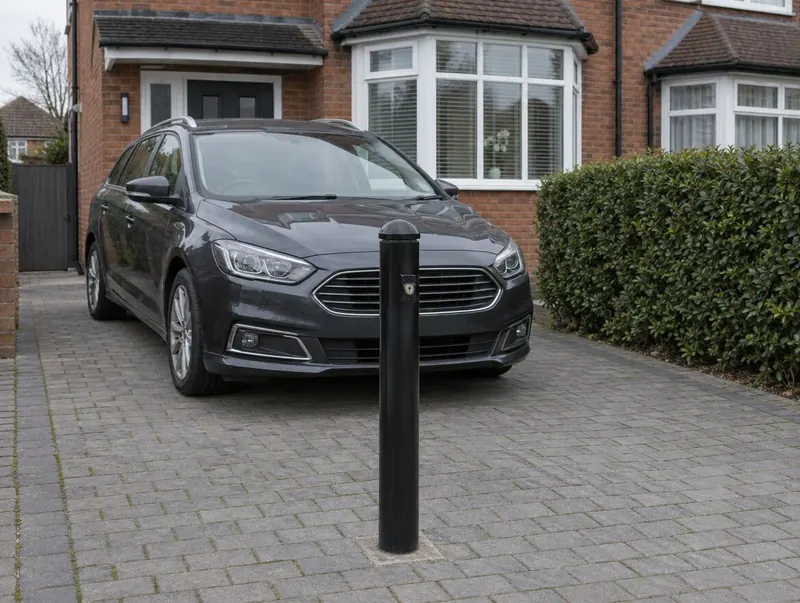 Computer-generated image
What is it?
What are driveway security posts?
A driveway security post is a lockable bollard fitted on a private drive to stop a parked car being driven away and to stop other people parking on the drive. The common types are telescopic posts that retract into the ground, fold-down posts that hinge flat, and removable posts that lift out of a socket. The right one depends on the surface, the depth available and how often the post will be used.
Most homeowners who ask about a driveway post have one of two problems. Either they are worried about their car being stolen from the drive, often after a neighbour's car has gone overnight, or someone keeps parking across or on their drive. A locked post in front of the car deals with both, because nobody can drive the car off or pull onto the drive without first unlocking it.
A post will not make a car impossible to steal, and we will not pretend otherwise. What it does is add a physical barrier that a thief cannot defeat electronically, which makes your car slower and riskier to take than one on an open drive nearby. Our installation crews, working under our management, fit the post where it actually blocks the car, set it flush with your surface and leave the drive looking tidy.
Where driveway security posts make sense
- Homes worried about keyless or relay car theft
- Drives where neighbours or visitors keep parking
- Houses near stations, schools or shops where drives get borrowed
- Homes with a high-value car or van parked outside
- Open-plan frontages without gates
- Drives where a gate would not fit or is not allowed
- Owners of motorhomes, caravans and trailers
How it works
Three types cover nearly every driveway. Telescopic posts slide down into a steel cassette in the ground and leave a flush lid, so there is nothing to store and nothing to trip over; they need a deep hole and good drainage. Fold-down posts bolt to the surface and hinge flat to be driven over; they need no excavation but must be fixed to sound concrete or a small new pad. Removable posts lift out of a shallow socket and have to be stored somewhere when out, which suits drives where the post is only used overnight or when away.
Position matters more than the post. It needs to sit close enough in front of the car, or between the car and the road, that the car cannot be steered round it. On a wide drive with two cars, that may mean two posts, or one post positioned so neither car can get out. We look at the drive's width, the kerb, any slope and where the cars actually park before suggesting a position.
For frequent use, the effort of operating the post decides whether it gets used at all. A lift-assisted telescopic or a semi-automatic post that rises on its own takes seconds; a heavy removable post that has to be carried to the garage each morning soon gets left out.
Options and finishes
| Option | Detail |
|---|---|
| Telescopic posts | Retract into a cassette with a flush lid when lowered. Tidy and secure, but need depth and drainage under the drive. |
| Fold-down posts | Hinged posts bolted down with resin anchors. Quick to fit and no digging, but need a solid base to fix into. |
| Removable posts | Lift out of a shallow socket and lock in place. Simple and low cost to fit, but must be stored when out. |
| Semi-automatic posts | Rise on their own when unlocked and push down to lower. Easier for daily use than lifting a post. |
| Finishes | Black, grey, yellow or stainless finishes, with reflective bands so visitors see the post at night. |
| Keyed-alike locks | Two posts or more can be supplied so one key opens both, which helps households with several cars. |
Typical specification
| Item | Typical |
|---|---|
| Raised height | Typically 600–900 mm |
| Telescopic dig depth | Often around 1 m, model dependent |
| Removable socket depth | Usually a few hundred millimetres |
| Fold-down fixing | Resin anchors into concrete or a new pad |
| Surfaces | Block paving, tarmac, concrete, resin, imprinted concrete, gravel |
| Locking | Keyed cylinder or padlock |
| Planning | Not usually needed on a private drive; check listed or conservation settings |
Typical values only — the survey and the product's data sheet set the final specification.
How we install it
Free home survey
We look at your drive, how and where you park, the surface and what might be under it, such as the water pipe or a gas service. You receive a fixed written quote with the post type and position marked.
Mark the position
The position is marked with the car in place, so we can check it blocks the car and that you can still open doors and walk past.
Cut the surface
Block paving is lifted carefully for reuse; tarmac, concrete or resin is cut neatly to keep the patch as small as possible.
Fit the post
Telescopic cassettes and removable sockets are set flush in concrete with drainage beneath. Fold-down posts are anchored to concrete or a small new pad.
Make good and show you
The surface is reinstated and cleaned. We show you how to lock, lower and raise the post and hand over the keys.
Ground, foundations and buried services
Domestic drives hide more than people expect. The water supply pipe, gas service and electric cable all cross the front garden, often at shallow depth and rarely where you would guess, and older drives may cover inspection chambers or soakaways. We scan and hand-dig before cutting deep for a telescopic cassette. Clay soils hold water, so a telescopic or semi-automatic cassette there needs a proper soakaway or a connection to a surface water drain, never the foul drain. Block paving reinstates well because the original blocks can go back; tarmac, resin-bound and imprinted concrete show patching, so we keep cuts tight and positions sensible.
Rules and checks before you order
- Make sure the post is on your own land; a post on the pavement or the dropped kerb needs the highway authority's agreement.
- If the drive is shared or has a right of way over it, agree positions with the neighbour first.
- In conservation areas or at listed buildings, check with the local planning authority before fitting visible posts.
- Connect any cassette drainage to surface water or a soakaway, not to the foul drain.
See rules and standards by nation for highway consent, accessibility and security standards.
Maintenance
Use the post regularly and keep the lock lubricated, especially before winter. With telescopic and semi-automatic posts, lift the lid every few months and check the cassette is not holding water or silt. Fold-down posts need the hinge oiled and anchors checked. Keep a spare key somewhere safe away from the car keys. If the post becomes stiff, deal with it early, because a post that is awkward to use is a post that stops being locked.
What affects the price
- Type of post: telescopic, fold-down, removable or semi-automatic
- Number of posts for the cars on the drive
- Drive surface and how visible a repair will be
- Depth available and services under the drive
- Drainage for telescopic and semi-automatic cassettes
- Finish and keyed-alike locks
Guide prices: driveway security posts
Three typical specifications. The middle one is the specification we usually recommend for durability and visibility.
Standard
per post inc VAT
- Standard post or product for the type
- Foundation and fixing to manufacturer's details
- Surface reinstated to match
Upgraded
per post inc VAT
- Upgraded finish (RAL colour, stainless or sleeve)
- Retroreflective band and matched keys
- Everything in Standard
Premium
per post inc VAT
- Heavy-duty or architectural specification
- Premium finish and fittings
- Everything in Upgraded
Guide prices for the UK base region; local pages adjust for your area. Per post, supplied and installed. Minimum job £395 + VAT. Your fixed price comes in writing after survey.
Driveway security posts: questions answered
How much does driveway security posts for homes cost?
Typically £385–£845 per post, supplied and installed, including VAT. Small jobs carry a minimum charge of £395 plus VAT. Ground conditions, access, buried services and consents move the figure; the fixed price comes in writing after survey.
Which type of post is right for my driveway?
Telescopic if you want a flush, tidy finish and will use it daily, provided the ground can be dug and drained. Fold-down if digging is not possible or the drive is concrete. Removable if the post will only be used occasionally and you have somewhere to store it.
Where should a driveway security post go?
Close enough in front of the car, or between it and the road, that the car cannot be driven round it. We mark the position with your car in place during the survey. Sloping drives and wide frontages may change the obvious spot.
Do I need two posts for two cars?
Not always. On a narrow drive where one car parks behind the other, one post at the front may be enough. On a wide drive with cars side by side, two posts are usually needed to block both.
Will fitting a post damage my block paving?
Only a small area is lifted and the original blocks are relaid around the post. Done carefully, the repair is hard to spot. Resin and imprinted drives show patching more.
What if I lose the key to my driveway post?
Keep the spare somewhere safe. If both are lost, many lock cylinders can be replaced, but sometimes the lock has to be drilled. That is a paid repair visit, so a spare key is worth having.
Does a driveway post stop keyless car theft?
It cannot stop a thief opening or starting the car electronically, but it stops the car being driven off the drive until the post is unlocked. That makes your car a slower, riskier target. Use it alongside a signal-blocking pouch and the car's own security.
Related bollard services
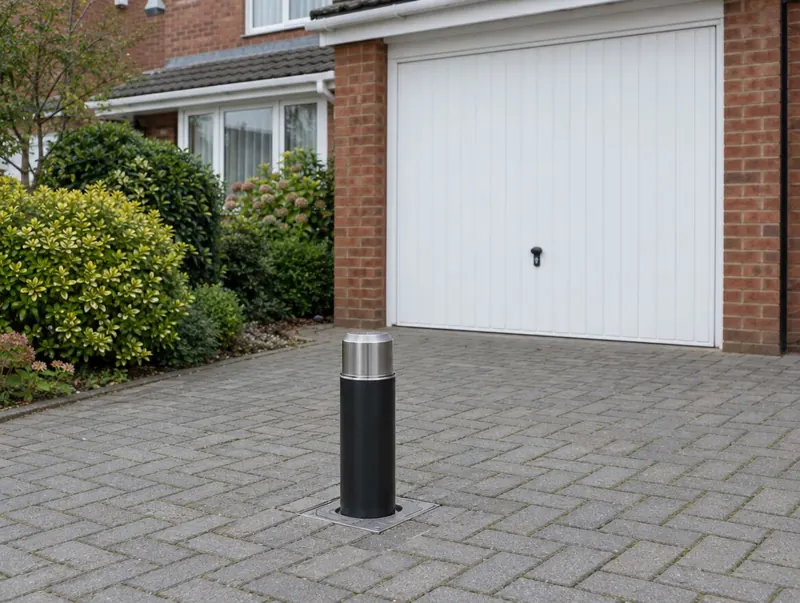
Telescopic bollards
Key-locked telescopic bollards that retract into a ground cassette, for driveways, private bays and access roads.
Learn more →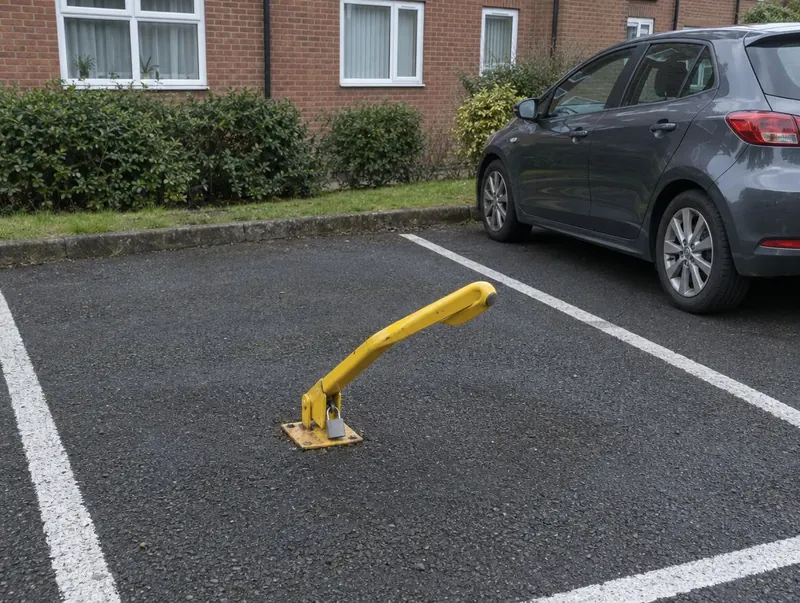
Fold-down parking posts
Hinged fold-down parking posts with padlock or integral key locks, bolted down to protect private and allocated bays.
Learn more →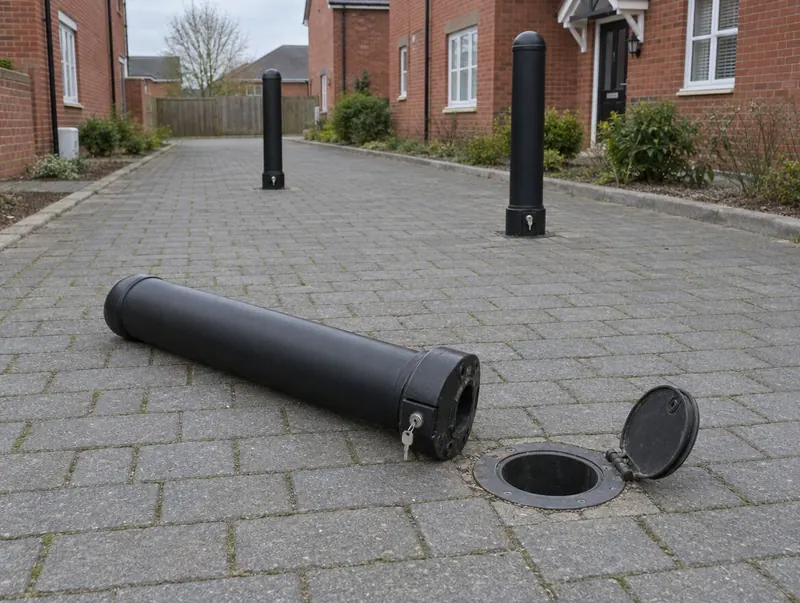
Removable bollards
Lift-out bollards in lockable ground sockets for driveways, delivery routes, access roads and emergency access points.
Learn more →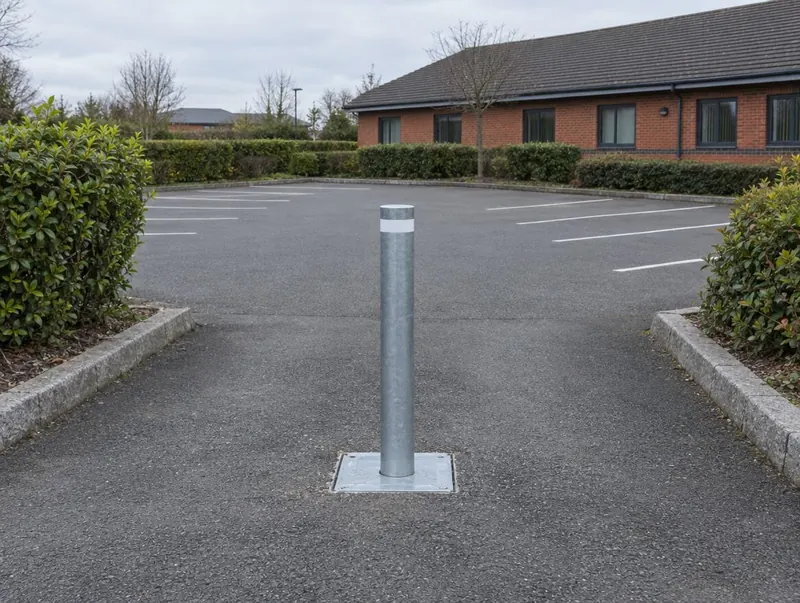
Semi-automatic bollards
Gas-strut assisted bollards that rise on their own when unlocked and lower by hand, with no mains power needed.
Learn more →Driveway security posts near you
Local pages show the highway authority, postcodes covered and regional prices.
- Bedfordshire
- Berkshire
- Bristol
- Buckinghamshire
- Cambridgeshire
- Cheshire
- Cornwall
- County Durham
- Cumbria
- Derbyshire
- Devon
- Dorset
- East Riding of Yorkshire
- East Sussex
- Essex
- Gloucestershire
- Greater Manchester
- Hampshire
- Herefordshire
- Hertfordshire
- Isle of Wight
- Kent
- Lancashire
- Leicestershire
- Lincolnshire
- London
- Merseyside
- Norfolk
- North Yorkshire
- Northamptonshire
- Northumberland
- Nottinghamshire
- Oxfordshire
- Rutland
- Shropshire
- Somerset
- South Yorkshire
- Staffordshire
- Suffolk
- Surrey
- Tyne and Wear
- Warwickshire
- West Midlands
- West Sussex
- West Yorkshire
- Wiltshire
- Worcestershire
- Blaenau Gwent
- Bridgend
- Caerphilly
- Cardiff
- Carmarthenshire
- Ceredigion
- Conwy
- Denbighshire
- Flintshire
- Gwynedd
- Isle of Anglesey
- Merthyr Tydfil
- Monmouthshire
- Neath Port Talbot
- Newport
- Pembrokeshire
- Powys
- Rhondda Cynon Taf
- Swansea
- Torfaen
- Vale of Glamorgan
- Wrexham
- Aberdeen City
- Aberdeenshire
- Angus
- Argyll and Bute
- City of Edinburgh
- Clackmannanshire
- Dumfries and Galloway
- Dundee City
- East Ayrshire
- East Dunbartonshire
- East Lothian
- East Renfrewshire
- Falkirk
- Fife
- Glasgow City
- Highland
- Inverclyde
- Midlothian
- Moray
- North Ayrshire
- North Lanarkshire
- Perth and Kinross
- Renfrewshire
- Scottish Borders
- South Ayrshire
- South Lanarkshire
- Stirling
- West Dunbartonshire
- West Lothian
- Antrim and Newtownabbey
- Ards and North Down
- Armagh City, Banbridge and Craigavon
- Belfast
- Causeway Coast and Glens
- Derry City and Strabane
- Fermanagh and Omagh
- Lisburn and Castlereagh
- Mid Ulster
- Mid and East Antrim
- Newry, Mourne and Down