Access & parking control
Access control for automatic bollards
ANPR, fob, keypad, intercom and remote control systems that decide who can lower an automatic bollard, and when.
- Typically £595–£11,995 per entrance + VAT
- Free survey and fixed written quote
- Foundations and reinstatement included
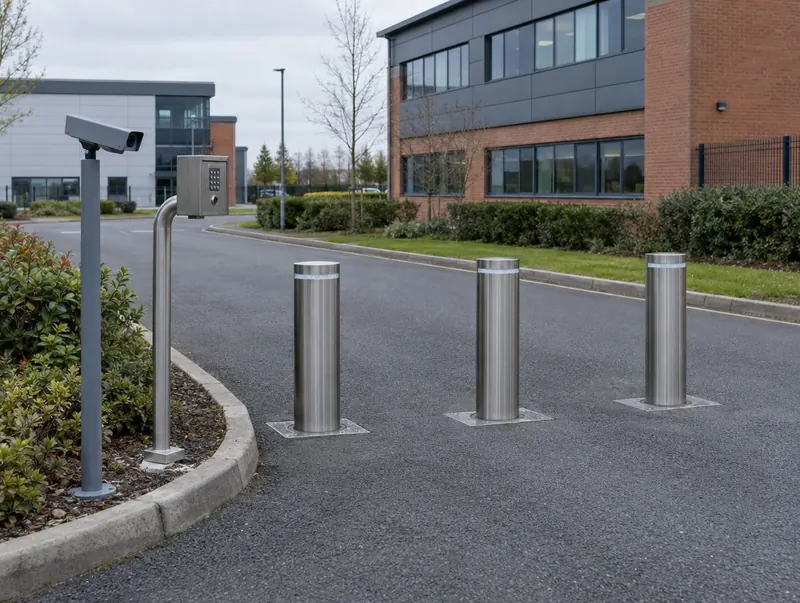 Computer-generated image
What is it?
What is bollard access control?
Bollard access control is the equipment that decides when an automatic bollard lowers: number plate recognition cameras, proximity fob or card readers, keypads, intercoms, remote handsets and exit detection loops. It connects to the bollard's controller and tells it who is allowed through and when. A good scheme lets authorised vehicles in without delay while safety devices still decide when the bollard may move.
An automatic bollard is only as useful as the way people ask it to open. A business park with hundreds of staff vehicles needs something different from a mews with twelve residents, and both need a way for visitors, deliveries and emergency services to get through. Choosing the access method is about how many users there are, how often they change and how much you want to know about who came and went.
We install access control for new automatic bollards and upgrade the controls on existing ones, using installation crews working under our management, with a qualified electrician for power and data connections. The access devices ask the bollard to lower; the bollard's own safety loops and photocells still decide whether it is safe to rise again. Keeping those two jobs separate is what makes a system safe.
Where bollard access control make sense
- Business parks and campuses with large numbers of staff vehicles
- Residential estates and mews with controlled vehicle access
- Pedestrianised zones with permitted delivery and blue badge access
- Upgrading old keypads or handsets on existing bollards
- Sites needing a record of vehicle entries and exits
- Visitor and contractor access managed from a reception or remotely
- Timed opening for deliveries or events
How it works
Every request to lower the bollard comes from an access device. ANPR cameras read number plates and compare them with an approved list, which suits sites with many regular users who should not need to stop. Proximity readers accept fobs, cards or tags, often on a post at driver's window height. Keypads accept codes, which are simple but easily shared. GSM or IP intercoms let a visitor call a person or a phone, who then opens the bollard remotely. Remote handsets suit small groups of users, and app-based control lets authorised users open from a phone.
Leaving is usually simpler. An exit loop cut into the road detects a vehicle approaching from inside and lowers the bollard automatically, so nobody is trapped. Timers can hold the bollard down during delivery windows. Interfaces can link the bollard to a building's fire alarm or an emergency override, agreed with the emergency services, so access is available when it matters.
Placement makes or breaks the scheme. Readers and cameras must sit where drivers stop well before the bollard, with enough queueing space that a waiting car does not block the road behind. Cameras need consistent lighting and a clear view of plates, and readers must be reachable from vans and cars alike.
Options and finishes
| Option | Detail |
|---|---|
| ANPR cameras | Read number plates and compare them with an approved list. Suited to large user groups and hands-free entry; needs careful camera placement and lighting. |
| Fob, card and tag readers | Proximity readers on a pedestal at window height. Lost fobs can be deleted individually without changing anyone else's access. |
| Keypads | Code entry for small groups or as a backup. Simple to manage, but codes spread, so change them regularly. |
| GSM and video intercoms | Visitors call a person or phone, who opens remotely. Video models let the person answering see who is at the entrance. |
| Remote handsets and app control | Handsets for small user groups; app control for sites that want to add and remove users from a phone. |
| Exit loops and timers | Loops lower the bollard for vehicles leaving; timers hold it down during set windows. |
| Integration | Links to existing building access control, fire alarm interfaces and emergency overrides. |
Typical specification
| Item | Typical |
|---|---|
| Entry methods | ANPR, fob or card, keypad, intercom, handset, app |
| Exit | Exit loop or push button, depending on site |
| Reader height | Usually at driver window height, often on a pedestal or gooseneck post |
| Power and data | Ducted cables to the controller, installed by a qualified electrician |
| Communications | Wired network, GSM or wireless, depending on device |
| Records | Event logs on many systems; check data handling for ANPR and video |
| Emergency access | Override agreed with the emergency services |
Typical values only — the survey and the product's data sheet set the final specification.
How we install it
Understand the users
At the free site survey we ask who uses the entrance, how many, how often they change, and how visitors and deliveries arrive. That decides the entry method, and a fixed written quote follows.
Plan positions
Readers, cameras and intercoms are placed so drivers stop well before the bollard, with queueing space off the public road where possible.
Lay ducts and pedestals
Ducts are laid from the controller to each device, and pedestals or posts are set in concrete. Loops for exit and detection are cut and sealed.
Wire and connect
A qualified electrician installs power, and devices are connected to the bollard controller and to any network or building system.
Programme and test
Users, plates, codes and schedules are entered, and every entry and exit route is tested with vehicles, including what happens when access is refused.
Hand over
You are shown how to add and remove users, read logs and use the emergency override. Credentials and settings are recorded.
Ground, foundations and buried services
Access control adds duct runs, pedestals and loops to a bollard installation, and each means cutting into the surface. Ducts between the controller, readers and cameras usually cross footways and verges where services run, so routes are traced before digging and draw pits are placed where runs change direction. Pedestals need small concrete bases set plumb so readers stay at the right height. Exit and safety loops must be cut into sound tarmac or concrete; cracked or patched surfaces cause loop faults, so poor areas are resurfaced first. Where existing bollards are being upgraded, old cables and ducts are tested before being reused.
Rules and checks before you order
- If you use ANPR or video, check your obligations for handling personal data, including signage, a privacy notice and how long records are kept.
- Keep access requests and safety devices separate, so an access device can never force a bollard to rise while a vehicle is over it.
- Agree emergency access with the fire and ambulance services and test the override.
- Have power and data installations certified by a qualified electrician to BS 7671.
See rules and standards by nation for highway consent, accessibility and security standards.
Maintenance
Access control needs housekeeping as much as hardware care. Remove users, fobs and plates when people leave, change keypad codes periodically and check that intercom phone numbers are still current. Clean camera lenses and reader faces, check pedestal fixings and look for damage from vehicles. Test exit loops and emergency overrides at each service visit. If the bollard opens for people who should not have access, the user list is usually the cause rather than the hardware.
What affects the price
- Entry method chosen and number of devices
- Number of users and how they will be managed
- Duct lengths and surface reinstatement
- Integration with existing access control or fire systems
- Network or GSM connectivity at the entrance
- Pedestals, lighting for cameras and signage
Guide prices: bollard access control
Three typical specifications. The middle one is the specification we usually recommend for durability and visibility.
Standard
per entrance + VAT
- Remote fobs or standalone keypad
- Wired to the bollard controller
- Tested and handed over
Upgraded
per entrance + VAT
- GSM intercom with keypad
- Gooseneck post installed
- Everything in Standard
Premium
per entrance + VAT
- ANPR camera and software
- Integration with your systems
- Everything in Upgraded
Guide prices for the UK base region; local pages adjust for your area. Per entrance, controls supplied, installed and commissioned. Your fixed price comes in writing after survey.
Bollard access control: questions answered
How much does access control for automatic bollards cost?
Typically £595–£11,995 per entrance, controls supplied, installed and commissioned, plus VAT. Ground conditions, access, buried services and consents move the figure; the fixed price comes in writing after survey.
Is ANPR or fob access better for an automatic bollard?
ANPR suits sites with many regular users who should not have to stop or carry a fob. Fobs suit sites where users change vehicles or where you want each person to have their own credential. Many sites use ANPR for staff and an intercom for visitors.
How do visitors and delivery drivers get through?
Usually by intercom to reception or a phone, by a temporary code, or by a timed delivery window. Some systems issue time-limited access to a visitor's number plate. The choice depends on how many visitors arrive and who is there to manage them.
Can new access control be added to our existing bollards?
Often, yes, if the bollard controller can accept the new devices. We check the existing controller and cabling first. Very old controllers sometimes need replacing at the same time.
Will vehicles leaving get trapped?
Not if exit detection is fitted. An exit loop in the road lowers the bollard automatically as a vehicle approaches from inside. On some sites a push button or exit reader is used instead.
Can the fire brigade open the bollards?
They should be able to, through an override agreed with them, such as a key switch, a code or a link to the fire alarm. We test the arrangement before handover. It should be reviewed if the site changes.
Do ANPR cameras at our entrance raise data protection issues?
They collect personal data, so you need to handle it properly, including signage, a privacy notice and sensible retention periods. Your data protection adviser can confirm what applies to your site. We can set retention and access options on the system to match.
Related bollard services
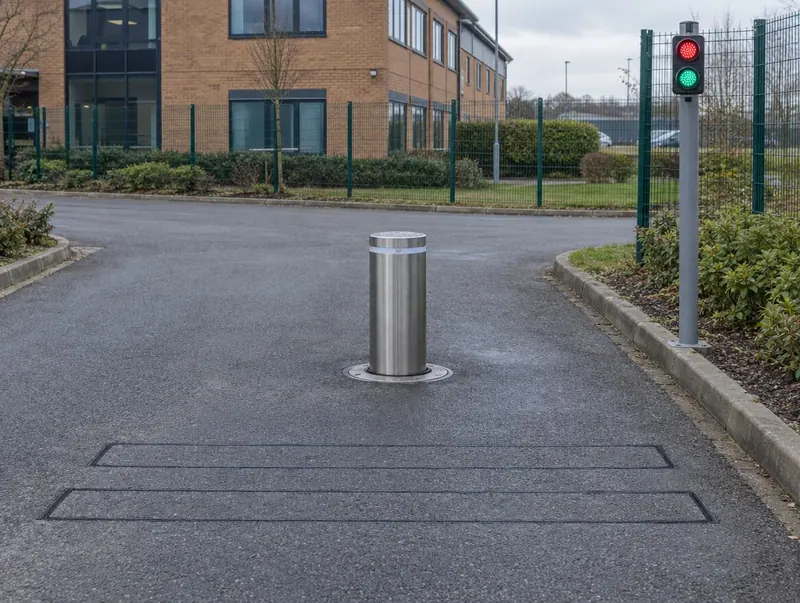
Automatic rising bollards
Hydraulic and electro-mechanical rising bollards installed with controls, safety loops, signals and power, for managed vehicle access.
Learn more →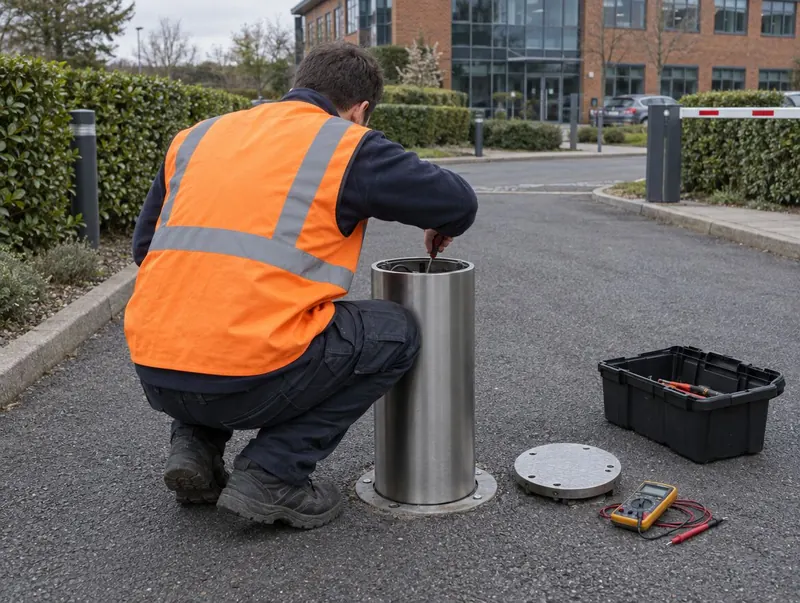
Automatic bollard servicing
Planned servicing visits and maintenance contracts for hydraulic and electro-mechanical rising bollards, priced in writing.
Learn more →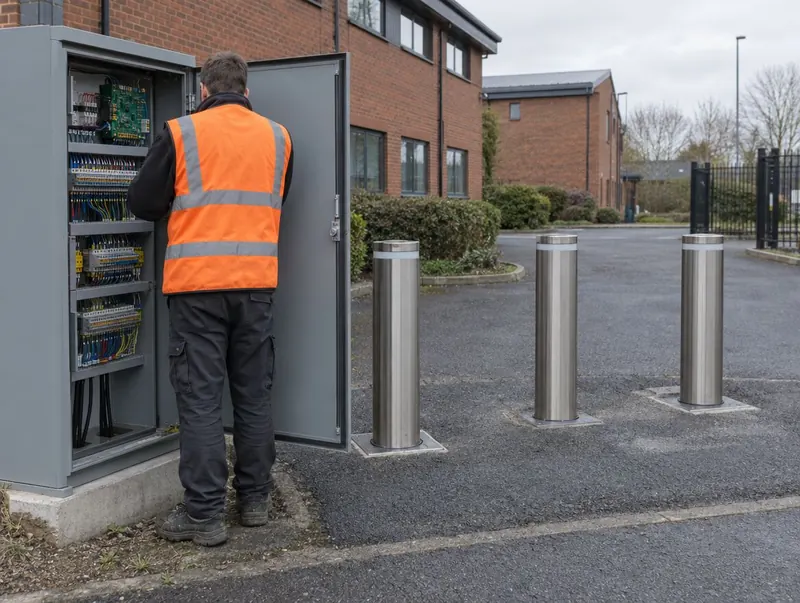
Automatic bollard repairs
Paid repair visits for rising bollards: hydraulics, motors, controllers, loops, flooded pits and heads damaged by vehicles.
Learn more →
Crash-rated (HVM) bollards
Installation of impact-tested HVM bollards rated to ISO 22343-1 (or the superseded, still-accepted PAS 68 / IWA 14-1) on the tested foundation.
Learn more →Bollard access control near you
Local pages show the highway authority, postcodes covered and regional prices.
- Bedfordshire
- Berkshire
- Bristol
- Buckinghamshire
- Cambridgeshire
- Cheshire
- Cornwall
- County Durham
- Cumbria
- Derbyshire
- Devon
- Dorset
- East Riding of Yorkshire
- East Sussex
- Essex
- Gloucestershire
- Greater Manchester
- Hampshire
- Herefordshire
- Hertfordshire
- Isle of Wight
- Kent
- Lancashire
- Leicestershire
- Lincolnshire
- London
- Merseyside
- Norfolk
- North Yorkshire
- Northamptonshire
- Northumberland
- Nottinghamshire
- Oxfordshire
- Rutland
- Shropshire
- Somerset
- South Yorkshire
- Staffordshire
- Suffolk
- Surrey
- Tyne and Wear
- Warwickshire
- West Midlands
- West Sussex
- West Yorkshire
- Wiltshire
- Worcestershire
- Blaenau Gwent
- Bridgend
- Caerphilly
- Cardiff
- Carmarthenshire
- Ceredigion
- Conwy
- Denbighshire
- Flintshire
- Gwynedd
- Isle of Anglesey
- Merthyr Tydfil
- Monmouthshire
- Neath Port Talbot
- Newport
- Pembrokeshire
- Powys
- Rhondda Cynon Taf
- Swansea
- Torfaen
- Vale of Glamorgan
- Wrexham
- Aberdeen City
- Aberdeenshire
- Angus
- Argyll and Bute
- City of Edinburgh
- Clackmannanshire
- Dumfries and Galloway
- Dundee City
- East Ayrshire
- East Dunbartonshire
- East Lothian
- East Renfrewshire
- Falkirk
- Fife
- Glasgow City
- Highland
- Inverclyde
- Midlothian
- Moray
- North Ayrshire
- North Lanarkshire
- Perth and Kinross
- Renfrewshire
- Scottish Borders
- South Ayrshire
- South Lanarkshire
- Stirling
- West Dunbartonshire
- West Lothian
- Antrim and Newtownabbey
- Ards and North Down
- Armagh City, Banbridge and Craigavon
- Belfast
- Causeway Coast and Glens
- Derry City and Strabane
- Fermanagh and Omagh
- Lisburn and Castlereagh
- Mid Ulster
- Mid and East Antrim
- Newry, Mourne and Down