Access & parking control
Removable bollard installation
Lift-out bollards in lockable ground sockets for driveways, delivery routes, access roads and emergency access points.
- Typically £245–£845 per bollard + VAT (£285–£995 inc VAT for homes); minimum job £595
- Free survey and fixed written quote
- Foundations and reinstatement included
 Computer-generated image
What is it?
What are removable bollards?
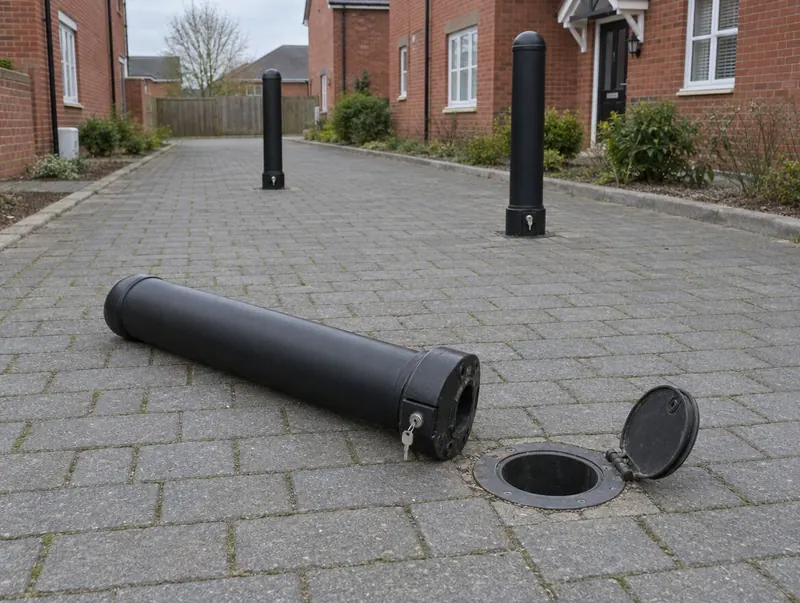
A removable bollard is a post that locks into a socket set in the ground and can be unlocked and lifted out by hand when access is needed. When the post is out, the socket is closed with a hinged lid or cap so the surface is flush. Removable bollards are used where vehicles need occasional rather than daily access.
Removable bollards are a plain, practical way to control an access point that only opens now and then: a fire route through a car park, a maintenance track across a park, the delivery bay in front of a shop or a driveway left open when the owner is home. They need no power and very little ground depth, and they work with almost any surface.
Their weakness is the human part. A post that is heavy, awkward to unlock or has a seized socket tends to be left out permanently, or stored on its side where it becomes a trip hazard. We choose posts and locks with the person who will handle them in mind, and our installation crews, working under our management, set the sockets so they stay clean and drain.
Where removable bollards make sense
- Emergency and fire service access routes
- Delivery bays in pedestrian areas and shop frontages
- Maintenance tracks through parks and open spaces
- Driveways and private parking bays
- Temporary event closures and market streets
- Gaps in a fixed bollard line that must open occasionally
- School gates closed during drop-off and pick-up
How it works
The socket, sometimes called a ground sleeve, is a steel tube with a top collar, cast into a small concrete foundation so its rim sits flush with the finished surface. The post drops into it and is held by a lock. Common locking types include a triangular or square key that turns an internal cam, a padlock through a hasp, and integral cylinder locks keyed alike so one key opens every post on a site.
When the post is lifted out, a lid on the socket closes over the opening. Spring-loaded or hinged lids close automatically, so nobody has to remember. Some sockets are designed so the lid can be locked closed, which prevents rubbish or water being pushed in. A drain hole at the base lets water out into the ground or gravel beneath.
Weight is the trade-off. Heavier, larger-diameter posts feel more substantial and resist being knocked, but someone has to lift them. Handles in the post head, aluminium or lighter steel posts, and post storage brackets fixed to a nearby wall all make daily use easier.
Options and finishes
| Option | Detail |
|---|---|
| Steel, stainless or aluminium posts | Galvanised and powder-coated steel for robustness, stainless for appearance, aluminium where lightness matters for frequent lifting. |
| Locking type | Triangular or square key, padlock, or integral keyed cylinder. Keyed-alike locks let one key open every post on a site. |
| Socket lids | Spring-closing, hinged or lockable lids that sit flush when the post is removed, so there is no open hole. |
| Diameter and height | Commonly 76–140 mm diameter and around 900–1,000 mm high, chosen to suit visibility and handling. |
| Heads and handles | Dome, flat or ball heads, with lifting handles or eyes so posts can be pulled out without strain. |
| Rated removable posts | Crash-tested removable models exist for security lines; they use heavier sockets and tested foundations. |
Typical specification
| Item | Typical |
|---|---|
| Exposed height | Typically 900–1,000 mm |
| Post diameter | Commonly 76–140 mm |
| Socket depth | Often around 250–450 mm, product dependent |
| Foundation | Small concrete surround with drainage at the socket base |
| Locking | Cam lock with triangular or square key, padlock or cylinder |
| Post weight | Varies by material and size; check before choosing |
| Finish | Galvanised, powder-coated, stainless or anodised |
Typical values only — the survey and the product's data sheet set the final specification.
How we install it
Agree who will lift the post
At the free site survey we talk through who will remove the post, how often and where it will be stored. That decides material, diameter and lock, and goes into a fixed written quote.
Cut and excavate
A small square of surface is cut out and excavated to socket depth, with a bed of free-draining stone at the bottom so water can leave the socket.
Set the socket flush
The socket is set in concrete with its rim exactly at finished surface level and to the fall of the ground, so the lid sits flat and nothing catches on it.
Reinstate around the socket
Block paving, tarmac or flags are cut tight to the collar and made good. On resin or bound surfaces, the edge is sealed neatly.
Fit posts and hand over keys
Posts are fitted and locked, and the lift-out and refit routine is checked on site. Keys and any storage brackets are handed over.
Ground, foundations and buried services
Removable bollards need modest depth, which makes them one of the easier bollards to fit around services. The critical details are level and drainage. A socket set even a few millimetres proud becomes a trip edge and gets clipped by tyres and snow ploughs; one set low collects water and grit. The base sits on free-draining stone or connects to a drainage route, so rainwater does not stand in the socket and freeze around the post in winter. On block paving, the socket is set before the blocks are cut to it, so the pattern finishes cleanly. On thin tarmac drives, the surround is sized so the socket does not loosen over time.
Rules and checks before you order
- Keep a clear route of typically at least 1,000–1,200 mm between posts on pedestrian routes, and check against Inclusive Mobility guidance.
- Fit reflective or contrasting bands near the top so posts are visible when in place.
- On emergency access routes, agree with the fire service how they will remove the posts, such as standard keys or bolt croppers on padlocks.
- Check whether the location is public highway; a highway authority agreement is usually needed there.
See rules and standards by nation for highway consent, accessibility and security standards.
Maintenance
Removable bollards fail in predictable ways: seized locks, sockets full of grit and lids that no longer close. Lubricate locks a few times a year with a graphite or lock-specific spray, lift the posts out periodically even if they are not needed, and clear the socket of debris. Check the lid springs and hinges. Keep spare keys somewhere sensible, because lost keys are a common reason for a post being cut out. If a socket has worked loose in the surface, re-bed it before the lid edge becomes a trip hazard.
What affects the price
- Number of posts and sockets
- Post material: steel, stainless or aluminium
- Lock type and whether locks are keyed alike
- Surface type and reinstatement
- Drainage at the socket base
- Rated removable posts where security is required
Guide prices: removable bollards
Three typical specifications. The middle one is the specification we usually recommend for durability and visibility.
Standard
per bollard + VAT · homes £285–£585 inc VAT
- Standard post or product for the type
- Foundation and fixing to manufacturer's details
- Surface reinstated to match
Upgraded
per bollard + VAT · homes £505–£805 inc VAT
- Upgraded finish (RAL colour, stainless or sleeve)
- Retroreflective band and matched keys
- Everything in Standard
Premium
per bollard + VAT · homes £725–£995 inc VAT
- Heavy-duty or architectural specification
- Premium finish and fittings
- Everything in Upgraded
Guide prices for the UK base region; local pages adjust for your area. Per bollard with ground socket, supplied and installed. Minimum job £595 + VAT. Your fixed price comes in writing after survey.
Removable bollards: questions answered
How much does removable bollard installation cost?
Typically £245–£845 per bollard with ground socket, supplied and installed, plus VAT. For homeowners that's £285–£995 including VAT. Small jobs carry a minimum charge of £595 plus VAT. Ground conditions, access, buried services and consents move the figure; the fixed price comes in writing after survey.
How heavy is a removable bollard to lift?
It depends on material and size; a slim aluminium post is easy to lift, while a large concrete-filled steel post is not designed for daily handling. If the post will come out every day, say so at the survey and we will suggest something lighter with a handle.
What happens to the hole when the bollard is out?
A lid on the socket closes over it so the surface is flush. Spring-closing lids shut automatically when the post is lifted. That stops trips and keeps debris out.
Can all the bollards on our site use one key?
Yes, if the locks are ordered keyed alike. That is common on estates and car parks with several access points. Spare keys can be supplied at the same time.
Will a removable bollard freeze in place?
It can if water sits in the socket and freezes around the post. Good drainage at the socket base is the main defence. A little lubricant on the post and lifting it out occasionally in winter also helps.
Where do we keep the post when it is removed?
Somewhere it cannot become a trip hazard or be taken. A wall-mounted storage bracket or a locked store nearby works well. Leaving posts lying on the ground is how they get damaged or lost.
Can removable bollards be installed on block paving?
Yes. The socket is set in concrete beneath the blocks and the blocks are cut tight around the collar. It finishes neatly if the socket is set to the exact paving level.
Related bollard services
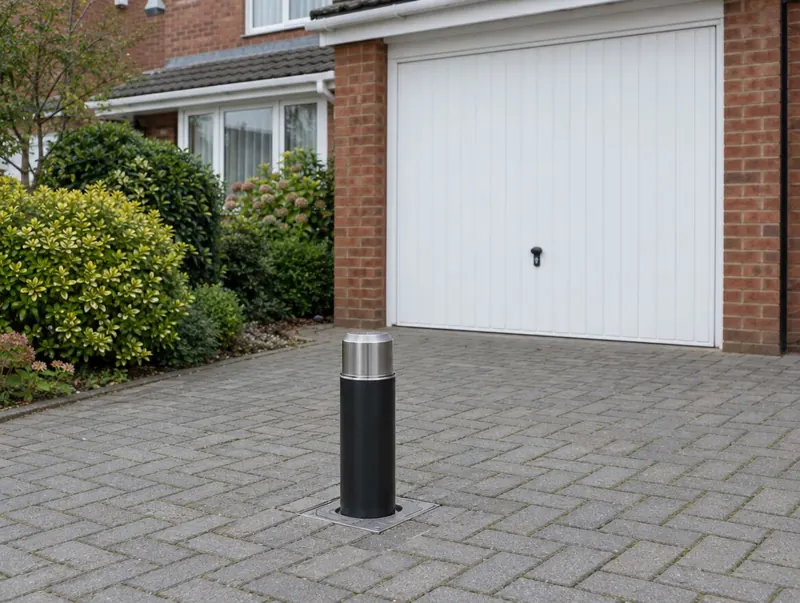
Telescopic bollards
Key-locked telescopic bollards that retract into a ground cassette, for driveways, private bays and access roads.
Learn more →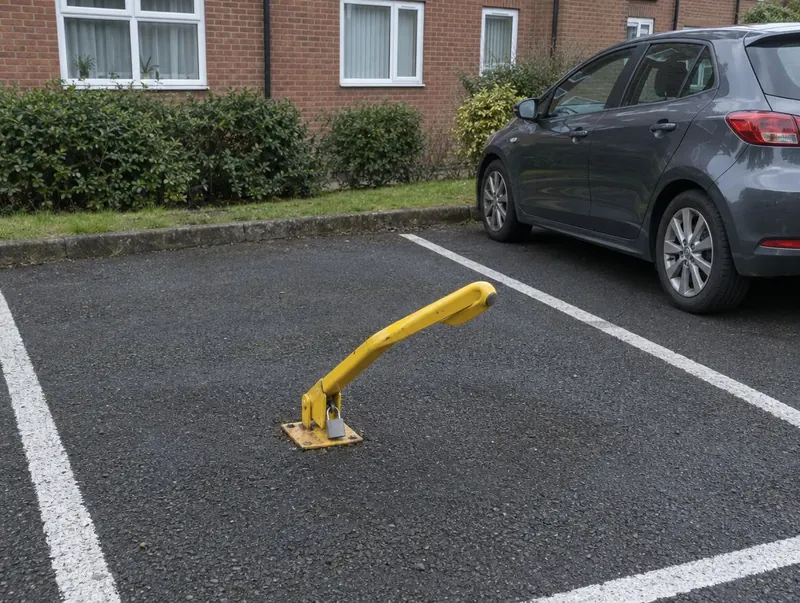
Fold-down parking posts
Hinged fold-down parking posts with padlock or integral key locks, bolted down to protect private and allocated bays.
Learn more →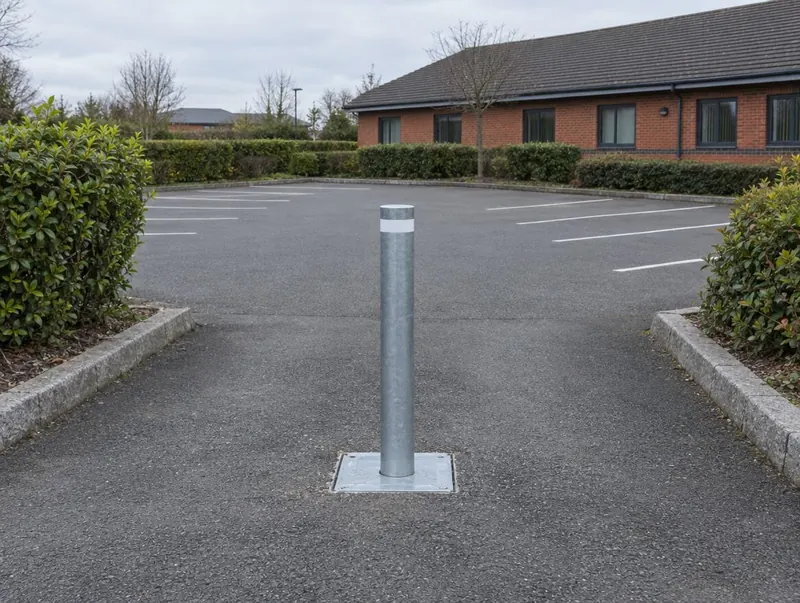
Semi-automatic bollards
Gas-strut assisted bollards that rise on their own when unlocked and lower by hand, with no mains power needed.
Learn more →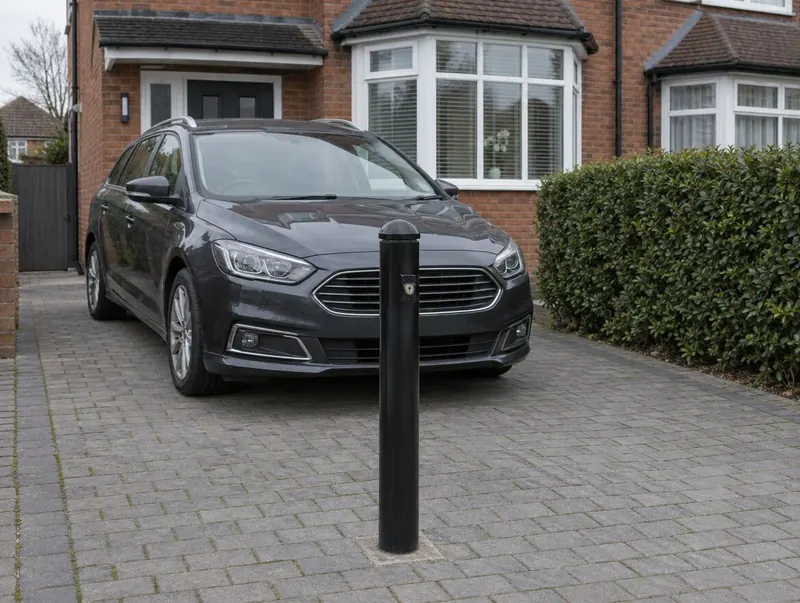
Driveway security posts
Telescopic, fold-down and removable security posts for home driveways, to deter car theft and stop unwanted parking.
Learn more →Removable bollards near you
Local pages show the highway authority, postcodes covered and regional prices.
- Bedfordshire
- Berkshire
- Bristol
- Buckinghamshire
- Cambridgeshire
- Cheshire
- Cornwall
- County Durham
- Cumbria
- Derbyshire
- Devon
- Dorset
- East Riding of Yorkshire
- East Sussex
- Essex
- Gloucestershire
- Greater Manchester
- Hampshire
- Herefordshire
- Hertfordshire
- Isle of Wight
- Kent
- Lancashire
- Leicestershire
- Lincolnshire
- London
- Merseyside
- Norfolk
- North Yorkshire
- Northamptonshire
- Northumberland
- Nottinghamshire
- Oxfordshire
- Rutland
- Shropshire
- Somerset
- South Yorkshire
- Staffordshire
- Suffolk
- Surrey
- Tyne and Wear
- Warwickshire
- West Midlands
- West Sussex
- West Yorkshire
- Wiltshire
- Worcestershire
- Blaenau Gwent
- Bridgend
- Caerphilly
- Cardiff
- Carmarthenshire
- Ceredigion
- Conwy
- Denbighshire
- Flintshire
- Gwynedd
- Isle of Anglesey
- Merthyr Tydfil
- Monmouthshire
- Neath Port Talbot
- Newport
- Pembrokeshire
- Powys
- Rhondda Cynon Taf
- Swansea
- Torfaen
- Vale of Glamorgan
- Wrexham
- Aberdeen City
- Aberdeenshire
- Angus
- Argyll and Bute
- City of Edinburgh
- Clackmannanshire
- Dumfries and Galloway
- Dundee City
- East Ayrshire
- East Dunbartonshire
- East Lothian
- East Renfrewshire
- Falkirk
- Fife
- Glasgow City
- Highland
- Inverclyde
- Midlothian
- Moray
- North Ayrshire
- North Lanarkshire
- Perth and Kinross
- Renfrewshire
- Scottish Borders
- South Ayrshire
- South Lanarkshire
- Stirling
- West Dunbartonshire
- West Lothian
- Antrim and Newtownabbey
- Ards and North Down
- Armagh City, Banbridge and Craigavon
- Belfast
- Causeway Coast and Glens
- Derry City and Strabane
- Fermanagh and Omagh
- Lisburn and Castlereagh
- Mid Ulster
- Mid and East Antrim
- Newry, Mourne and Down