Repairs, servicing & removal
Automatic bollard servicing
Planned servicing visits and maintenance contracts for hydraulic and electro-mechanical rising bollards, priced in writing.
- Typically £95–£345 per visit + VAT
- Visit price confirmed in writing first
- Written report after every visit
 Computer-generated image
What is it?
What is automatic bollard servicing?
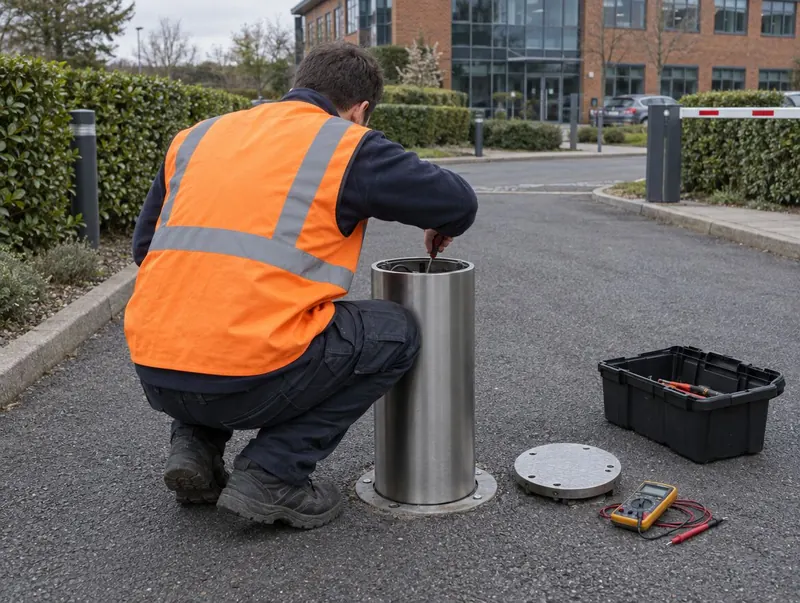
Automatic bollard servicing is planned, preventive maintenance of powered rising bollards and their controls, carried out at regular intervals rather than waiting for a fault. A service visit cleans and inspects the bollard and cassette, checks the drive, drainage and electrics, and tests every safety device, access control input and emergency function. Each visit is recorded, giving a maintenance history for the installation.
Automatic bollards are machines working in a pit in the road, exposed to water, grit, salt, frost and vehicle loads. They do not fail suddenly as often as people think; they wear. Drains silt up, seals weep, loops degrade as the road surface cracks, and safety devices drift out of adjustment. A planned service catches those changes while they are small and keeps the safety equipment doing its job.
We provide one-off service visits and planned maintenance contracts for hydraulic and electro-mechanical bollards, carried out by installation crews working under our management. Service visits are paid and priced in writing in advance. If a service finds a fault that needs parts or further work, that repair is quoted separately in writing before it is carried out.
Which systems need servicing
- Business parks and campuses with busy automatic entrances
- Pedestrianised zones with rising bollards for deliveries
- Secure sites with crash-rated automatic bollards
- Residential estates with shared automatic bollards
- Bollards inherited with a building and no service history
- Systems that have started to run slowly or noisily
- Sites needing documented maintenance for insurers or audits
How it works
A service starts with the pit. The bollard is lowered or the head opened as the design allows, debris and silt are cleared from the cassette, and the drain is tested to make sure water leaves freely. Blocked drainage is behind a large share of automatic bollard faults, because standing water corrodes components, damages electrics and freezes in winter.
The drive is checked next. On hydraulic bollards that means fluid level and condition, hoses, fittings, seals and the pump or power pack, and any sign of leaks. On electro-mechanical bollards it means the motor, gearbox, couplings and limit or position sensors. Rise and fall times are measured and compared with the previous visit, because a gradual slowdown is often the first sign of wear.
Finally, the safety and control systems are tested with the bollard in operation: safety and exit loops, photocells, traffic lights, head lights and audible warnings, the manual release, any emergency fast operation and every access control input. The controller's fault log is read, firmware or settings noted, and any battery backup checked. The visit report records what was found, what was done and what needs attention. On sites with several bollards, each unit's figures are recorded separately, so one bollard wearing faster than its neighbours is easy to spot.
Options and finishes
| Option | Detail |
|---|---|
| One-off service visit | A single paid service, useful for bollards with no recent history or before a decision about a contract. |
| Planned maintenance contract | Scheduled visits at agreed intervals, priced in writing, with a consistent record kept across visits. |
| Visit frequency | Set by how often the bollards cycle and the site's risk; busy or security sites usually need more frequent visits. |
| Hydraulic servicing | Fluid, hoses, seals, pump and valve checks, with fluid topped up or changed as needed. |
| Electro-mechanical servicing | Motor, gearbox, couplings and sensor checks, with adjustment of limits and positions. |
| Safety and access testing | Loops, photocells, lights, manual release, emergency functions and access control inputs tested on every visit. |
Typical specification
| Item | Typical |
|---|---|
| Visit type | Paid visit, priced in writing in advance |
| Bollard types | Hydraulic and electro-mechanical, unrated and rated |
| Typical checks | Cassette, drainage, drive, electrics, safety devices, access inputs |
| Frequency | Commonly quarterly to six-monthly, depending on use and risk |
| Records | Written report after each visit |
| Faults found | Quoted separately in writing before repair |
| Parts | Sourced through manufacturers or distributors where proprietary |
Typical values only — the survey and the product's data sheet set the final specification.
How we do it
Tell us about the installation
Send the make and model if known, the number of bollards, how busy the entrance is and any current problems, with photographs of the bollards and controller.
Agree the visit or contract
We price a one-off visit or a contract in writing, with the visit frequency suggested for your usage. Nothing is booked until you have agreed it.
Plan around the entrance
Visits are planned to keep the entrance usable, usually servicing one lane or bollard at a time, with cones and staff on hand while a bollard is out of service.
Service and test
The pit, drainage, drive, electrics, safety devices and access inputs are serviced and tested, and the controller log is read.
Report and recommend
You receive a written report of what was checked and found. Any repair needed is quoted separately in writing for your approval.
Ground, foundations and buried services
Servicing rarely needs excavation, but the condition of the ground around the bollard tells a lot about its health. Cracked or sunken surfacing around a cassette can indicate a failing foundation or water washing out the sub-base. Loops fail when the road surface around them cracks or is patched, so loop condition is checked alongside surface condition. Drainage outlets are tested by running water into the pit; where they no longer drain, the cause may be a collapsed pipe or a soakaway that has silted up, which may need a separate drainage repair quoted in writing. Silt and grit washed in from the surrounding road are a steady source of wear, so where the road drains towards the bollard, a small change such as a channel or gully nearby can reduce how much debris reaches the pit.
Rules and checks before you order
- Keep safety devices tested and working; a bollard with disabled or faulty safety loops or photocells should not stay in service.
- Keep written records of each service, including tests of safety devices and emergency functions.
- Have electrical faults and modifications handled by a qualified electrician, to BS 7671.
- For crash-rated automatic bollards, follow the manufacturer's maintenance requirements so the bollard continues to perform as tested.
- Test emergency service access arrangements periodically and after any change to the controls.
See rules and standards by nation for highway consent, accessibility and security standards.
Maintenance
Between service visits, site staff can do a lot to keep bollards reliable: keep the head and surrounding road clear of leaves and grit, report any change in speed, noise or behaviour, keep a note of faults with the date and time, and never bypass or disconnect safety devices to keep an entrance open. After snow, clear around the head before use. If the road around the bollard is being resurfaced, tell us beforehand so loops and ducts can be protected or reinstated. If the site changes how the entrance is used, such as longer opening hours or heavier delivery vehicles, mention it before the next visit so the service frequency and safety settings can be reconsidered.
What affects the price
- Number of bollards and controllers
- Hydraulic or electro-mechanical drive
- Visit frequency and contract length
- Access control equipment to be tested
- Traffic management needed on live roads
- Rated bollards with manufacturer-specified procedures
Guide prices: bollard servicing
Three typical specifications. The middle one is the specification we usually recommend for durability and visibility.
Standard
per visit + VAT
- One bollard
- Planned service and safety checks
- Price confirmed in writing first
Upgraded
per visit + VAT
- Two bollards
- Full service with written report
- Everything in Standard
Premium
per visit + VAT
- Larger or rated systems
- Manufacturer-specified procedures
- Everything in Upgraded
Guide prices for the UK base region; local pages adjust for your area. Per planned service visit, first bollard. The visit price is confirmed in writing before we attend.
Bollard servicing: questions answered
How much does automatic bollard servicing cost?
Typically £95–£345 per planned service visit, first bollard, plus VAT. Ground conditions, access, buried services and consents move the figure; the fixed price comes in writing after survey.
How often should automatic bollards be serviced?
It depends on how often they cycle and the risk at the site. Commonly that means every three to six months, with busier or security entrances at the more frequent end. We suggest a frequency once we know your usage.
What is checked during a bollard service?
The cassette and drainage, the hydraulic or electro-mechanical drive, electrics, rise and fall times, all safety devices, the manual release, emergency functions and access control inputs. You receive a written report afterwards.
Do you service bollards you did not install?
Yes, for common makes of hydraulic and electro-mechanical bollard. Proprietary parts are sourced through the manufacturer or their distributor where available. Photographs of the bollard and controller help us prepare.
Is a maintenance contract necessary?
It is not compulsory, but planned visits catch wear before it becomes a breakdown and give you a maintenance record. One-off visits suit lightly used bollards or as a starting point.
What happens if the service finds a fault?
It is recorded in the report and quoted separately in writing. You decide whether to go ahead. Small adjustments within the service scope are made during the visit.
Will the entrance be closed during a service?
Usually only partly. We service one bollard or lane at a time where possible, with cones and staff managing traffic. On single-bollard entrances, a short closure is agreed in advance.
Related bollard services
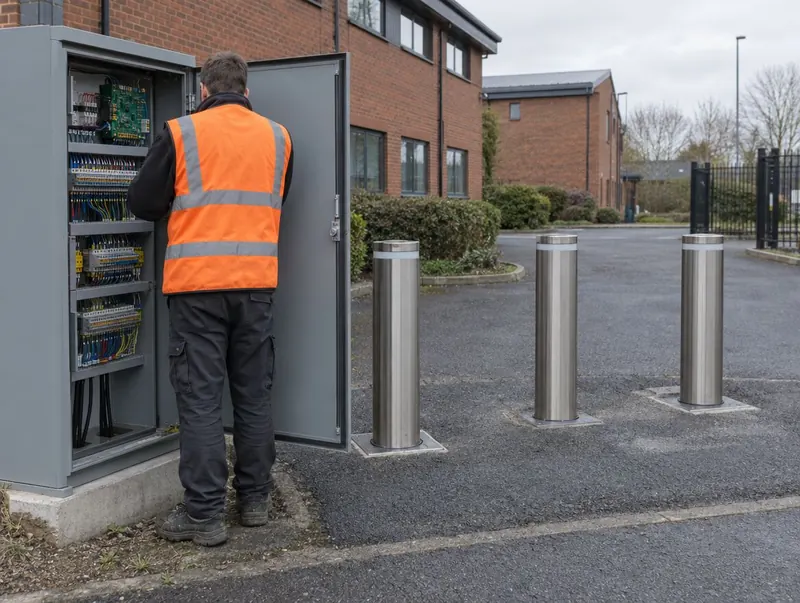
Automatic bollard repairs
Paid repair visits for rising bollards: hydraulics, motors, controllers, loops, flooded pits and heads damaged by vehicles.
Learn more →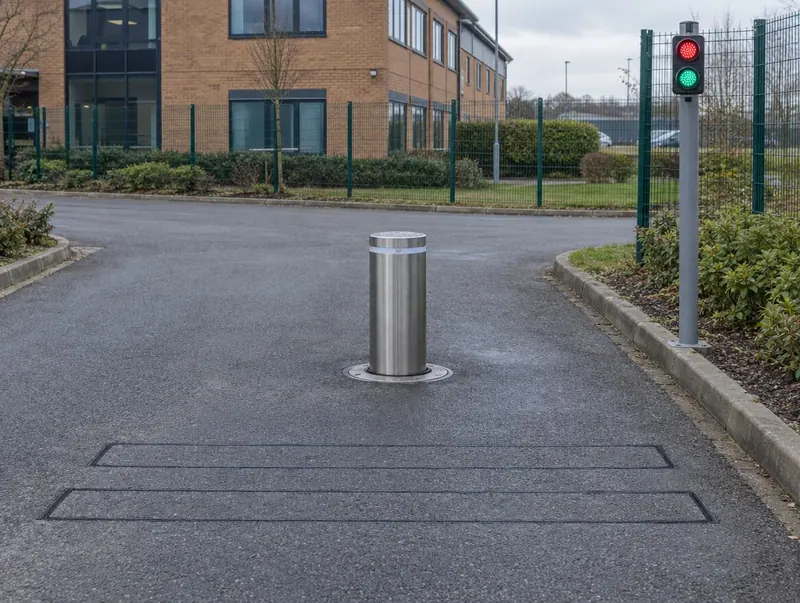
Automatic rising bollards
Hydraulic and electro-mechanical rising bollards installed with controls, safety loops, signals and power, for managed vehicle access.
Learn more →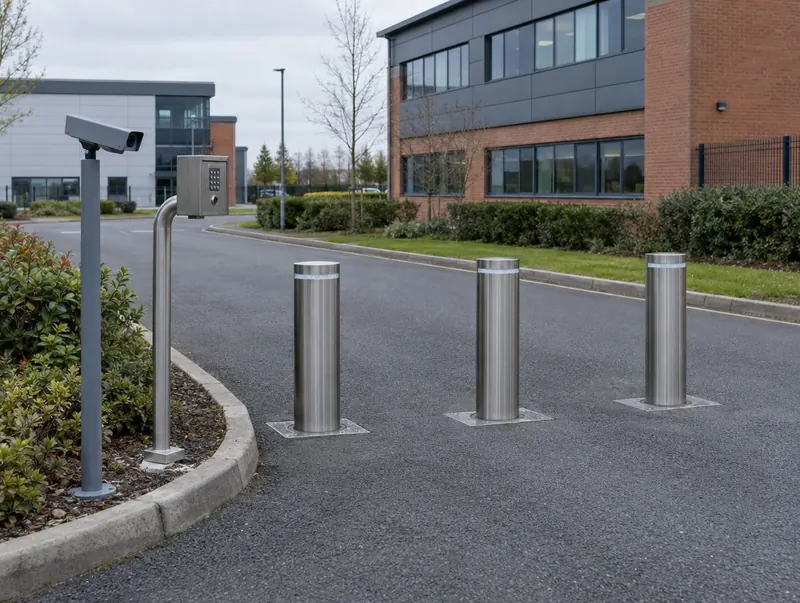
Bollard access control
ANPR, fob, keypad, intercom and remote control systems that decide who can lower an automatic bollard, and when.
Learn more →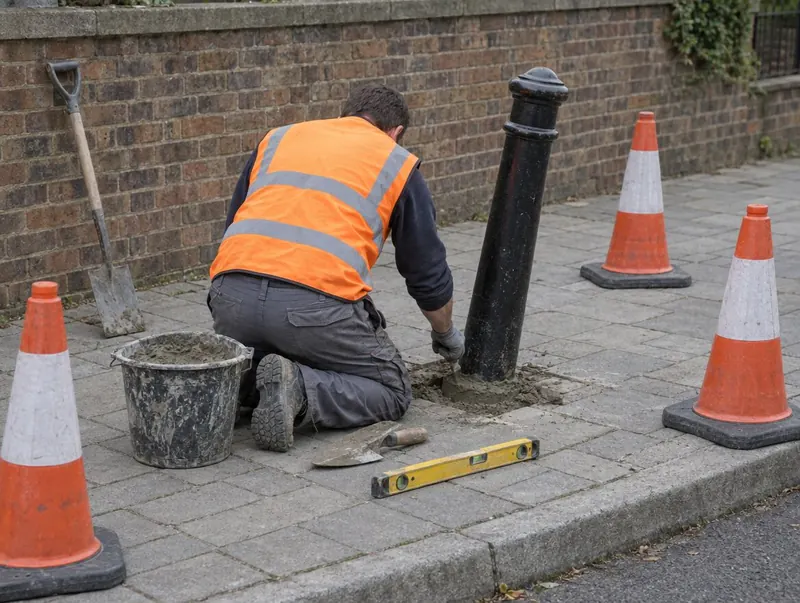
Bollard repairs
Paid repair visits for loose, leaning and damaged bollards: re-bedding, re-fixing, new sockets, locks, caps and reflective bands.
Learn more →Bollard servicing near you
Local pages show the highway authority, postcodes covered and regional prices.
- Bedfordshire
- Berkshire
- Bristol
- Buckinghamshire
- Cambridgeshire
- Cheshire
- Cornwall
- County Durham
- Cumbria
- Derbyshire
- Devon
- Dorset
- East Riding of Yorkshire
- East Sussex
- Essex
- Gloucestershire
- Greater Manchester
- Hampshire
- Herefordshire
- Hertfordshire
- Isle of Wight
- Kent
- Lancashire
- Leicestershire
- Lincolnshire
- London
- Merseyside
- Norfolk
- North Yorkshire
- Northamptonshire
- Northumberland
- Nottinghamshire
- Oxfordshire
- Rutland
- Shropshire
- Somerset
- South Yorkshire
- Staffordshire
- Suffolk
- Surrey
- Tyne and Wear
- Warwickshire
- West Midlands
- West Sussex
- West Yorkshire
- Wiltshire
- Worcestershire
- Blaenau Gwent
- Bridgend
- Caerphilly
- Cardiff
- Carmarthenshire
- Ceredigion
- Conwy
- Denbighshire
- Flintshire
- Gwynedd
- Isle of Anglesey
- Merthyr Tydfil
- Monmouthshire
- Neath Port Talbot
- Newport
- Pembrokeshire
- Powys
- Rhondda Cynon Taf
- Swansea
- Torfaen
- Vale of Glamorgan
- Wrexham
- Aberdeen City
- Aberdeenshire
- Angus
- Argyll and Bute
- City of Edinburgh
- Clackmannanshire
- Dumfries and Galloway
- Dundee City
- East Ayrshire
- East Dunbartonshire
- East Lothian
- East Renfrewshire
- Falkirk
- Fife
- Glasgow City
- Highland
- Inverclyde
- Midlothian
- Moray
- North Ayrshire
- North Lanarkshire
- Perth and Kinross
- Renfrewshire
- Scottish Borders
- South Ayrshire
- South Lanarkshire
- Stirling
- West Dunbartonshire
- West Lothian
- Antrim and Newtownabbey
- Ards and North Down
- Armagh City, Banbridge and Craigavon
- Belfast
- Causeway Coast and Glens
- Derry City and Strabane
- Fermanagh and Omagh
- Lisburn and Castlereagh
- Mid Ulster
- Mid and East Antrim
- Newry, Mourne and Down