Repairs, servicing & removal
Automatic bollard repairs
Paid repair visits for rising bollards: hydraulics, motors, controllers, loops, flooded pits and heads damaged by vehicles.
- Typically £145–£2,495 per repair + VAT
- Visit price confirmed in writing first
- Written report after every visit
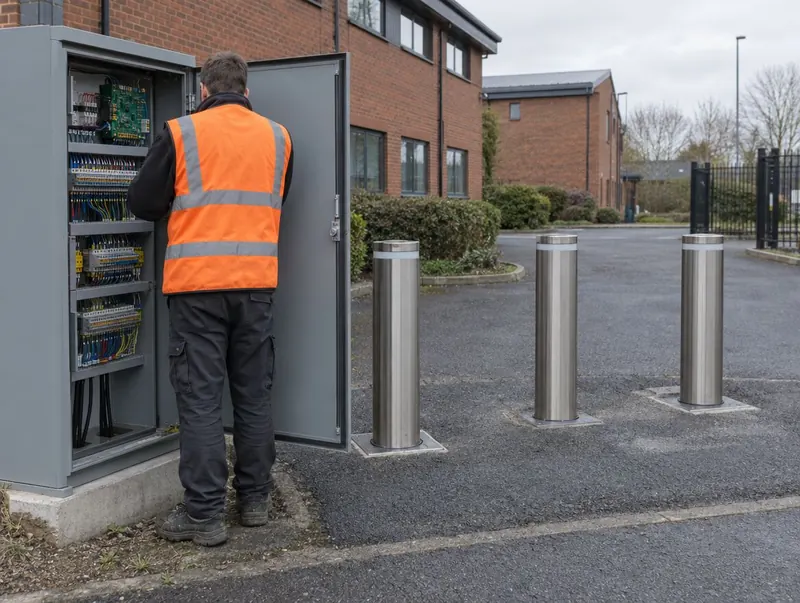 Computer-generated image
What is it?
What are automatic bollard repairs?
Automatic bollard repair is the diagnosis and correction of faults in powered rising bollards, from hydraulic leaks and motor failures to controller faults, failed detection loops, flooded cassettes and heads damaged by vehicles. Repairs start with finding the cause, then making the bollard safe and replacing or adjusting the failed part. Each repair visit is paid and priced in writing before work begins.
When an automatic bollard fails, the entrance it controls usually fails with it. A bollard stuck up locks out staff and deliveries; one stuck down leaves a secure entrance open; one that rises unexpectedly is a danger to vehicles. The first priority is to make the entrance safe and usable, and the second is to find out why it failed, because the visible fault is often not the cause.
We repair hydraulic and electro-mechanical bollards, controllers, loops and associated access equipment, using installation crews working under our management and a qualified electrician for electrical work. Repair visits are paid. We ask what the bollard is doing and for photographs, give you the cost of the visit in writing, and quote any parts and further work in writing before carrying them out.
Common automatic bollard faults
- Bollards stuck in the raised or lowered position
- Slow, jerky or noisy rising and lowering
- Hydraulic oil leaks around the head or pit
- Bollards that rise or fall on their own
- Loops cut or damaged during resurfacing
- Flooded pits after heavy rain
- Heads and covers damaged by a vehicle strike
How it works
Faults fall into a few families. Drive faults include hydraulic pump or valve failure, leaking seals and hoses, low fluid, and on electro-mechanical units motor, gearbox or coupling wear. Control faults include failed power supplies, controller boards, contactors, limit or position sensors and battery backup. Detection faults are usually loops, which break when the road surface cracks or is cut, and photocells knocked out of alignment. Then there is water: a blocked drain fills the pit and causes almost every kind of fault at once.
Diagnosis works through these in order. The controller's fault log and indicator lights show what the system thinks is wrong; loop detectors can be tested for frequency and fault status; the drive is checked under load; and the pit is inspected. A bollard that rises or falls on its own is often a loop or detector fault rather than a bollard fault, and an access device sending repeated signals can look like a controller failure.
Vehicle damage needs its own care. If a bollard rose under a vehicle, the safety settings are checked and the cause established before the bollard returns to service. Damaged heads, covers and light rings can often be replaced without lifting the whole unit, but a bent post or cracked cassette may mean replacement of the bollard or its foundation.
Options and finishes
| Option | Detail |
|---|---|
| Make safe | Locking the bollard down or securing it up, with cones and signs, so the entrance is safe while a repair is arranged. |
| Hydraulic repairs | Seals, hoses, valves, pumps and power packs, with fluid topped up or replaced and leaks cleaned up properly. |
| Electro-mechanical repairs | Motors, gearboxes, couplings, position sensors and limit switches. |
| Controller and electrics | Power supplies, control boards, contactors, batteries and wiring, with a qualified electrician for supply work. |
| Loop replacement | New safety and exit loops cut into sound surface, with detectors retuned and tested. |
| Pit and drainage | Pumping out flooded cassettes, clearing drains and repairing failed outlets. |
| Heads and covers | Replacement heads, covers, reflective bands and light rings after impact damage. |
Typical specification
| Item | Typical |
|---|---|
| Visit type | Paid visit, priced in writing before work |
| Information needed | What the bollard is doing, make and model if known, photographs |
| Drive types | Hydraulic and electro-mechanical |
| Common causes | Blocked drains, worn seals, failed loops, controller faults, impact damage |
| Parts | Sourced through manufacturers or distributors where proprietary |
| Further work | Quoted separately in writing before it is carried out |
| Electrical work | Qualified electrician, to BS 7671 |
Typical values only — the survey and the product's data sheet set the final specification.
How we do it
Describe the fault
Tell us what the bollard is doing, any lights or messages on the controller, recent weather or roadworks, and send photographs of the bollard, pit and controller.
Agree the visit price
We confirm the cost of the diagnostic and repair visit in writing. Nothing is done until you have agreed it.
Make the entrance safe
On arrival, the crew makes the bollard and entrance safe, lowering or securing it as agreed with you and coning the area.
Diagnose the cause
Fault logs, loops, drive, electrics and pit are checked in turn to find the underlying cause rather than just the symptom.
Quote and repair
Simple faults within the visit are fixed on the day. Where parts or further work are needed, we quote them in writing and complete the repair once approved.
Test and report
After the repair, every safety device and access input is tested with vehicles, and you receive a written report of the fault, cause and work done.
Ground, foundations and buried services
Many automatic bollard faults start in the ground. Pits flood when drains silt up, soakaways fail or pipes collapse, and the repair may involve jetting or relaying a drain as well as replacing water-damaged parts. Loops fail when surfaces crack, sink or are patched; replacing a loop in a broken surface without repairing the surface first just leads to another failure. Resurfacing contractors often cut through loops and ducts without realising they are there, so it is worth pointing them out before any roadworks. Where a vehicle impact has cracked the cassette's foundation, the concrete may need breaking out and recasting before the bollard can safely return to use.
Rules and checks before you order
- Do not keep a bollard in service with faulty or bypassed safety devices; make it safe and lock it down or out of use until repaired.
- Collect and clean up hydraulic fluid leaks properly to avoid contaminating drains and ground.
- Have electrical repairs carried out by a qualified electrician to BS 7671.
- For crash-rated automatic bollards, involve the manufacturer where repairs could affect tested performance.
- After an incident where a bollard struck a vehicle or person, revisit the risk assessment and safety settings before returning it to use.
See rules and standards by nation for highway consent, accessibility and security standards.
Maintenance
Many repairs could be avoided by regular servicing, which catches blocked drains, weeping seals and failing loops early. Between visits, keep the bollard head clear, report changes in speed or sound promptly and keep a simple log of faults with times and dates, which speeds diagnosis. Tell anyone resurfacing or digging nearby where loops, ducts and drains run. After a repair, consider a planned maintenance arrangement if the bollard has no service history.
What affects the price
- Nature of the fault and time needed to diagnose it
- Parts required and their availability
- Hydraulic or electro-mechanical drive
- Drainage repairs or pit pumping
- Loop replacement and surface repairs
- Impact damage to heads, cassettes or foundations
Guide prices: auto bollard repairs
Three typical specifications. The middle one is the specification we usually recommend for durability and visibility.
Standard
per repair + VAT
- Diagnostic visit
- Minor fault fixed where possible
- Price confirmed in writing first
Upgraded
per repair + VAT
- Component repair
- Loop, controller or photocell
- Written report
Premium
per repair + VAT
- Major part replaced
- Hydraulic unit, ram or bollard head
- Quoted in writing before work
Guide prices for the UK base region; local pages adjust for your area. Per repair, from a diagnostic visit to a replacement hydraulic unit or head. The visit price is confirmed in writing before we attend.
Auto bollard repairs: questions answered
How much does automatic bollard repairs cost?
Typically £145–£2,495 per repair, from a diagnostic visit to a replacement hydraulic unit or head, plus VAT. Ground conditions, access, buried services and consents move the figure; the fixed price comes in writing after survey.
Our automatic bollard is stuck up: what should we do now?
Keep vehicles and people clear and do not try to force it. If you have a manual release key and know the procedure, you can lower it; otherwise cone it off. Then contact us with photographs and a description so we can price the visit.
Why does our bollard rise and fall by itself?
Usually because a loop or its detector is faulty, or an access device is sending repeated signals. Damaged road surfaces and water in loop cuts are common causes. Diagnosis checks the loops first.
How is an automatic bollard repair priced?
The visit is priced in writing before we attend. If parts or further work are needed beyond what can be done on the visit, they are quoted separately in writing before we carry them out.
Can you repair automatic bollards you did not install?
Yes, for common makes of hydraulic and electro-mechanical bollard. Some parts are proprietary and sourced through the manufacturer or distributor. Make and model details help us prepare.
Our bollard rose under a car: what happens next?
Take it out of service and keep it lowered or secured. The safety loops, photocells and settings are checked to find out why it rose, and the damage is assessed. It should not return to use until the cause is fixed and the risk assessment reviewed.
Roadworks cut our loops: can they be replaced?
Yes. New loops are cut into the sound surface, connected and the detectors retuned. If the surface around them is damaged, it is repaired first so the new loops last.
Related bollard services
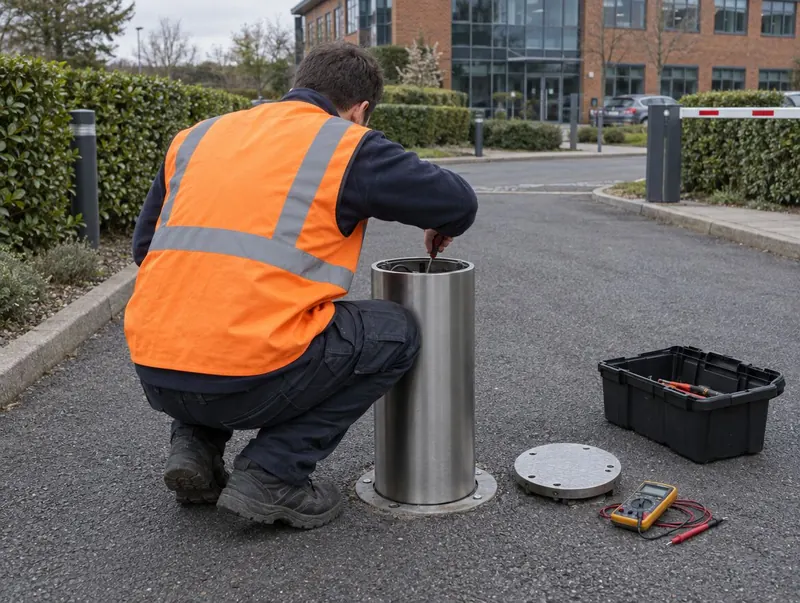
Automatic bollard servicing
Planned servicing visits and maintenance contracts for hydraulic and electro-mechanical rising bollards, priced in writing.
Learn more →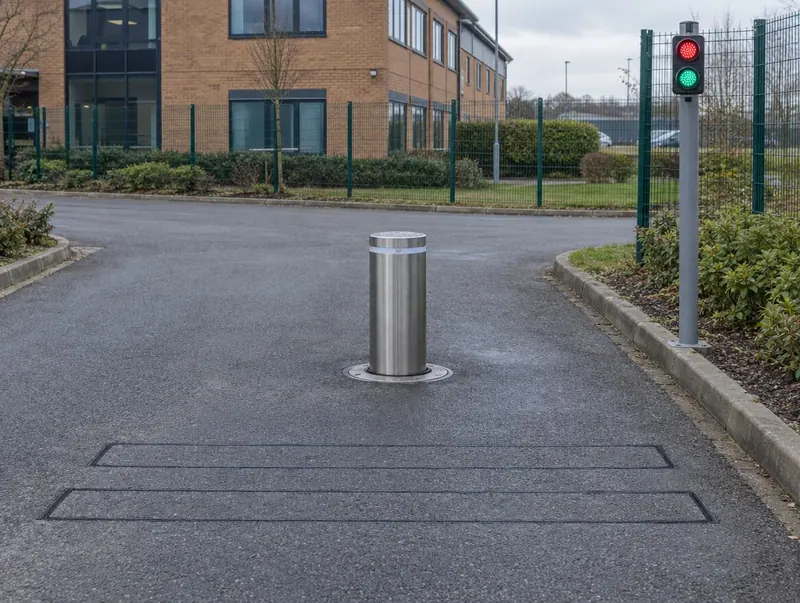
Automatic rising bollards
Hydraulic and electro-mechanical rising bollards installed with controls, safety loops, signals and power, for managed vehicle access.
Learn more →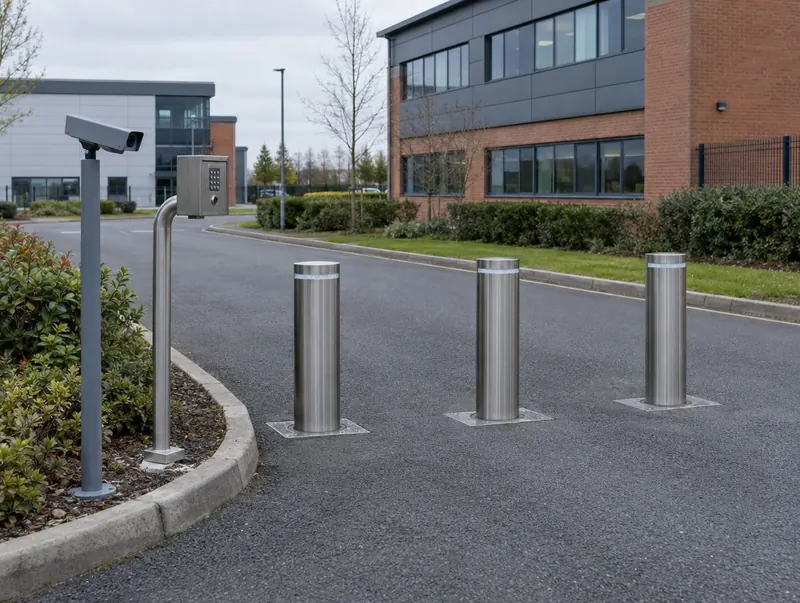
Bollard access control
ANPR, fob, keypad, intercom and remote control systems that decide who can lower an automatic bollard, and when.
Learn more →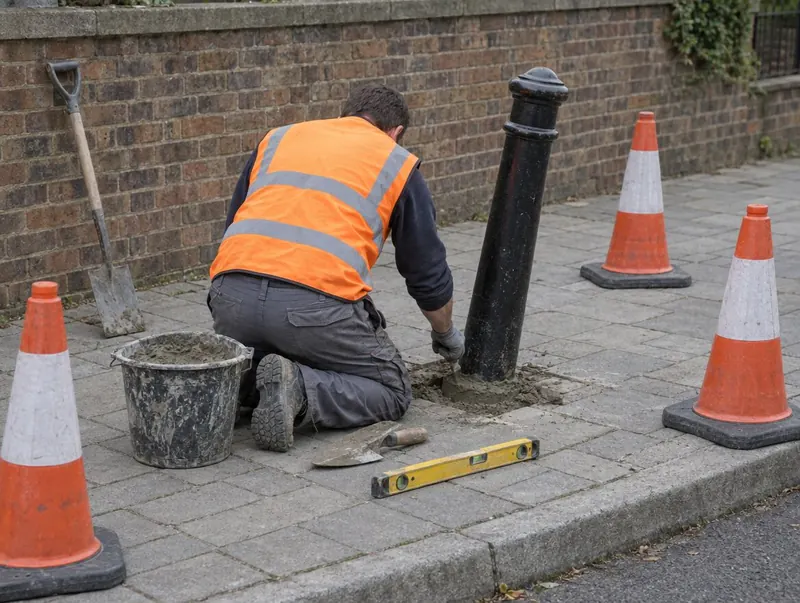
Bollard repairs
Paid repair visits for loose, leaning and damaged bollards: re-bedding, re-fixing, new sockets, locks, caps and reflective bands.
Learn more →Auto bollard repairs near you
Local pages show the highway authority, postcodes covered and regional prices.
- Bedfordshire
- Berkshire
- Bristol
- Buckinghamshire
- Cambridgeshire
- Cheshire
- Cornwall
- County Durham
- Cumbria
- Derbyshire
- Devon
- Dorset
- East Riding of Yorkshire
- East Sussex
- Essex
- Gloucestershire
- Greater Manchester
- Hampshire
- Herefordshire
- Hertfordshire
- Isle of Wight
- Kent
- Lancashire
- Leicestershire
- Lincolnshire
- London
- Merseyside
- Norfolk
- North Yorkshire
- Northamptonshire
- Northumberland
- Nottinghamshire
- Oxfordshire
- Rutland
- Shropshire
- Somerset
- South Yorkshire
- Staffordshire
- Suffolk
- Surrey
- Tyne and Wear
- Warwickshire
- West Midlands
- West Sussex
- West Yorkshire
- Wiltshire
- Worcestershire
- Blaenau Gwent
- Bridgend
- Caerphilly
- Cardiff
- Carmarthenshire
- Ceredigion
- Conwy
- Denbighshire
- Flintshire
- Gwynedd
- Isle of Anglesey
- Merthyr Tydfil
- Monmouthshire
- Neath Port Talbot
- Newport
- Pembrokeshire
- Powys
- Rhondda Cynon Taf
- Swansea
- Torfaen
- Vale of Glamorgan
- Wrexham
- Aberdeen City
- Aberdeenshire
- Angus
- Argyll and Bute
- City of Edinburgh
- Clackmannanshire
- Dumfries and Galloway
- Dundee City
- East Ayrshire
- East Dunbartonshire
- East Lothian
- East Renfrewshire
- Falkirk
- Fife
- Glasgow City
- Highland
- Inverclyde
- Midlothian
- Moray
- North Ayrshire
- North Lanarkshire
- Perth and Kinross
- Renfrewshire
- Scottish Borders
- South Ayrshire
- South Lanarkshire
- Stirling
- West Dunbartonshire
- West Lothian
- Antrim and Newtownabbey
- Ards and North Down
- Armagh City, Banbridge and Craigavon
- Belfast
- Causeway Coast and Glens
- Derry City and Strabane
- Fermanagh and Omagh
- Lisburn and Castlereagh
- Mid Ulster
- Mid and East Antrim
- Newry, Mourne and Down