Traffic & site protection
Lighting bollard installation
Low-level LED bollard lights for paths, car parks, entrances and gardens, installed with a qualified electrician.
- Typically £345–£1,195 per bollard + VAT (£405–£1,445 inc VAT for homes); minimum job £845
- Free survey and fixed written quote
- Foundations and reinstatement included
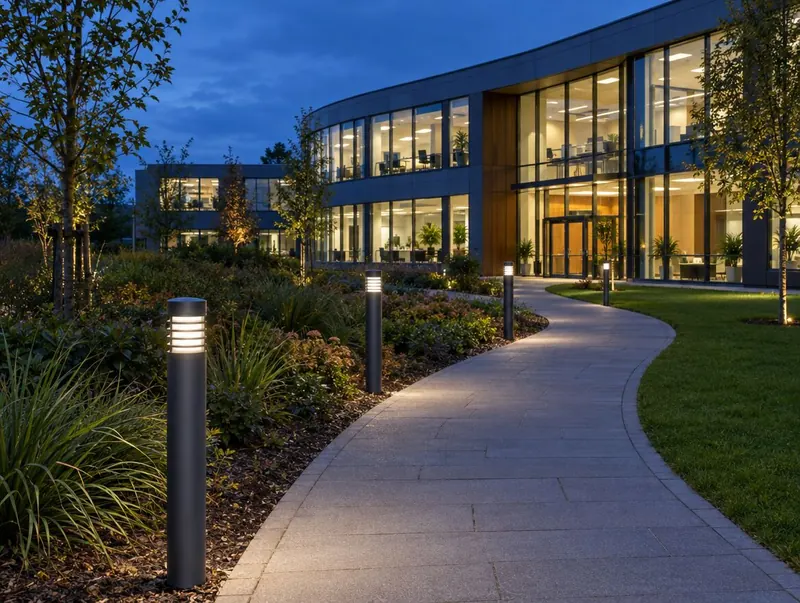 Computer-generated image
What is it?
What are lighting bollards?
A lighting bollard is a short post with a built-in light, usually LED, used to light paths, entrances, car parks and gardens at low level. It is fed by a buried electrical cable or, for some models, powered by a solar panel and battery. Outdoor lighting bollards need weatherproof and impact-resistant construction and must be connected and tested by a qualified electrician.
Lighting bollards light the ground where people walk without the glare and spill of tall columns. They mark the edge of a path, guide people to an entrance, light steps and changes in level and make car park walkways easier to use after dark. On housing developments, office campuses, hotels, schools and private gardens they double as visible markers by day.
A lighting bollard is an electrical installation as much as a post. It needs a properly designed circuit, cable buried at the right depth and protected, connections that stay dry and a test certificate at the end. Our installation crews, working under our management, set the bollards and dig the cable routes, and a qualified electrician carries out the electrical work and certifies it.
Where lighting bollards make sense
- Footpaths through housing developments and campuses
- Building entrances and approach routes
- Car park walkways and pedestrian crossings
- Steps, ramps and changes in level
- Hotel, restaurant and pub frontages
- Private gardens and long driveways
- Parks and areas where tall columns would be intrusive
How it works
The bollard body is usually aluminium, steel or stainless steel with an LED module behind a diffuser near the top. Light can spread all the way round, be directed to one side so it lights a path without shining into windows, or be louvred to keep light low. Output, beam pattern and colour temperature together decide how far apart bollards need to be and how the space feels; warmer white light is common in residential and amenity settings.
Two ratings matter outdoors. The IP rating shows protection against dust and water; ground-level fittings exposed to rain, splashing and hosing usually need at least IP65, and higher ratings for exposed or wet sites. The IK rating shows resistance to impact, which matters where bollards stand beside car parks or in public places; IK08 to IK10 is typical for robust products. Neither makes a lighting bollard a vehicle barrier.
Mains bollards are fed by armoured cable or cable in duct, run from a protected circuit, often controlled by a photocell, timer or sensor. Solar bollards avoid cabling but give less light and depend on sunshine, so they suit markers and low-use paths rather than lighting a route properly.
Options and finishes
| Option | Detail |
|---|---|
| Mains LED bollards | Wired from a dedicated circuit for reliable lighting of paths and car parks. Needs cable routes and electrical certification. |
| Solar bollards | Self-contained with panel and battery; no cabling. Suited to markers and low-use routes where lower output is acceptable. |
| Light distribution | 360-degree, asymmetric or louvred heads to light paths while limiting glare and light spill. |
| Colour temperature | Warm white for residential and amenity areas; warmer or amber options near sensitive wildlife habitats. |
| Body materials and finishes | Powder-coated aluminium or steel, or stainless steel, in colours to suit the building. |
| Controls | Photocells, timers, motion sensors and dimming to light only when and as much as needed. |
| Fixings | Anchor cages cast in concrete, base plates on existing slabs, or ground spikes for garden models. |
Typical specification
| Item | Typical |
|---|---|
| Height | Typically 500–1,000 mm |
| Light source | LED, integrated or replaceable module |
| Ingress protection | Usually IP65 or higher outdoors |
| Impact resistance | Commonly IK08–IK10 for public areas |
| Supply | Mains via armoured cable or ducted cable, or solar |
| Control | Photocell, timer, sensor or building controls |
| Electrical work | By a qualified electrician, tested and certified to BS 7671 |
Typical values only — the survey and the product's data sheet set the final specification.
How we install it
Survey and lighting layout
A free site survey looks at the routes to be lit, where power can come from, surfaces and buried services. Bollard spacing is set from the product's light data, and you receive a fixed written quote.
Dig cable routes
Trenches are dug between bollard positions and the supply point, avoiding existing services, with cable or duct laid at a suitable depth and warning tape above.
Set the bases
Anchor cages or foundations are cast at each position with the cable entry in the right place, set level so each bollard stands plumb.
Electrical connection
A qualified electrician installs the circuit protection, makes the connections in weatherproof enclosures and fits controls such as a photocell or timer.
Test, aim and certify
The circuit is tested and certified, bollards are checked at night for coverage and glare, and asymmetric heads are turned to face the path.
Reinstate
Trenches are backfilled and surfaces made good, whether paving, tarmac, gravel or turf.
Ground, foundations and buried services
Most of the work in a lighting bollard scheme is underground. Cable trenches run between every position and back to the supply, often crossing paths, drives and planting, so the routes are planned to minimise cuts through hard surfaces and to avoid existing gas, water and telecoms services. Cable is protected by armour or duct, buried deep enough to avoid garden tools and future paving works, and marked with warning tape. Bases are set in firm ground with the cable entry facing the right way, and on paved routes the bollards are positioned so cables can be pulled through ducts rather than requiring surfaces to be lifted again later.
Rules and checks before you order
- Have the electrical installation designed, installed, tested and certified by a qualified electrician to BS 7671.
- In homes, new outdoor circuits are often notifiable building work; a registered electrician can usually self-certify it.
- Choose IP and IK ratings that suit the location, and do not rely on lighting bollards as vehicle barriers.
- Limit glare and upward light, and check for any planning or ecology conditions on lighting near sensitive habitats.
- Where bollards light a public route, check the lighting levels the site owner or designer requires.
See rules and standards by nation for highway consent, accessibility and security standards.
Maintenance
LED lighting bollards need far less maintenance than older lamp types, but they are not maintenance-free. Clean diffusers so dirt and algae do not dim the light, check seals and fixings, and look for impact damage, especially in car parks. Photocells and timers need resetting when the clocks change unless they adjust automatically. A periodic electrical inspection checks that connections and protection are still sound. If a run of bollards trips the circuit after rain, water ingress at a connection is the usual cause and needs an electrician.
What affects the price
- Number of bollards and their specification
- Length of cable routes and surfaces to be cut
- Distance from the supply and circuit requirements
- Controls such as photocells, timers or sensors
- Mains or solar bollards
- Reinstatement of paving, tarmac or planting
Guide prices: lighting bollards
Three typical specifications. The middle one is the specification we usually recommend for durability and visibility.
Standard
per bollard + VAT · homes £405–£845 inc VAT
- Standard post or product for the type
- Foundation and fixing to manufacturer's details
- Surface reinstated to match
Upgraded
per bollard + VAT · homes £725–£1,145 inc VAT
- Upgraded finish (RAL colour, stainless or sleeve)
- Retroreflective band and matched keys
- Everything in Standard
Premium
per bollard + VAT · homes £1,045–£1,445 inc VAT
- Heavy-duty or architectural specification
- Premium finish and fittings
- Everything in Upgraded
Guide prices for the UK base region; local pages adjust for your area. Per bollard, installed with a qualified electrician (supply run extra). Minimum job £845 + VAT. Your fixed price comes in writing after survey.
Lighting bollards: questions answered
How much does lighting bollard installation cost?
Typically £345–£1,195 per bollard, installed with a qualified electrician (supply run extra), plus VAT. For homeowners that's £405–£1,445 including VAT. Small jobs carry a minimum charge of £845 plus VAT. Ground conditions, access, buried services and consents move the figure; the fixed price comes in writing after survey.
Do lighting bollards need an electrician to install?
Yes, mains lighting bollards must be connected by a qualified electrician, who tests and certifies the circuit. We arrange that as part of the job. Solar bollards avoid mains work but provide less light.
What IP rating do outdoor bollard lights need?
Usually at least IP65 for rain and splashing, and higher where water may collect or fittings are hosed down. Ask for the rating of the complete fitting, not just the LED module.
How far apart should lighting bollards be?
That depends on the light output, beam pattern and how evenly the path needs to be lit. Spacing is worked out from the product's light data rather than a fixed distance. Too far apart leaves dark patches between pools of light.
Are solar bollard lights worth it?
For marking edges and low-use paths, they can be, because there is no cabling to install. They give less light than mains bollards and perform poorly in shaded spots and short winter days. For lighting a route properly, mains bollards are more dependable.
Can bollard lights work on a timer or motion sensor?
Yes. Photocells switch them on at dusk, timers switch them off or dim them late at night and motion sensors bring them up when someone approaches. Combining controls saves energy and reduces light pollution.
Will lighting bollards survive in a car park?
Choose robust bodies with a high impact rating and place them where vehicles are unlikely to hit them, such as behind kerbs or alongside protective posts. A lighting bollard is not designed to stop a car.
Related bollard services
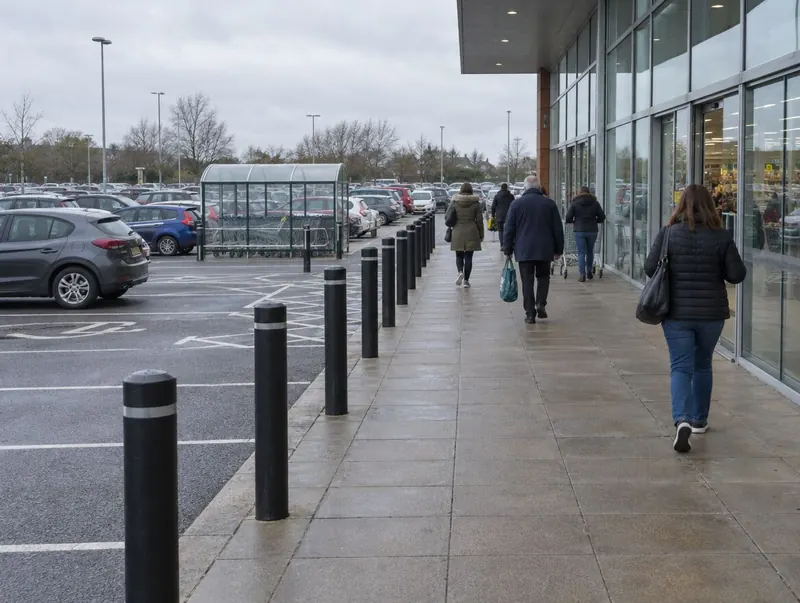
Pedestrian and shopfront protection bollards
Bollards that separate people from vehicles at car parks, forecourts, walkways, drive-thrus and shop entrances.
Learn more →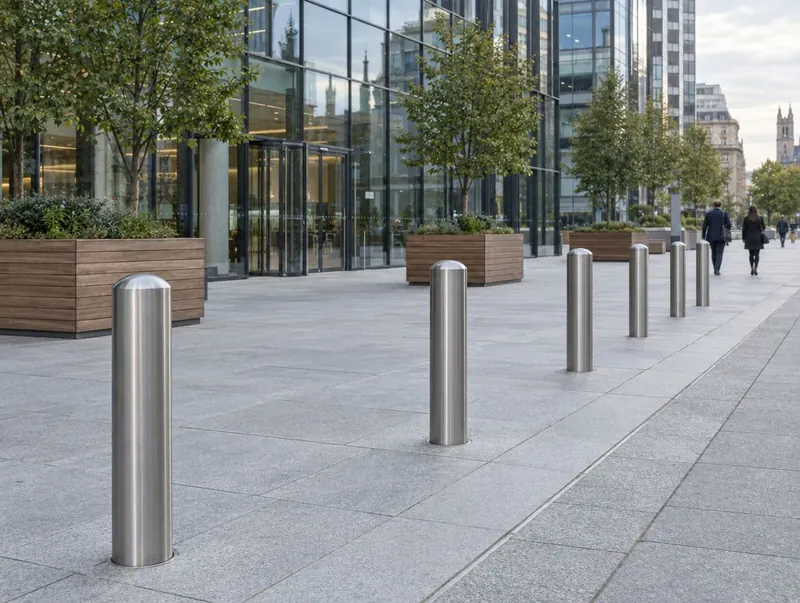
Stainless steel bollards and bollard covers
Stainless steel bollards and sleeve covers in 304 or 316 grade, for building entrances, plazas and upgrading tired steel posts.
Learn more →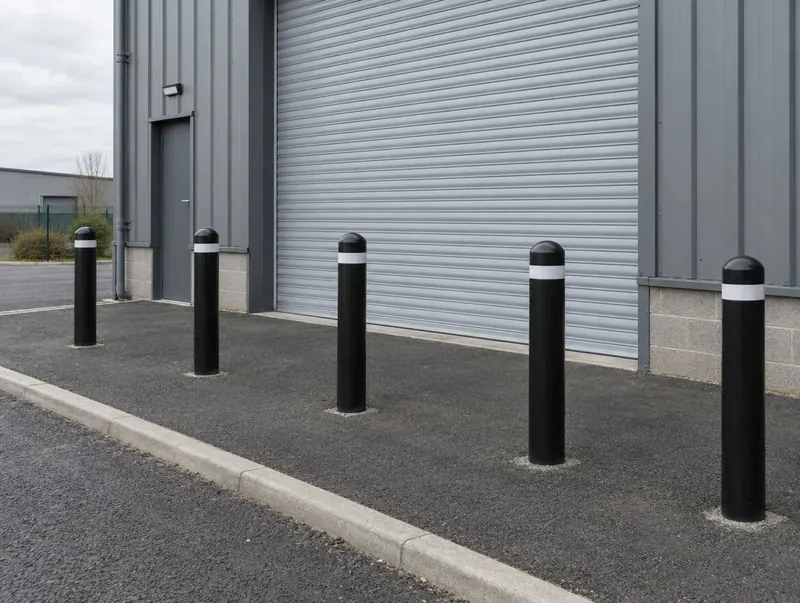
Steel security bollards (unrated)
Concrete-filled steel bollards, root-fixed or base-plated, for car parks, forecourts, boundaries and nuisance vehicle control.
Learn more →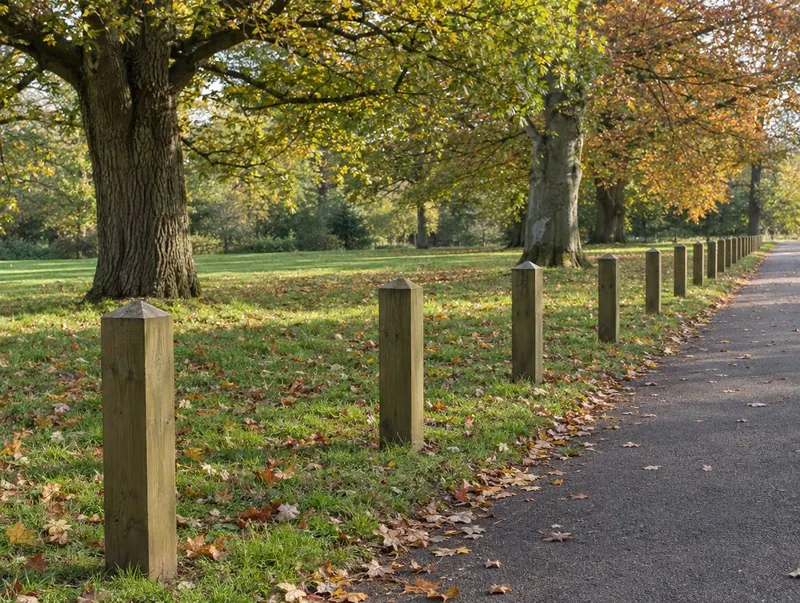
Timber bollards
Oak, hardwood and treated softwood bollards for parks, verges, rural sites, car parks and school frontages.
Learn more →Lighting bollards near you
Local pages show the highway authority, postcodes covered and regional prices.
- Bedfordshire
- Berkshire
- Bristol
- Buckinghamshire
- Cambridgeshire
- Cheshire
- Cornwall
- County Durham
- Cumbria
- Derbyshire
- Devon
- Dorset
- East Riding of Yorkshire
- East Sussex
- Essex
- Gloucestershire
- Greater Manchester
- Hampshire
- Herefordshire
- Hertfordshire
- Isle of Wight
- Kent
- Lancashire
- Leicestershire
- Lincolnshire
- London
- Merseyside
- Norfolk
- North Yorkshire
- Northamptonshire
- Northumberland
- Nottinghamshire
- Oxfordshire
- Rutland
- Shropshire
- Somerset
- South Yorkshire
- Staffordshire
- Suffolk
- Surrey
- Tyne and Wear
- Warwickshire
- West Midlands
- West Sussex
- West Yorkshire
- Wiltshire
- Worcestershire
- Blaenau Gwent
- Bridgend
- Caerphilly
- Cardiff
- Carmarthenshire
- Ceredigion
- Conwy
- Denbighshire
- Flintshire
- Gwynedd
- Isle of Anglesey
- Merthyr Tydfil
- Monmouthshire
- Neath Port Talbot
- Newport
- Pembrokeshire
- Powys
- Rhondda Cynon Taf
- Swansea
- Torfaen
- Vale of Glamorgan
- Wrexham
- Aberdeen City
- Aberdeenshire
- Angus
- Argyll and Bute
- City of Edinburgh
- Clackmannanshire
- Dumfries and Galloway
- Dundee City
- East Ayrshire
- East Dunbartonshire
- East Lothian
- East Renfrewshire
- Falkirk
- Fife
- Glasgow City
- Highland
- Inverclyde
- Midlothian
- Moray
- North Ayrshire
- North Lanarkshire
- Perth and Kinross
- Renfrewshire
- Scottish Borders
- South Ayrshire
- South Lanarkshire
- Stirling
- West Dunbartonshire
- West Lothian
- Antrim and Newtownabbey
- Ards and North Down
- Armagh City, Banbridge and Craigavon
- Belfast
- Causeway Coast and Glens
- Derry City and Strabane
- Fermanagh and Omagh
- Lisburn and Castlereagh
- Mid Ulster
- Mid and East Antrim
- Newry, Mourne and Down