England · 7 towns
Lighting bollard installation in Cambridgeshire
Lighting bollards for sites across Cambridgeshire: surveyed, quoted in writing and installed by our crews.
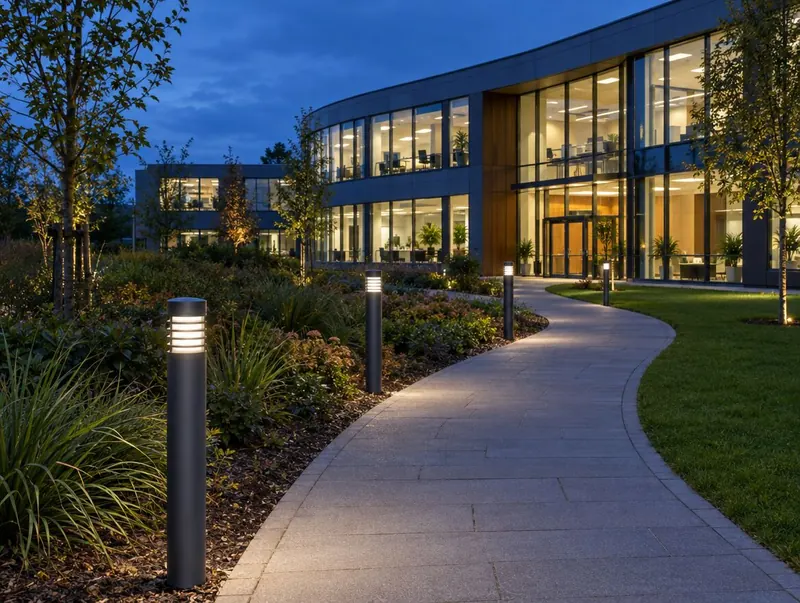 Computer-generated image
Lighting bollards in Cambridgeshire
Across Cambridgeshire, typical sites for lighting bollards include distribution parks, city-centre plazas and stadium approaches. Low-level LED bollard lights for paths, car parks, entrances and gardens, installed with a qualified electrician.
Highway authorities for local roads in Cambridgeshire: Cambridgeshire County Council and Peterborough City Council.
Choose your town in Cambridgeshire
Guide prices in Cambridgeshire
| Specification | Guide price | Includes |
|---|---|---|
| Standard | £355–£725 + VAT · £425–£865 inc VAT | Standard post, foundation, reinstatement |
| Upgraded | £615–£985 + VAT · £735–£1,195 inc VAT | Upgraded finish or fittings, reflective band, matched keys |
| Premium | £885–£1,245 + VAT · £1,045–£1,495 inc VAT | Heavy-duty or architectural spec, premium finish |
Per bollard, installed with a qualified electrician (supply run extra); +3% for East of England. Guide only — the fixed price follows a survey.
Local authorities across Cambridgeshire
| Town | Highway / roads authority | Planning authority |
|---|---|---|
| Peterborough | Peterborough City Council | Peterborough City Council |
| Cambridge | Cambridgeshire County Council | Cambridgeshire County Council |
| Wisbech | Cambridgeshire County Council | the council for Fenland |
| St Neots | Cambridgeshire County Council | the council for Huntingdonshire |
| Huntingdon | Cambridgeshire County Council | the council for Huntingdonshire |
| March | Cambridgeshire County Council | the council for Fenland |
| Ely | Cambridgeshire County Council | the council for East Cambridgeshire |
Rules for lighting bollards in England
Bollards on adopted highway are a matter for the highway authority under the Highways Act 1980, so they need its written agreement. On private land the owner's agreement is what matters; listed buildings and conservation areas need a word with the planning team first. Accessibility guidance asks for posts at least 1,000 mm high with contrasting tops and no chains between them.
Details and sources: bollard rules in England.
How installation works
Set the bases
Anchor cages or foundations are cast at each position with the cable entry in the right place, set level so each bollard stands plumb.
Electrical connection
A qualified electrician installs the circuit protection, makes the connections in weatherproof enclosures and fits controls such as a photocell or timer.
Test, aim and certify
The circuit is tested and certified, bollards are checked at night for coverage and glare, and asymmetric heads are turned to face the path.
Reinstate
Trenches are backfilled and surfaces made good, whether paving, tarmac, gravel or turf.
Lighting bollards in Cambridgeshire: FAQs
Do you cover all of Cambridgeshire for lighting bollards?
Yes — including Peterborough, Cambridge, Wisbech, St Neots, Huntingdon, March and Ely. Enter your postcode in the price calculator to confirm.
How much do lighting bollards cost in Cambridgeshire?
In Cambridgeshire, typically £355–£1,245 per bollard, installed with a qualified electrician (supply run extra), plus VAT (£425–£1,495 including VAT for homeowners), with a minimum job of £865 plus VAT, using our East of England guide prices. The fixed figure comes in writing after we've seen the site.
Who do I ask about bollards on public land in Cambridgeshire?
For local roads, Cambridgeshire County Council and Peterborough City Council; National Highways covers motorways and trunk roads. Bollards on adopted highway need the highway authority's written agreement.
What IP rating do outdoor bollard lights need?
Usually at least IP65 for rain and splashing, and higher where water may collect or fittings are hosed down. Ask for the rating of the complete fitting, not just the LED module.
Are solar bollard lights worth it?
For marking edges and low-use paths, they can be, because there is no cabling to install. They give less light than mains bollards and perform poorly in shaded spots and short winter days. For lighting a route properly, mains bollards are more dependable.