Traffic & site protection
Traffic and site protection bollards
Everyday protection for walkways, car parks, warehouses and public spaces, in steel, polyurethane, concrete, cast iron and timber, plus lighting bollards.
 Computer-generated image
Traffic & site protection: choose a type
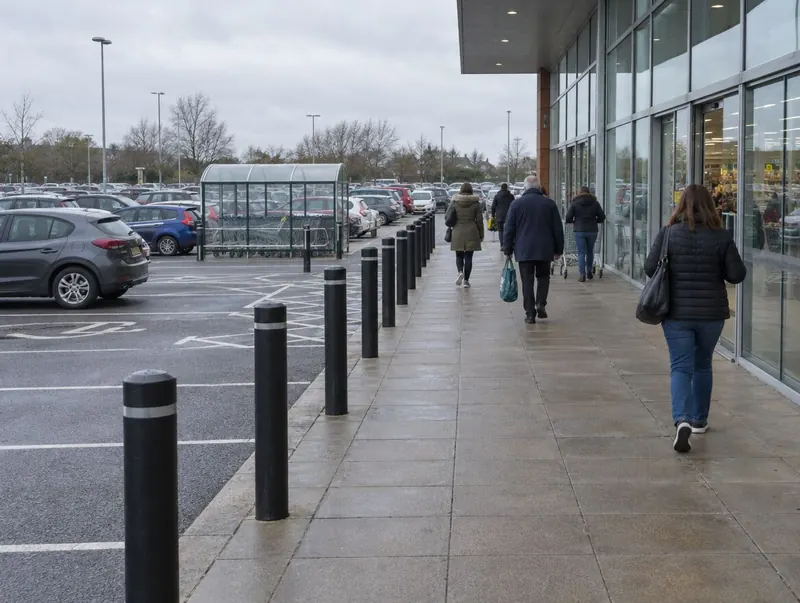
Pedestrian and shopfront protection bollards
Bollards that separate people from vehicles at car parks, forecourts, walkways, drive-thrus and shop entrances.
Learn more →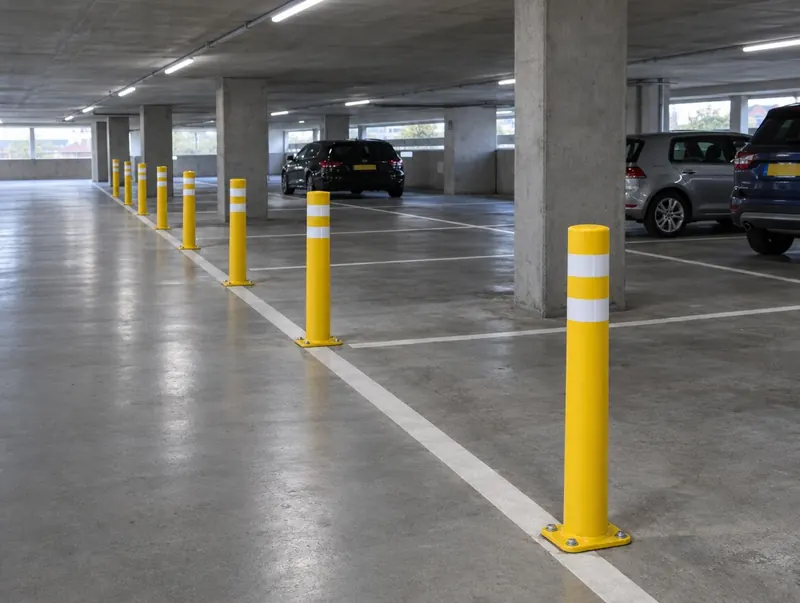
Flexible impact-recoverable bollards
Polyurethane and spring-based bollards that bend when hit and return upright, for car parks, depots and lane separation.
Learn more →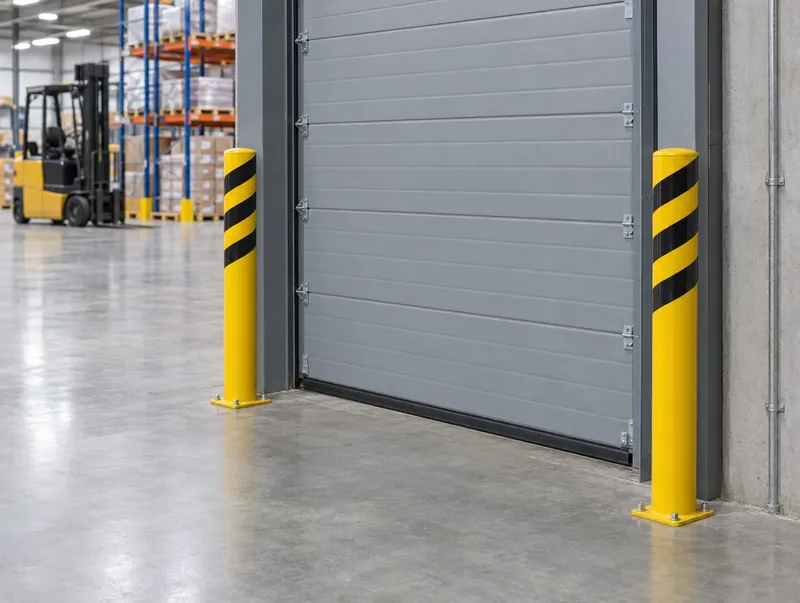
Warehouse and loading-bay impact bollards
Yellow steel and polymer impact bollards for forklift zones, loading bays, doors, columns and racking inside warehouses.
Learn more →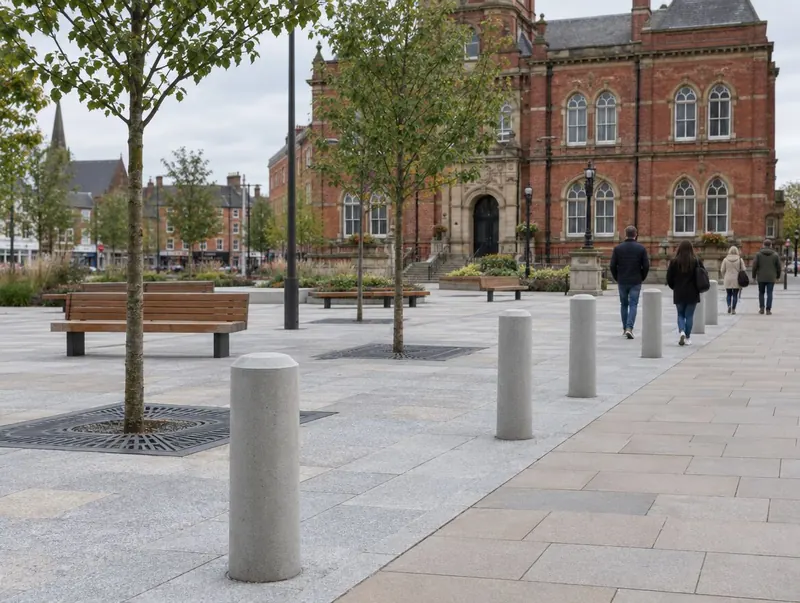
Concrete bollards
Precast concrete and reconstituted stone bollards for public realm, parks, boundaries and estates, dowelled or bedded in place.
Learn more →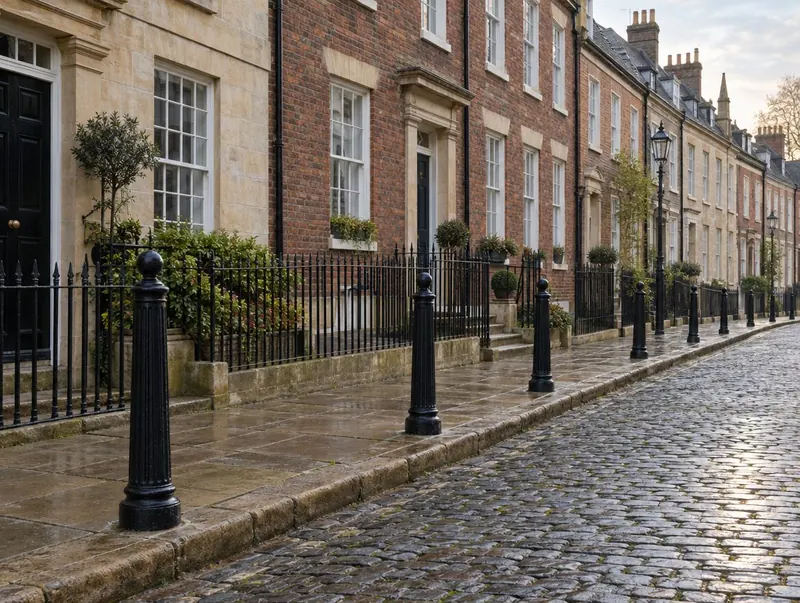
Cast iron and heritage bollards
Traditional cast and ductile iron bollards for conservation areas, period streets and historic estates, installed and reset.
Learn more →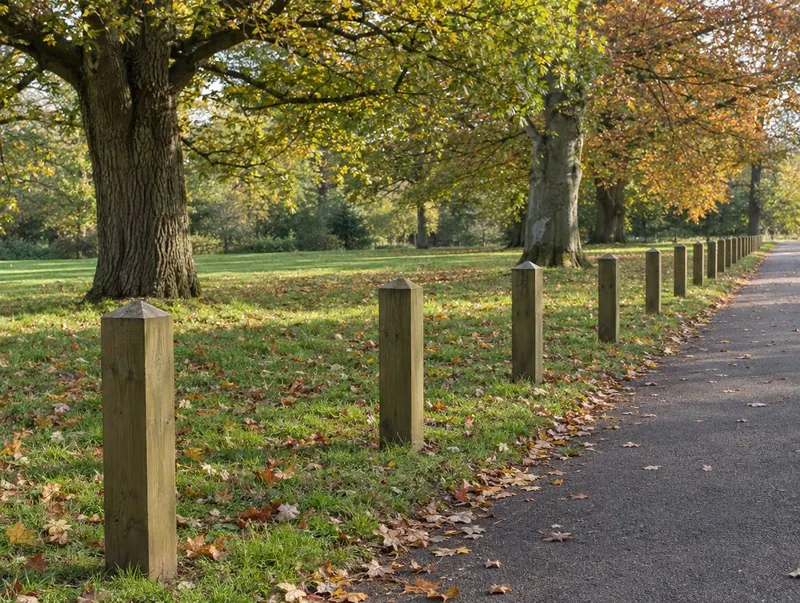
Timber bollards
Oak, hardwood and treated softwood bollards for parks, verges, rural sites, car parks and school frontages.
Learn more →
Lighting bollards
Low-level LED bollard lights for paths, car parks, entrances and gardens, installed with a qualified electrician.
Learn more →Compare at a glance
| Service | What it's for | Typical price |
|---|---|---|
| Pedestrian and shopfront protection bollards | Bollards that separate people from vehicles at car parks, forecourts, walkways, drive-thrus and shop entrances. | Typically £245–£1,195 per bollard + VAT; minimum job £595 |
| Flexible impact-recoverable bollards | Polyurethane and spring-based bollards that bend when hit and return upright, for car parks, depots and lane separation. | Typically £195–£595 per bollard + VAT; minimum job £445 |
| Warehouse and loading-bay impact bollards | Yellow steel and polymer impact bollards for forklift zones, loading bays, doors, columns and racking inside warehouses. | Typically £175–£1,195 per bollard + VAT; minimum job £445 |
| Concrete bollards | Precast concrete and reconstituted stone bollards for public realm, parks, boundaries and estates, dowelled or bedded in place. | Typically £175–£595 per bollard + VAT; minimum job £595 |
| Cast iron and heritage bollards | Traditional cast and ductile iron bollards for conservation areas, period streets and historic estates, installed and reset. | Typically £445–£1,695 per bollard + VAT (£525–£2,045 inc VAT for homes); minimum job £745 |
| Timber bollards | Oak, hardwood and treated softwood bollards for parks, verges, rural sites, car parks and school frontages. | Typically £95–£345 per post + VAT (£105–£405 inc VAT for homes); minimum job £445 |
| Lighting bollards | Low-level LED bollard lights for paths, car parks, entrances and gardens, installed with a qualified electrician. | Typically £345–£1,195 per bollard + VAT (£405–£1,445 inc VAT for homes); minimum job £845 |
Common questions
How far from the kerb should car park bollards go?
Far enough back that parked bumpers do not hit them, but not so far that they narrow the walkway. That distance depends on the bay length and kerb height. We set it on site with the layout in front of us.
Will a flexible bollard stop a car?
No. It is designed to bend and recover, so a car can push past it. It marks the line and discourages drivers from crossing it. Where a vehicle must be physically stopped, use a rigid bollard.
Should we choose steel or polymer warehouse bollards?
Steel suits lighter traffic and sound, thick slabs where cost matters most. Polymer suits busy forklift areas where repeated impacts would destroy anchors and floors. Polymer often costs more to buy but less to keep in service.