England · 8 towns
Automatic bollard servicing in Leicestershire
Bollard servicing across Leicestershire: visit price confirmed in writing, then a clear report and a fixed price for anything further.
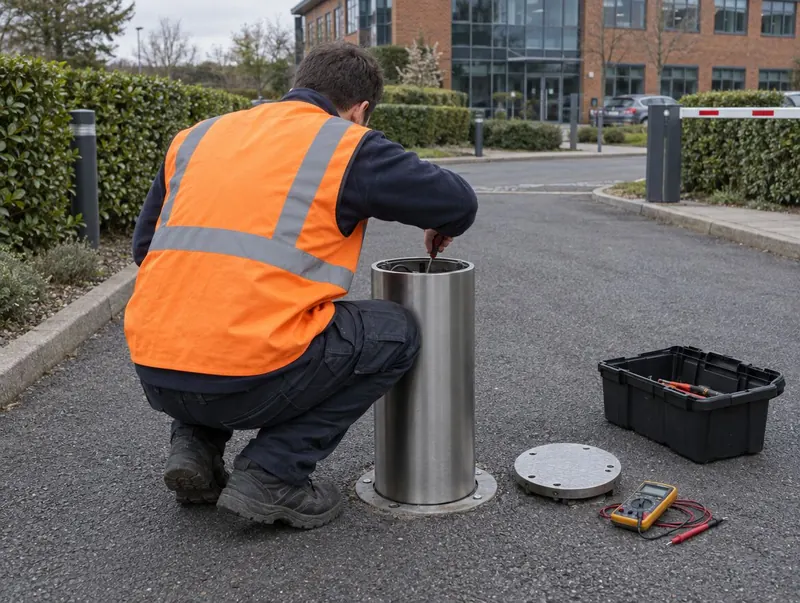 Computer-generated image
Bollard servicing in Leicestershire
We supply and install automatic bollard service visits across Leicestershire, with local pages for 8 towns below. Planned servicing visits and maintenance contracts for hydraulic and electro-mechanical rising bollards, priced in writing.
Highway authorities for local roads in Leicestershire: Leicester City Council and Leicestershire County Council.
Choose your town in Leicestershire
Guide prices in Leicestershire
| Specification | Guide price | Includes |
|---|---|---|
| Standard | £100–£195 + VAT | One bollard, planned service and safety checks |
| Upgraded | £165–£265 + VAT | Two bollards, full service and written report |
| Premium | £245–£335 + VAT | Larger or rated systems to manufacturer procedures |
Per planned service visit, first bollard; -2% for East Midlands. Guide only — the visit price is confirmed in writing first.
Who looks after the roads in Leicestershire
| Town | Highway / roads authority | Planning authority |
|---|---|---|
| Leicester | Leicester City Council | Leicester City Council |
| Loughborough | Leicestershire County Council | the council for Charnwood |
| Hinckley | Leicestershire County Council | the council for Hinckley and Bosworth |
| Coalville | Leicestershire County Council | the council for North West Leicestershire |
| Wigston | Leicestershire County Council | the council for Oadby and Wigston |
| Melton Mowbray | Leicestershire County Council | the council for Melton |
| Market Harborough | Leicestershire County Council | the council for Harborough |
| Oadby | Leicestershire County Council | the council for Oadby and Wigston |
Rules for automatic bollard service visits in England
Bollards on adopted highway are a matter for the highway authority under the Highways Act 1980, so they need its written agreement. On private land the owner's agreement is what matters; listed buildings and conservation areas need a word with the planning team first. Rising bollards should fail safe, never rise beneath a vehicle, carry clear signs and give the emergency services an override.
Details and sources: bollard rules in England.
How installation works
Agree the visit or contract
We price a one-off visit or a contract in writing, with the visit frequency suggested for your usage. Nothing is booked until you have agreed it.
Plan around the entrance
Visits are planned to keep the entrance usable, usually servicing one lane or bollard at a time, with cones and staff on hand while a bollard is out of service.
Service and test
The pit, drainage, drive, electrics, safety devices and access inputs are serviced and tested, and the controller log is read.
Report and recommend
You receive a written report of what was checked and found. Any repair needed is quoted separately in writing for your approval.
Bollard servicing in Leicestershire: FAQs
Do you cover all of Leicestershire for automatic bollard service visits?
Yes — including Leicester, Loughborough, Hinckley, Coalville, Wigston, Melton Mowbray, Market Harborough and Oadby. Enter your postcode in the price calculator to confirm.
How much do automatic bollard service visits cost in Leicestershire?
In Leicestershire, typically £100–£335 per planned service visit, first bollard, plus VAT, using our East Midlands guide prices. We confirm the visit price in writing before attending.
Who do I ask about bollards on public land in Leicestershire?
For local roads, Leicester City Council and Leicestershire County Council; National Highways covers motorways and trunk roads. Bollards on adopted highway need the highway authority's written agreement.
What happens if the service finds a fault?
It is recorded in the report and quoted separately in writing. You decide whether to go ahead. Small adjustments within the service scope are made during the visit.
How often should automatic bollards be serviced?
It depends on how often they cycle and the risk at the site. Commonly that means every three to six months, with busier or security entrances at the more frequent end. We suggest a frequency once we know your usage.