Sector
Bollards for car parks
Protecting pay machines, walkways, barriers and EV chargers, and controlling who can use a bay or entrance.
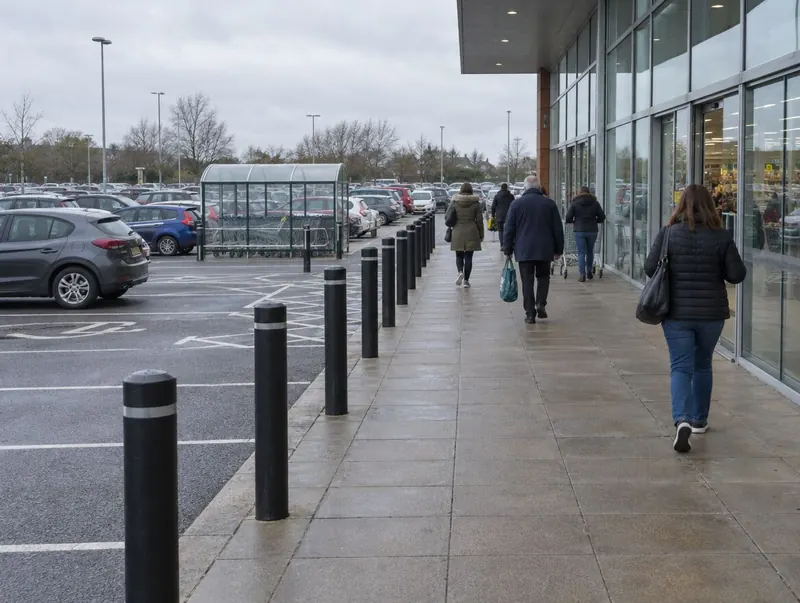 Computer-generated image
What car parks need from bollards
Car parks see frequent bollard impacts, almost all of them slow, low-angle knocks from reversing vehicles. The job is usually less about stopping a determined driver and more about keeping cars off walkways, away from pay stations, EV chargers and building corners, and out of bays they should not be using.
We look at traffic flow first: where vehicles turn, where people cross, where delivery vans stop, and which surfaces are tarmac over a thin sub-base rather than concrete. That decides between root-fixed steel, base-plated posts on a slab, flexible bollards that recover from a knock, and removable or fold-down posts for bays that sometimes need to open.
Typical requirements
- Walkway and pedestrian route protection
- Pay station, EV charger and column protection
- Reserved bays with fold-down or removable posts
- Entrance control with automatic or telescopic bollards
- Height-appropriate reflective bands for low light
- Replacing damaged posts quickly
Things to check
- Multi-storey decks: never core through a post-tensioned slab without the structural engineer's sign-off; base-plated or flexible posts with resin anchors are usual.
- Where posts must stop vehicles, keep clear gaps to no more than 1.2 m (wide enough for wheelchairs and buggies); on cycle routes, allow at least 1.5 m.
- Light levels drop sharply in covered car parks; bright reflective bands or yellow posts are worth the extra.
- If the car park is a public highway or council-run, the operator's specification may set the post type.
Car parks: questions
Which bollards survive car park knocks best?
Flexible polyurethane bollards and sprung posts recover from low-speed impacts, so they suit tight turns and columns. Where a post must actually stop a car, concrete-filled steel in a proper footing is the answer, but it will damage the vehicle and may itself need replacing after a hard hit.
Can bays be reserved without a barrier?
Yes. A fold-down parking post or a removable bollard in each bay is the usual answer — the holder unlocks it with a key. Telescopic posts suit entrances rather than single bays.
Do we need to close the car park?
Rarely. We work in sections behind barriers and cones, and core drilling and concrete curing are planned so most bays stay open.
Recommended for car parks
Pedestrian and shopfront protection bollards
Bollards that separate people from vehicles at car parks, forecourts, walkways, drive-thrus and shop entrances.
Learn more →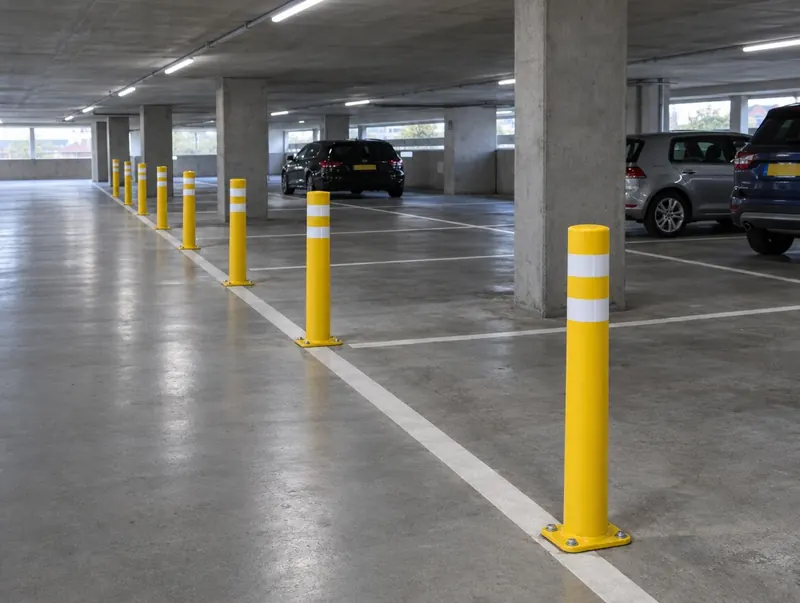
Flexible impact-recoverable bollards
Polyurethane and spring-based bollards that bend when hit and return upright, for car parks, depots and lane separation.
Learn more →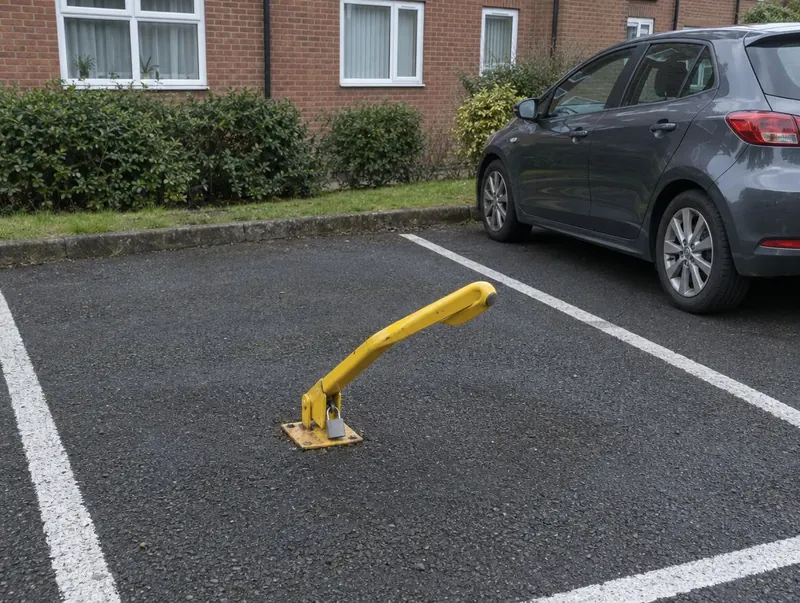
Fold-down parking posts
Hinged fold-down parking posts with padlock or integral key locks, bolted down to protect private and allocated bays.
Learn more →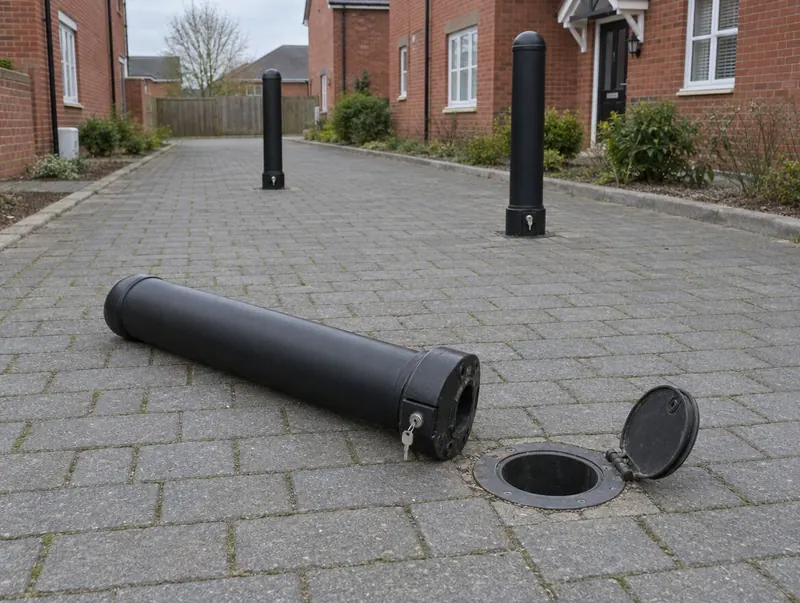
Removable bollards
Lift-out bollards in lockable ground sockets for driveways, delivery routes, access roads and emergency access points.
Learn more →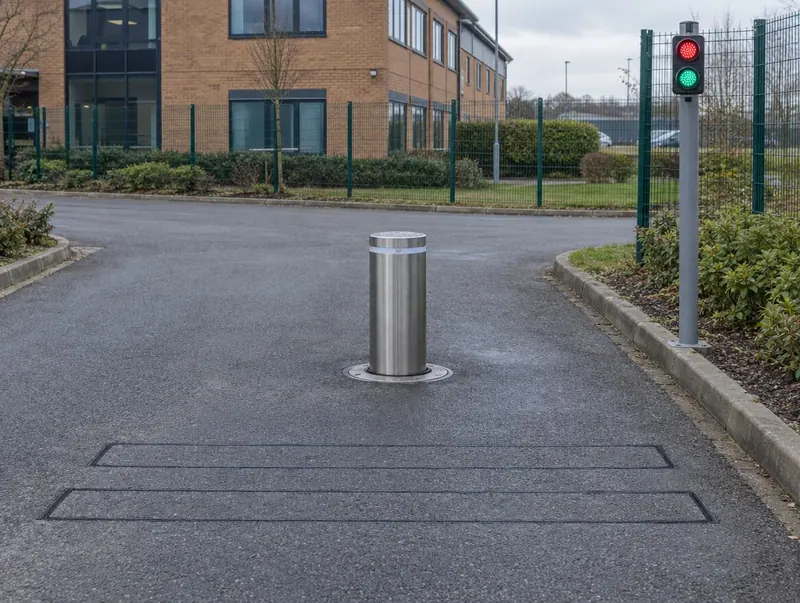
Automatic rising bollards
Hydraulic and electro-mechanical rising bollards installed with controls, safety loops, signals and power, for managed vehicle access.
Learn more →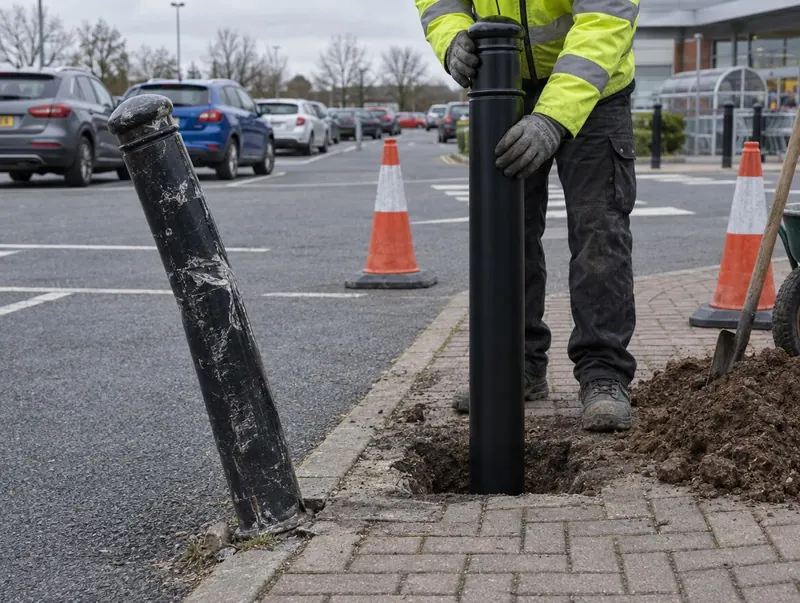
Bollard replacement
Like-for-like or upgraded replacement of bollards damaged by vehicles, corrosion or wear, matched to the existing line.
Learn more →