Highland · Scotland
Access control for automatic bollards in Fort William
Bollard access control systems for sites across Fort William and the rest of Highland, from the first measurement to the last relaid paving block.
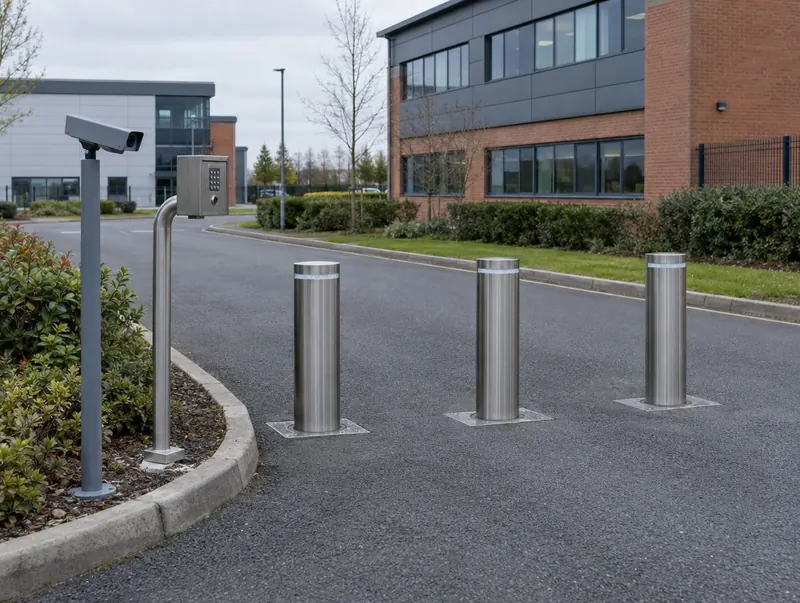 Computer-generated image
Bollard access control in Fort William
Bollard access control systems suit plenty of Fort William sites, town-centre squares, community car parks and high street shopfronts among them. ANPR, fob, keypad, intercom and remote control systems that decide who can lower an automatic bollard, and when.
We cover Fort William's PH33 postcode district, including places such as Caol, Inchree, Torlundy and Blarmachfoldach. Fort William is fairly self-contained, with no other large town within about 20 miles.
Key facts for this area
- Area
- Highland, Scotland
- Roads authority
- The Highland Council (local roads)
- Planning authority
- The Highland Council
- Postcodes
- PH33
- Guide price
- Typically £595–£11,995 per entrance + VAT
- Survey
- Free, with a fixed written quote
Typical bollard access control systems jobs in Fort William
Common uses in a place like Fort William:
- Sites needing a record of vehicle entries and exits
- Timed opening for deliveries or events
- Business parks and campuses with large numbers of staff vehicles
What bollard access control systems cost in Fort William
| Specification | Guide price | Includes |
|---|---|---|
| Standard | £595–£5,395 + VAT | Remote fobs or a standalone keypad |
| Upgraded | £3,995–£8,795 + VAT | GSM intercom with keypad on a post |
| Premium | £7,445–£11,995 + VAT | ANPR camera, software and integration |
Per entrance, controls supplied, installed and commissioned; no regional adjustment. Guide only — the fixed price follows a survey.
What we check first in Fort William
In Scotland the council is the roads authority for local roads, which in Fort William means The Highland Council. Bollards on an adopted footway need its consent; trunk roads sit with Transport Scotland.
Bollards on private land often need no planning application, but listed buildings and conservation areas are different; the planning service at The Highland Council can confirm before anything is ordered.
Access control adds duct runs, pedestals and loops to a bollard installation, and each means cutting into the surface. Ducts between the controller, readers and cameras usually cross footways and verges where services run, so routes are traced before digging and draw pits are placed where runs change direction.
- If you use ANPR or video, check your obligations for handling personal data, including signage, a privacy notice and how long records are kept.
- Keep access requests and safety devices separate, so an access device can never force a bollard to rise while a vehicle is over it.
How the job runs
Understand the users
At the free site survey we ask who uses the entrance, how many, how often they change, and how visitors and deliveries arrive. That decides the entry method, and a fixed written quote follows.
Plan positions
Readers, cameras and intercoms are placed so drivers stop well before the bollard, with queueing space off the public road where possible.
Programme and test
Users, plates, codes and schedules are entered, and every entry and exit route is tested with vehicles, including what happens when access is refused.
Finishes and options
| Option | Detail |
|---|---|
| ANPR cameras | Read number plates and compare them with an approved list. Suited to large user groups and hands-free entry; needs careful camera placement and lighting. |
| Fob, card and tag readers | Proximity readers on a pedestal at window height. Lost fobs can be deleted individually without changing anyone else's access. |
| GSM and video intercoms | Visitors call a person or phone, who opens remotely. Video models let the person answering see who is at the entrance. |
What affects the quote
Our Scotland guide prices are a starting point; the survey in Fort William firms them up. What tends to move them:
- Number of users and how they will be managed
- Entry method chosen and number of devices
- Duct lengths and surface reinstatement
After installation
If the bollard opens for people who should not have access, the user list is usually the cause rather than the hardware. Clean camera lenses and reader faces, check pedestal fixings and look for damage from vehicles.
If posts in Fort William are later hit or damaged, we can repair or replace them — see bollard repairs.
Common questions
Which parts of Fort William do you cover for bollard access control systems?
We cover all of Fort William (PH33) and the rest of Highland.
Do I need consent for bollards on a public footway in Fort William?
For anything on the public footway in Fort William we check with the roads authority first — The Highland Council for local roads, Transport Scotland on trunk routes. Private ground such as a car park or forecourt only needs the owner's go-ahead.
What's a typical price for bollard access control systems in Fort William?
In Fort William, typically £595–£11,995 per entrance, controls supplied, installed and commissioned, plus VAT, using our Scotland guide prices. The fixed figure comes in writing after we've seen the site.
Can the fire brigade open the bollards?
They should be able to, through an override agreed with them, such as a key switch, a code or a link to the fire alarm. We test the arrangement before handover. It should be reviewed if the site changes.
Is ANPR or fob access better for an automatic bollard?
ANPR suits sites with many regular users who should not have to stop or carry a fob. Fobs suit sites where users change vehicles or where you want each person to have their own credential. Many sites use ANPR for staff and an intercom for visitors.