England · 12 towns
Bollard removal in County Durham
Bollard removal for sites across County Durham: surveyed, quoted in writing and installed by our crews.
 Computer-generated image
Bollard removal in County Durham
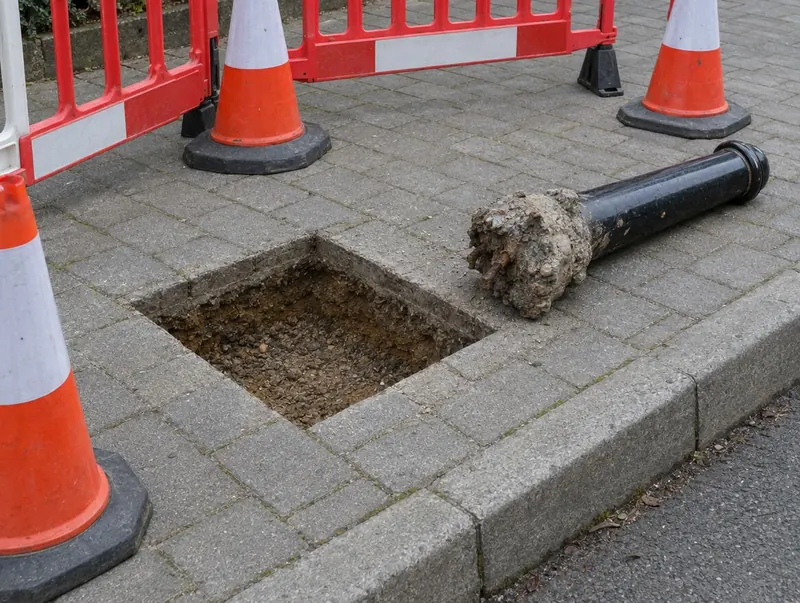
Removal of fixed, removable, telescopic and automatic bollards, including foundations, with the surface made good to match. We cover County Durham — Darlington, Hartlepool, Stockton-on-Tees, Durham and Chester-le-Street and more.
Highway authorities for local roads in County Durham: Darlington Council, Durham County Council, Hartlepool Council and Stockton-on-Tees Council.
Choose your town in County Durham
- Darlington
- Hartlepool
- Stockton-on-Tees
- Durham
- Chester-le-Street
- Billingham
- Stanley
- Consett
- Newton Aycliffe
- Bishop Auckland
- Seaham
- Peterlee
Guide prices in County Durham
| Specification | Guide price | Includes |
|---|---|---|
| Standard | £75–£185 + VAT · £90–£215 inc VAT | Post out, hole backfilled, simple surface |
| Upgraded | £145–£255 + VAT · £165–£305 inc VAT | Footing removed, tarmac or block paving reinstated |
| Premium | £225–£335 + VAT · £265–£395 inc VAT | Large footing, concrete or natural stone reinstated |
Per post removed with footing, surface made good; -4% for North East. Guide only — the fixed price follows a survey.
Highway and planning authorities in County Durham
| Town | Highway / roads authority | Planning authority |
|---|---|---|
| Darlington | Darlington Council | Darlington Council |
| Hartlepool | Hartlepool Council | Hartlepool Council |
| Stockton-on-Tees | Stockton-on-Tees Council | Stockton-on-Tees Council |
| Durham | Durham County Council | the council for County Durham |
| Chester-le-Street | Durham County Council | the council for County Durham |
| Billingham | Stockton-on-Tees Council | Stockton-on-Tees Council |
| Stanley | Durham County Council | the council for County Durham |
| Consett | Durham County Council | the council for County Durham |
| Newton Aycliffe | Durham County Council | the council for County Durham |
| Bishop Auckland | Durham County Council | the council for County Durham |
| Seaham | Durham County Council | the council for County Durham |
| Peterlee | Durham County Council | the council for County Durham |
Rules for bollard removal jobs in England
Bollards on adopted highway are a matter for the highway authority under the Highways Act 1980, so they need its written agreement. On private land the owner's agreement is what matters; listed buildings and conservation areas need a word with the planning team first.
Details and sources: bollard rules in England.
How installation works
Survey what is in the ground
The free site survey identifies bollard types, likely foundation sizes, any power or ducts, and what the area will be used for next. You receive a fixed written quote for the agreed level of removal.
Check consents and reasons
Before removal, check whether the bollards were required by a planning condition, a lease, a security plan or the highway authority, and whether they protect something such as a meter or a building corner.
Make supplies safe
For automatic and lighting bollards, a qualified electrician isolates and disconnects the supply, and hydraulic units are drained.
Backfill and reinstate
Holes are backfilled in compacted layers and the surface reinstated to match, so there is no settlement or trip edge.
Bollard removal in County Durham: FAQs
Do you cover all of County Durham for bollard removal jobs?
Yes — including Darlington, Hartlepool, Stockton-on-Tees, Durham, Chester-le-Street, Billingham, Stanley and Consett. Enter your postcode in the price calculator to confirm.
How much do bollard removal jobs cost in County Durham?
In County Durham, typically £75–£335 per post removed with footing, surface made good, plus VAT (£90–£395 including VAT for homeowners), with a minimum job of £275 plus VAT, using our North East guide prices. The fixed figure comes in writing after we've seen the site.
Who do I ask about bollards on public land in County Durham?
For local roads, Darlington Council, Durham County Council, Hartlepool Council and Stockton-on-Tees Council; National Highways covers motorways and trunk roads. Bollards on adopted highway need the highway authority's written agreement.
What happens to the waste?
Steel and iron are recycled where possible, concrete and spoil are taken away, and hydraulic fluid is disposed of properly. You are left with a clean, reinstated area.
Can automatic bollards be removed safely?
Yes, once the supply has been isolated and disconnected by a qualified electrician and any hydraulic fluid drained. The cassette is then lifted and the pit backfilled. Ducts are capped or removed.