Ceredigion · Wales
Cast iron and heritage bollards in Cardigan
Cast iron bollards for sites across Cardigan and the rest of Ceredigion, from the first measurement to the last relaid paving block.
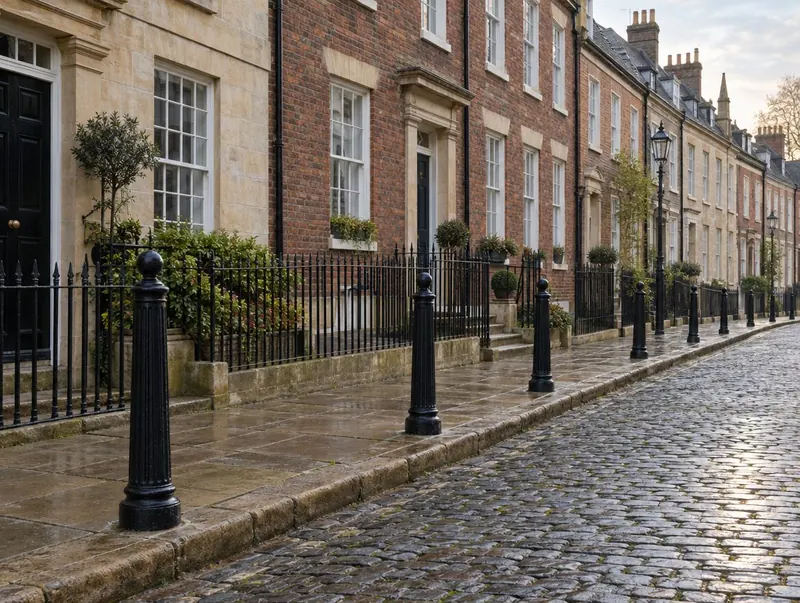 Computer-generated image
About cast iron bollards in Cardigan
Cast iron bollards suit plenty of Cardigan sites, filling-station forecourts, small industrial units and residential driveways among them. Traditional cast and ductile iron bollards for conservation areas, period streets and historic estates, installed and reset.
We work across SA43 — Cardigan itself and places including Aberporth, Cilgerran, Parcllyn and Blaenporth. Nearby, we also work in Carmarthen (21.9 miles), measured as the crow flies.
Cardigan at a glance
- Area
- Ceredigion, Wales
- Highway authority
- Ceredigion County Council (local roads)
- Planning authority
- Ceredigion County Council
- Postcodes
- SA43
- Guide price
- Typically £435–£1,645 per bollard + VAT (£515–£1,945 inc VAT for homes); minimum job £715
- Survey
- Free, with a fixed written quote
- Nearby
- Carmarthen (21.9 mi)
What Cardigan sites use cast iron bollards for
Common uses in a place like Cardigan:
- Streets and squares around listed buildings
- Period residential streets and mews
- Heritage-style covers over modern steel or tested cores
Cast iron bollard prices in Cardigan
| Specification | Guide price | Includes |
|---|---|---|
| Standard | £435–£945 + VAT · £515–£1,145 inc VAT | Standard post, foundation, reinstatement |
| Upgraded | £795–£1,295 + VAT · £945–£1,545 inc VAT | Upgraded finish or fittings, reflective band, matched keys |
| Premium | £1,145–£1,645 + VAT · £1,345–£1,945 inc VAT | Heavy-duty or architectural spec, premium finish |
Per bollard, supplied and installed; -3% for Wales. Guide only — the fixed price follows a survey.
Consents, ground and services in Cardigan
In Cardigan the highway authority for local roads is Ceredigion County Council. We confirm whether the ground is adopted highway before quoting, because cast iron bollards on a public footway need its agreement first.
Many private-land installations in Cardigan need no planning application, but the rules don't clearly cover bollards, so listed buildings, conservation areas and prominent frontages are worth raising with the planning team at Ceredigion County Council before posts go in.
Reinstatement follows the original laying pattern and joint style, and on lime-bedded paving uses compatible materials so new work does not crack old stones around it. Historic streets were built in layers: modern services sit over older drains, coal holes and sometimes vaults, and the paving may be natural stone on a lime or sand bed rather than concrete.
- Check whether existing bollards are of historic interest or listed before removing them; repair and resetting may be expected.
- Agree contrasting paint details with the conservation officer so posts remain visible to partially sighted people, in line with Inclusive Mobility guidance.
From survey to handover
Record what is there
The free site survey records existing bollards, their pattern, spacing, height and condition, and the paving they sit in. You receive a fixed written quote covering new castings, resets and reinstatement.
Set the post
Each bollard is set plumb in concrete with its root, flange or core, at a height that matches its neighbours. Original posts being reset are cleaned and checked for cracks first.
Relay and finish
Stone is relaid in its original pattern with suitable mortar, and the bollard is painted or touched up after fixing.
Options to consider
| Option | Detail |
|---|---|
| Traditional patterns | Cannon, fluted Doric, ball-top, Victorian and Georgian styles, and crest panels for estates or boroughs. |
| Cast aluminium | Lighter and easier to handle, with traditional patterns, but less robust and not always accepted in sensitive settings. |
| Grey cast iron | Traditional material with crisp detail and good corrosion resistance. Brittle under heavy impact, so suited to low-risk positions. |
What moves the price in Cardigan
When we price cast iron bollards in Cardigan, these make the biggest difference:
- Lifting and relaying natural stone paving
- Pattern complexity and whether a special casting is needed
- Resetting or repairing original bollards
Keeping them working
Keep a record of patterns and suppliers so that future replacements match; some patterns are made in small runs and can take time to source. Cast iron lasts well if its paint is kept intact.
We can also service, repair or replace existing posts anywhere in Cardigan.
Common questions
Can you install cast iron bollards anywhere in Cardigan?
We cover all of Cardigan (SA43) and the rest of Ceredigion. We also work in Carmarthen.
Who gives permission for bollards on the pavement in Cardigan?
In Cardigan the highway authority for local roads is Ceredigion County Council. We confirm whether the ground is adopted highway before quoting, because cast iron bollards on a public footway need its agreement first.
How much do cast iron bollards cost in Cardigan?
In Cardigan, typically £435–£1,645 per bollard, supplied and installed, plus VAT (£515–£1,945 including VAT for homeowners), with a minimum job of £715 plus VAT, using our Wales guide prices. The fixed figure comes in writing after we've seen the site.
What colour should cast iron bollards be painted?
Black is the traditional choice in many places, sometimes with gold or white highlights on bands or crests. Some areas have their own historic colours. The conservation officer can confirm what suits the street.
Can an old cast iron bollard be repaired?
Usually, if it is tilted, loose or has damaged paint: it can be lifted, cleaned, reset on a new foundation and repainted. Cracked grey iron is harder to repair and may need specialist work or a matching replacement.