Lincolnshire · England
Crash-rated bollard installation in Skegness
Crash-rated bollards for sites across Skegness and the rest of Lincolnshire, from the first measurement to the last relaid paving block.
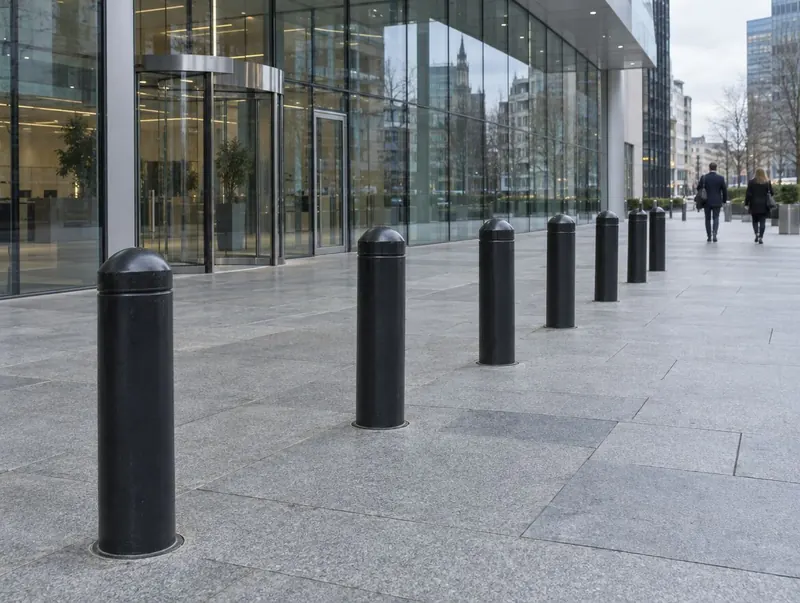 Computer-generated image
About crash-rated bollards in Skegness
Crash-rated bollards suit plenty of Skegness sites, town-centre squares, community car parks and filling-station forecourts among them. Installation of impact-tested HVM bollards rated to ISO 22343-1 (or the superseded, still-accepted PAS 68 / IWA 14-1) on the tested foundation.
We work across PE25 and PE24 — Skegness itself and places including Ingoldmells, Chapel St Leonards, Burgh le Marsh and Wainfleet All Saints. Jobs in Skegness can be combined with work in Boston (19 miles) (straight-line distances).
Skegness at a glance
- Area
- Lincolnshire, England
- Highway authority
- Lincolnshire County Council (local roads)
- Planning authority
- the council for East Lindsey
- Postcodes
- PE25 and PE24
- Guide price
- Typically £2,045–£10,295 per bollard + VAT; minimum job £4,095
- Survey
- Free, with a fixed written quote
- Nearby
- Boston (19 mi)
Crash-rated bollard prices in Skegness
| Specification | Guide price | Includes |
|---|---|---|
| Standard | £2,045–£5,495 + VAT | Rated for a 7.5 t vehicle at 30 mph (48 km/h), tested foundation |
| Upgraded | £4,545–£7,995 + VAT | Rated for 7.5 t at 40 mph (64 km/h), tested foundation |
| Premium | £6,995–£10,295 + VAT | Rated for 7.5 t at 50 mph (80 km/h), or a specialist foundation |
Per bollard, supplied and installed on a standard tested foundation; +3% for East of England. Guide only — the fixed price follows a survey.
What Skegness sites use crash-rated bollards for
Around Skegness, crash-rated bollards usually solve one of these:
- Stadiums, arenas and event venues with predictable crowd flows
- Data centres, utilities and critical infrastructure perimeters
- Transport interchanges, taxi ranks and drop-off zones
Before we dig in Skegness
In Skegness, work on adopted pavements and verges needs consent from Lincolnshire County Council, the local highway authority. Car parks, forecourts and other private land only need the owner's permission.
Many private-land installations in Skegness need no planning application, but the rules don't clearly cover bollards, so listed buildings, conservation areas and prominent frontages are worth raising with the planning team at the council for East Lindsey before posts go in.
Reinstatement matches paving, tactile surfaces and kerbs. Made ground, a high water table or soft clay may need an engineer to confirm the tested design suits the site; any change to depth, width or reinforcement must be agreed in writing by the manufacturer, or the rating may no longer apply.
- Confirm who owns the land: works on public highway usually need the highway authority's agreement, and permanent street furniture there may need a licence.
- Balance the gaps: narrow enough to stop a vehicle, typically no more than about 1,200 mm, but wide enough for wheelchair users and buggies — check against Inclusive Mobility guidance.
What happens on site
Set out and excavate
Positions are set out to the drawing and excavated to the tested depth and width, with shoring where the ground needs it. Spoil is removed as work progresses.
Cure, protect and reinstate
The posts are protected while the concrete gains strength, and the surface is reinstated to match. The line should not be treated as fully effective until the specified curing period has passed.
Hand over a build record
You receive photographs of the reinforcement and excavation before each pour, concrete delivery tickets, as-built positions and the manufacturer's product certification, ready for your adviser and insurers.
Specification choices
| Option | Detail |
|---|---|
| Finishes and visibility bands | Galvanised and powder-coated finishes in RAL colours, with contrasting or reflective bands near the top so the posts are visible to pedestrians and drivers. |
| Rated removable or automatic posts | Where an entrance must open for deliveries or emergency vehicles, rated removable, retractable or automatic models are available. Check that the rating stated is for the exact model and position you are buying. |
| Heights and diameters | Exposed heights are commonly around 800 to 1,000 mm, with core diameters varying by model and rating. Larger diameters are not always needed to achieve a given rating. |
What affects the quote
Our East of England guide prices are a starting point; the survey in Skegness firms them up. What tends to move them:
- Traffic management, restricted working hours or night work in occupied sites
- Number of posts and whether a linked beam system is needed
- Depth and volume of excavation, reinforcement and concrete
After installation
Static rated bollards need little routine work, but they should be inspected periodically and always after any impact. Look for cracked surfacing at the base, movement, damaged covers and faded bands.
For damaged or loose posts in Skegness, repairs and replacements are priced in writing first.
Questions about crash-rated bollards in Skegness
Which parts of Skegness do you cover for crash-rated bollards?
We cover all of Skegness (PE25 and PE24) and the rest of Lincolnshire. We also work in Boston.
Who gives permission for bollards on the pavement in Skegness?
In Skegness, work on adopted pavements and verges needs consent from Lincolnshire County Council, the local highway authority. Car parks, forecourts and other private land only need the owner's permission.
What's a typical price for crash-rated bollards in Skegness?
In Skegness, typically £2,045–£10,295 per bollard, supplied and installed on a standard tested foundation, plus VAT, with a minimum job of £4,095 plus VAT, using our East of England guide prices. The fixed figure comes in writing after we've seen the site.
When can we rely on the new bollards?
Only once the concrete has reached the strength set in the specification. The posts are physically in place as soon as the pour is finished, but the rated performance depends on the foundation, and full design strength is commonly taken at around 28 days. Your adviser may arrange temporary measures to cover the gap.
Will you design our HVM layout?
No. Scheme design and threat assessment belong with your security adviser, a specialist consultant or the manufacturer's technical team. We install the products they specify, to the tested foundation, and work alongside them on site so the build matches the design.