England · 10 towns
Pedestrian protection bollards in Lincolnshire
Pedestrian protection for sites across Lincolnshire: surveyed, quoted in writing and installed by our crews.
 Computer-generated image
Pedestrian protection in Lincolnshire
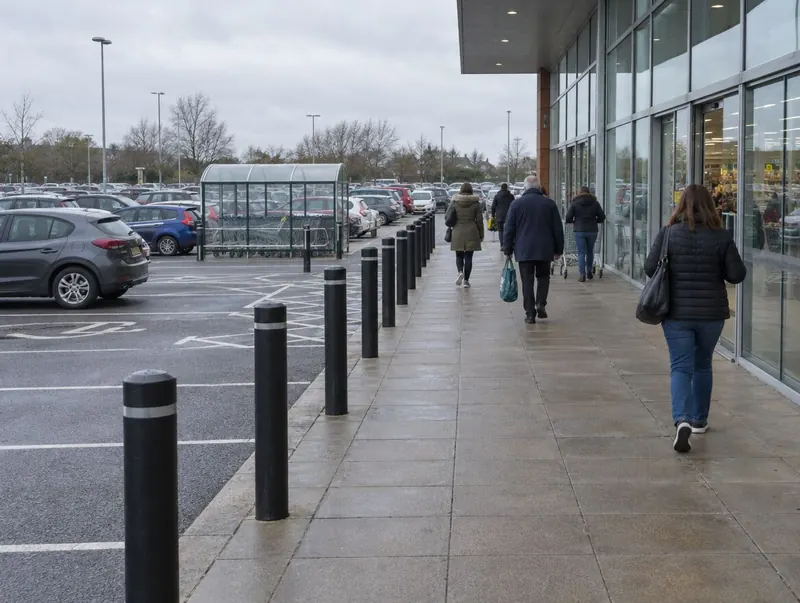
Across Lincolnshire, typical sites for pedestrian protection bollards include housing association car parks, supermarket frontages and industrial estates. Bollards that separate people from vehicles at car parks, forecourts, walkways, drive-thrus and shop entrances.
Highway authorities for local roads in Lincolnshire: Lincolnshire County Council, North East Lincolnshire Council and North Lincolnshire Council.
Choose your town in Lincolnshire
Guide prices in Lincolnshire
| Specification | Guide price | Includes |
|---|---|---|
| Standard | £255–£665 + VAT | Standard post, foundation, reinstatement |
| Upgraded | £545–£955 + VAT | Upgraded finish or fittings, reflective band, matched keys |
| Premium | £835–£1,245 + VAT | Heavy-duty or architectural spec, premium finish |
Per bollard, supplied and installed; +3% for East of England. Guide only — the fixed price follows a survey.
Who looks after the roads in Lincolnshire
| Town | Highway / roads authority | Planning authority |
|---|---|---|
| Lincoln | Lincolnshire County Council | Lincolnshire County Council |
| Grimsby | North East Lincolnshire Council | North East Lincolnshire Council |
| Scunthorpe | North Lincolnshire Council | North Lincolnshire Council |
| Boston | Lincolnshire County Council | the council for Boston |
| Grantham | Lincolnshire County Council | the council for South Kesteven |
| Cleethorpes | North East Lincolnshire Council | North East Lincolnshire Council |
| Spalding | Lincolnshire County Council | the council for South Holland |
| Skegness | Lincolnshire County Council | the council for East Lindsey |
| Stamford | Lincolnshire County Council | the council for South Kesteven |
| Gainsborough | Lincolnshire County Council | the council for West Lindsey |
Rules for pedestrian protection bollards in England
Bollards on adopted highway are a matter for the highway authority under the Highways Act 1980, so they need its written agreement. On private land the owner's agreement is what matters; listed buildings and conservation areas need a word with the planning team first. Accessibility guidance asks for posts at least 1,000 mm high with contrasting tops and no chains between them.
Details and sources: bollard rules in England.
How installation works
Watch how the site works
The free site survey looks at where cars park, where people walk and queue, and where incidents or near misses have happened. You receive a fixed written quote with positions marked.
Reinstate
Paving, tarmac or concrete is made good flush around each post, with tactile paving reinstated where it was disturbed.
Add bands and markings
Reflective bands are fitted and any wheel stops or line markings agreed in the scheme are installed.
Agree a plan for live trading
Work is phased so entrances and walkways stay open, with each section fenced while it is dug and set. Busy sites often prefer early starts or quieter weekdays.
Pedestrian protection in Lincolnshire: FAQs
Do you cover all of Lincolnshire for pedestrian protection bollards?
Yes — including Lincoln, Grimsby, Scunthorpe, Boston, Grantham, Cleethorpes, Spalding and Skegness. Enter your postcode in the price calculator to confirm.
How much do pedestrian protection bollards cost in Lincolnshire?
In Lincolnshire, typically £255–£1,245 per bollard, supplied and installed, plus VAT, with a minimum job of £605 plus VAT, using our East of England guide prices. The fixed figure comes in writing after we've seen the site.
Who do I ask about bollards on public land in Lincolnshire?
For local roads, Lincolnshire County Council, North East Lincolnshire Council and North Lincolnshire Council; National Highways covers motorways and trunk roads. Bollards on adopted highway need the highway authority's written agreement.
How far from the kerb should car park bollards go?
Far enough back that parked bumpers do not hit them, but not so far that they narrow the walkway. That distance depends on the bay length and kerb height. We set it on site with the layout in front of us.
Are wheel stops enough on their own?
Wheel stops help drivers judge where to stop but a car can mount them with a firm press on the accelerator. Used with bollards, they reduce daily knocks on the posts. On their own they are not a barrier.