Berkshire · England
Warehouse and loading-bay bollards in Reading
Warehouse impact bollards supplied and fitted in Reading, Berkshire: surveyed, scanned for services, set in proper foundations and finished to match the ground.
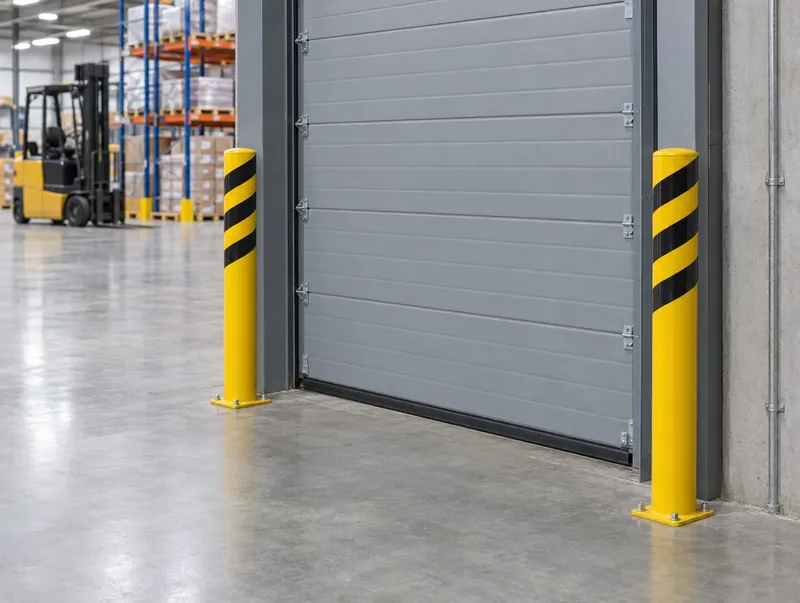 Computer-generated image
Warehouse bollards in Reading
In the town of Reading, warehouse impact bollards tend to go in at high streets, business parks and supermarket frontages. Yellow steel and polymer impact bollards for forklift zones, loading bays, doors, columns and racking inside warehouses.
We cover every part of Reading in the RG1, RG30, RG6, RG2, RG31 and RG4 postcode districts. Jobs in Reading can be combined with work in Wokingham (6.6 miles), Crowthorne (9.7 miles), Bracknell (9.9 miles) and Yateley (9.9 miles) (straight-line distances). Swindon is around 36 miles away.
Key facts for this area
- Area
- Berkshire, England
- Highway authority
- Reading Council (local roads)
- Planning authority
- Reading Council
- Postcodes
- RG1, RG30, RG6, RG2, RG31 and RG4
- Guide price
- Typically £185–£1,245 per bollard + VAT; minimum job £465
- Survey
- Free, with a fixed written quote
- Nearby
- Wokingham (6.6 mi), Crowthorne (9.7 mi), Bracknell (9.9 mi), Yateley (9.9 mi)
What warehouse impact bollards cost in Reading
| Specification | Guide price | Includes |
|---|---|---|
| Standard | £185–£635 + VAT | Standard post, foundation, reinstatement |
| Upgraded | £515–£965 + VAT | Upgraded finish or fittings, reflective band, matched keys |
| Premium | £835–£1,245 + VAT | Heavy-duty or architectural spec, premium finish |
Per bollard, supplied and fixed; +6% for South East. Guide only — the fixed price follows a survey.
Typical warehouse impact bollards jobs in Reading
Around Reading, warehouse impact bollards usually solve one of these:
- Pedestrian crossings and the ends of walkways
- Charging stations for forklifts and pallet trucks
- Racking ends and corners in busy aisles
What we check first in Reading
The highway authority for local roads in Reading is Reading Council; motorways and trunk roads sit with National Highways. Warehouse impact bollards on the adopted footway are a matter for the highway authority, so we only install there with its written agreement.
Many private-land installations in Reading need no planning application, but the rules don't clearly cover bollards, so listed buildings, conservation areas and prominent frontages are worth raising with the planning team at Reading Council before posts go in.
Where a slab is too thin or poor, the options include through-bolting, a larger base plate to spread load, a polymer bollard that reduces anchor forces, or breaking out and casting a new local foundation. External yard bollards can be root-fixed in concrete foundations, with the usual checks for buried drainage and cables.
- Use your workplace transport risk assessment to decide where protection is needed, in line with HSE guidance on workplace transport.
- Keep fire exits, escape routes and fire equipment accessible; bollards must not narrow escape routes below their required width.
What happens on site
Check the slab
Slab thickness, joints, cracks and any underfloor services or heating are checked, and anchors are chosen for the floor rather than taken from a standard list.
Drill and anchor
Holes are drilled, cleaned and anchors installed to the maker's instructions. Chemical anchors are left to cure before the bollard is loaded.
Fix, torque and mark
Bollards and guards are fixed and torqued, then any associated floor markings are applied so drivers can see protected zones.
Finishes and options
| Option | Detail |
|---|---|
| Column and rack end guards | Wrap-around or corner protectors for columns and racking uprights where a single post will not fit. |
| Diameters and heights | Commonly 114–273 mm diameter and around 600–1,200 mm high, chosen for vehicle type and mast or fork height. |
| Steel bollards | Yellow-coated steel tube on a base plate, often concrete-filled. Robust and economical, but they pass impact loads straight into the slab. |
What affects the quote
Our South East guide prices are a starting point; the survey in Reading firms them up. What tends to move them:
- Floor marking and associated signage
- Removal of damaged existing protection
- Number of positions and types of guard
Keeping them working
Repaint or recoat steel posts when the yellow is worn, because faded protection is easier to miss. Inspect warehouse bollards regularly as part of routine site checks, and after any reported impact.
For damaged or loose posts in Reading, repairs and replacements are priced in writing first.
Warehouse bollards in Reading: FAQs
Can you install warehouse impact bollards anywhere in Reading?
We cover all of Reading (RG1, RG30, RG6, RG2, RG31 and RG4) and the rest of Berkshire. We also work in Wokingham, Crowthorne and Bracknell.
Do I need consent for warehouse impact bollards on a public footway in Reading?
In Reading, work on adopted pavements and verges needs consent from Reading Council, the local highway authority. Car parks, forecourts and other private land only need the owner's permission.
What's a typical price for warehouse impact bollards in Reading?
In Reading, typically £185–£1,245 per bollard, supplied and fixed, plus VAT, with a minimum job of £465 plus VAT, using our South East guide prices. The fixed figure comes in writing after we've seen the site.
How close to a column should a bollard sit?
Close enough that a vehicle cannot reach the column around it, but with enough gap that the bollard does not hit the column when struck. Polymer bollards need more clearance than steel because they deflect. The gap is set from the product data.
Can bollards be fixed to a thin warehouse floor?
Sometimes, using larger base plates, through-bolts or polymer bollards that reduce anchor loads. If the slab is too thin or damaged, a new local foundation may be needed. We check the slab before recommending a fixing.
Warehouse bollards in nearby towns
- Wokingham (6.6 mi)
- Crowthorne (9.7 mi)
- Bracknell (9.9 mi)
- Yateley (9.9 mi)
- Sandhurst (11 mi)
- Maidenhead (11.7 mi)