Kent · England
Bollard removal in Dover
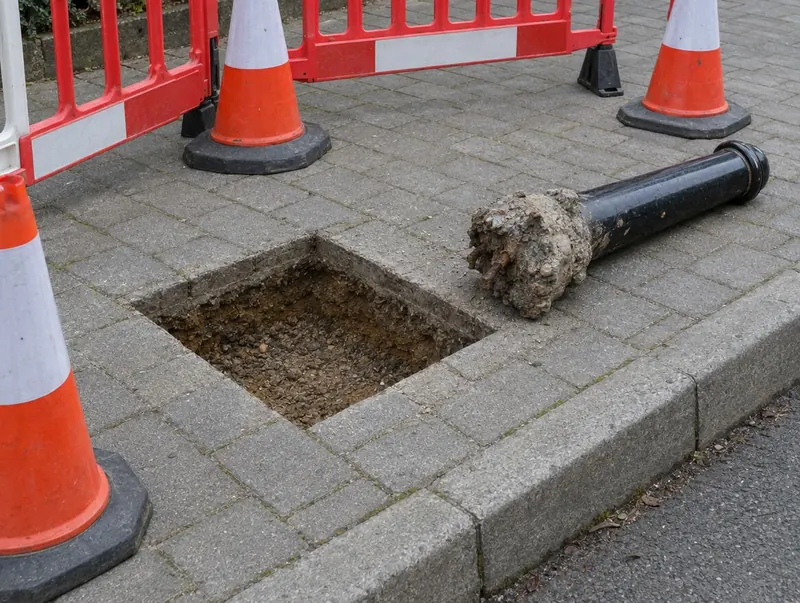
Bollard removal jobs for sites across Dover and the rest of Kent, from the first measurement to the last relaid paving block.
 Computer-generated image
About bollard removal jobs in Dover
We supply and fit bollard removal jobs throughout Dover, typically for sites such as community car parks, schools and filling-station forecourts. Automatic and lighting bollards also need their electrical supply made safe by a qualified electrician.
We cover Dover's CT17, CT16 and CT15 postcode districts, including places such as Whitfield, Church Whitfield, St Margaret's at Cliffe and Eythorne. We also cover neighbouring Folkestone (7 miles), Deal (7.8 miles), Canterbury (14.6 miles) and Ramsgate (15.2 miles) — distances are straight-line.
Local details
- Area
- Kent, England
- Highway authority
- Kent County Council (local roads)
- Planning authority
- the council for Dover
- Postcodes
- CT17, CT16 and CT15
- Guide price
- Typically £85–£365 per post + VAT (£95–£435 inc VAT for homes); minimum job £305
- Survey
- Free, with a fixed written quote
- Nearby
- Folkestone (7 mi), Deal (7.8 mi), Canterbury (14.6 mi), Ramsgate (15.2 mi)
Typical bollard removal jobs requests in Dover
Typical reasons for bollard removal jobs in Dover:
- Moving bollards to new positions on the same site
- Decommissioning automatic bollards that are no longer used
- Access routes no longer needing control
What bollard removal jobs cost in Dover
| Specification | Guide price | Includes |
|---|---|---|
| Standard | £85–£205 + VAT · £95–£245 inc VAT | Post out, hole backfilled, simple surface |
| Upgraded | £165–£285 + VAT · £195–£335 inc VAT | Footing removed, tarmac or block paving reinstated |
| Premium | £255–£365 + VAT · £305–£435 inc VAT | Large footing, concrete or natural stone reinstated |
Per post removed with footing, surface made good; +6% for South East. Guide only — the fixed price follows a survey.
Permissions and groundwork in Dover
In Dover, work on adopted pavements and verges needs consent from Kent County Council, the local highway authority. Car parks, forecourts and other private land only need the owner's permission.
Many private-land installations in Dover need no planning application, but the rules don't clearly cover bollards, so listed buildings, conservation areas and prominent frontages are worth raising with the planning team at the council for Dover before posts go in.
Cables and pipes are often laid close to existing posts after they were installed, so breaking out is done carefully and services are traced first. Older bollards may sit in large blocks of concrete, and rated bollards in very large reinforced bases, so full extraction can mean substantial breaking out and spoil removal.
- Have automatic and lighting bollard supplies isolated and made safe by a qualified electrician.
- Check whether the bollards were required by a planning condition, lease, security plan or the highway authority before removing them.
How the job runs
Survey what is in the ground
The free site survey identifies bollard types, likely foundation sizes, any power or ducts, and what the area will be used for next. You receive a fixed written quote for the agreed level of removal.
Check consents and reasons
Before removal, check whether the bollards were required by a planning condition, a lease, a security plan or the highway authority, and whether they protect something such as a meter or a building corner.
Make supplies safe
For automatic and lighting bollards, a qualified electrician isolates and disconnects the supply, and hydraulic units are drained.
Specification choices
| Option | Detail |
|---|---|
| Socket and cassette removal | Removable sockets and telescopic or semi-automatic cassettes extracted whole and the hole filled. |
| Relocation | Careful removal of reusable posts and reinstallation in new positions on the same site. |
| Lighting bollard removal | Supply made dead and cables terminated or removed by a qualified electrician before posts are lifted. |
Pricing bollard removal jobs in Dover
Our South East guide prices are a starting point; the survey in Dover firms them up. What tends to move them:
- Size of foundations and amount of spoil
- Access, working hours and waste disposal
- Electrical isolation and hydraulic drain-down
After installation
Keep any keys, manuals and records from removed automatic bollards until the controller and cabling have also been dealt with, as they help an electrician confirm what was connected. Where cables were terminated rather than removed, record where they are and confirm with the electrician that they are dead and labelled.
For damaged or loose posts in Dover, repairs and replacements are priced in writing first.
Bollard removal in Dover: FAQs
Which parts of Dover do you cover for bollard removal jobs?
We cover all of Dover (CT17, CT16 and CT15) and the rest of Kent. We also work in Folkestone, Deal and Canterbury.
Do I need consent for bollards on a public footway in Dover?
Kent County Council is the highway authority covering Dover's local roads. If any post would stand on adopted highway rather than your land, that consent is the first thing we sort out.
How much do bollard removal jobs cost in Dover?
In Dover, typically £85–£365 per post removed with footing, surface made good, plus VAT (£95–£435 including VAT for homeowners), with a minimum job of £305 plus VAT, using our South East guide prices. The fixed figure comes in writing after we've seen the site.
Will the surface look patched after removal?
On block paving it can be nearly invisible, as the blocks are relaid. Tarmac, resin and concrete usually show a patch, especially on older weathered surfaces. Timing removal before resurfacing avoids that.
What happens to the waste?
Steel and iron are recycled where possible, concrete and spoil are taken away, and hydraulic fluid is disposed of properly. You are left with a clean, reinstated area.
Bollard removal near Dover
- Folkestone (7 mi)
- Deal (7.8 mi)
- Canterbury (14.6 mi)
- Ramsgate (15.2 mi)
- Broadstairs (17 mi)
- Margate (17.9 mi)