Norfolk · England
Bollard removal in Great Yarmouth
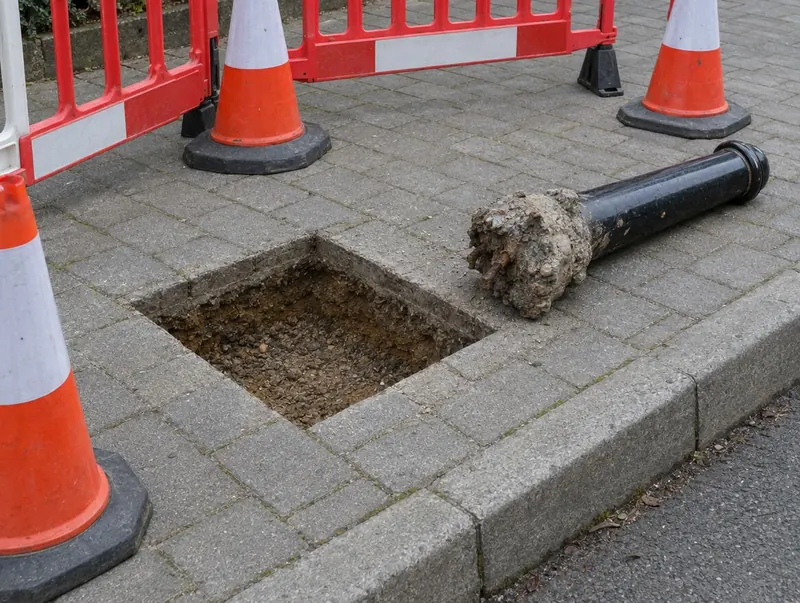
Bollard removal jobs supplied and fitted in Great Yarmouth, Norfolk: surveyed, scanned for services, set in proper foundations and finished to match the ground.
 Computer-generated image
Great Yarmouth bollard removal jobs
Removal of fixed, removable, telescopic and automatic bollards, including foundations, with the surface made good to match. In Great Yarmouth, that tends to mean sites such as filling-station forecourts, community car parks and schools.
Coverage in Great Yarmouth takes in the NR30, NR29 and NR31 postcode districts and nearby places like Caister-on-Sea, West Caister, Martham and Hemsby. Jobs in Great Yarmouth can be combined with work in Lowestoft (9.2 miles) and Norwich (18.2 miles) (straight-line distances).
Local details
- Area
- Norfolk, England
- Highway authority
- Norfolk County Council (local roads)
- Planning authority
- the council for Great Yarmouth
- Postcodes
- NR30, NR29 and NR31
- Guide price
- Typically £80–£355 per post + VAT (£95–£425 inc VAT for homes); minimum job £295
- Survey
- Free, with a fixed written quote
Bollard removal prices in Great Yarmouth
| Specification | Guide price | Includes |
|---|---|---|
| Standard | £80–£195 + VAT · £95–£225 inc VAT | Post out, hole backfilled, simple surface |
| Upgraded | £165–£275 + VAT · £195–£325 inc VAT | Footing removed, tarmac or block paving reinstated |
| Premium | £245–£355 + VAT · £285–£425 inc VAT | Large footing, concrete or natural stone reinstated |
Per post removed with footing, surface made good; +3% for East of England. Guide only — the fixed price follows a survey.
Why Great Yarmouth sites book bollard removal jobs
What bollard removal jobs usually sort out in Great Yarmouth:
- Taking out broken stubs and empty sockets
- Access routes no longer needing control
- Decommissioning automatic bollards that are no longer used
Consents, ground and services in Great Yarmouth
Norfolk County Council is the highway authority covering Great Yarmouth's local roads. If any post would stand on adopted highway rather than your land, that consent is the first thing we sort out.
Bollards on private land often don't need planning permission, but it depends on the council's view, the height and the location; in a conservation area, next to a listed building or under an Article 4 direction, ask the local planning authority (the council for Great Yarmouth) first — we flag this at survey.
Older bollards may sit in large blocks of concrete, and rated bollards in very large reinforced bases, so full extraction can mean substantial breaking out and spoil removal. Where the area is being resurfaced anyway, removal is timed to happen first so the patching disappears under the new surface.
- Collect and dispose of hydraulic fluid and waste properly rather than leaving it in the ground.
- Check whether the bollards were required by a planning condition, lease, security plan or the highway authority before removing them.
Installation, step by step
Check consents and reasons
Before removal, check whether the bollards were required by a planning condition, a lease, a security plan or the highway authority, and whether they protect something such as a meter or a building corner.
Make supplies safe
For automatic and lighting bollards, a qualified electrician isolates and disconnects the supply, and hydraulic units are drained.
Backfill and reinstate
Holes are backfilled in compacted layers and the surface reinstated to match, so there is no settlement or trip edge.
Specification choices
| Option | Detail |
|---|---|
| Relocation | Careful removal of reusable posts and reinstallation in new positions on the same site. |
| Automatic bollard decommissioning | Electrical isolation, hydraulic drain-down, cassette removal and capping of ducts. |
| Socket and cassette removal | Removable sockets and telescopic or semi-automatic cassettes extracted whole and the hole filled. |
Pricing bollard removal jobs in Great Yarmouth
Our East of England guide prices are a starting point; the survey in Great Yarmouth firms them up. What tends to move them:
- Access, working hours and waste disposal
- Size of foundations and amount of spoil
- Electrical isolation and hydraulic drain-down
Looking after them
If foundations were left in place, record their positions on site drawings so future contractors are not surprised by buried concrete. Where cables were terminated rather than removed, record where they are and confirm with the electrician that they are dead and labelled.
For damaged or loose posts in Great Yarmouth, repairs and replacements are priced in writing first.
Questions about bollard removal jobs in Great Yarmouth
Do you carry out bollard removal jobs in Great Yarmouth?
We cover all of Great Yarmouth (NR30, NR29 and NR31) and the rest of Norfolk. We also work in Lowestoft and Norwich.
Who gives permission for bollards on the pavement in Great Yarmouth?
The highway authority for local roads in Great Yarmouth is Norfolk County Council; motorways and trunk roads sit with National Highways. Bollards on the adopted footway are a matter for the highway authority, so we only install there with its written agreement.
How much do bollard removal jobs cost in Great Yarmouth?
In Great Yarmouth, typically £80–£355 per post removed with footing, surface made good, plus VAT (£95–£425 including VAT for homeowners), with a minimum job of £295 plus VAT, using our East of England guide prices. The fixed figure comes in writing after we've seen the site.
Should bollards be cut off or fully removed?
Cut off if the area is staying as it is and nothing will be built or dug there later. Fully remove if you are resurfacing, planting or installing something new, because buried concrete gets in the way. The quote can price both.
Can automatic bollards be removed safely?
Yes, once the supply has been isolated and disconnected by a qualified electrician and any hydraulic fluid drained. The cassette is then lifted and the pit backfilled. Ducts are capped or removed.