England · 12 towns
Cast iron and heritage bollards in Derbyshire
Cast iron bollards for sites across Derbyshire: surveyed, quoted in writing and installed by our crews.
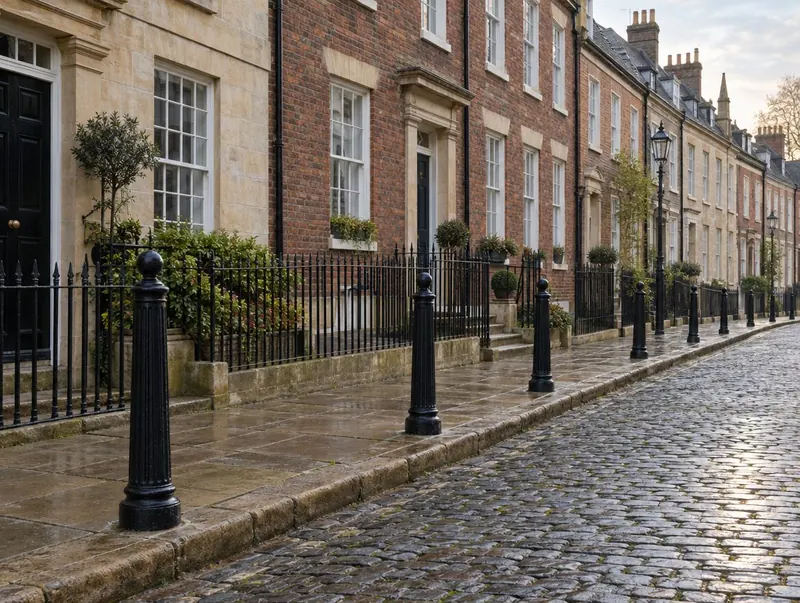 Computer-generated image
Cast iron bollards in Derbyshire
Traditional cast and ductile iron bollards for conservation areas, period streets and historic estates, installed and reset. We cover Derbyshire — Derby, Chesterfield, Long Eaton, Ilkeston and Swadlincote and more.
Highway authorities for local roads in Derbyshire: Derby City Council and Derbyshire County Council.
Choose your town in Derbyshire
Guide prices in Derbyshire
| Specification | Guide price | Includes |
|---|---|---|
| Standard | £435–£955 + VAT · £515–£1,145 inc VAT | Standard post, foundation, reinstatement |
| Upgraded | £805–£1,295 + VAT · £965–£1,545 inc VAT | Upgraded finish or fittings, reflective band, matched keys |
| Premium | £1,195–£1,645 + VAT · £1,445–£1,945 inc VAT | Heavy-duty or architectural spec, premium finish |
Per bollard, supplied and installed; -2% for East Midlands. Guide only — the fixed price follows a survey.
Who looks after the roads in Derbyshire
| Town | Highway / roads authority | Planning authority |
|---|---|---|
| Derby | Derby City Council | Derby City Council |
| Chesterfield | Derbyshire County Council | the council for Chesterfield |
| Long Eaton | Derbyshire County Council | the council for Erewash |
| Ilkeston | Derbyshire County Council | the council for Erewash |
| Swadlincote | Derbyshire County Council | the council for South Derbyshire |
| Staveley | Derbyshire County Council | the council for Chesterfield |
| Belper | Derbyshire County Council | the council for Amber Valley |
| Heanor | Derbyshire County Council | the council for Amber Valley |
| Alfreton | Derbyshire County Council | the council for Amber Valley |
| Dronfield | Derbyshire County Council | the council for North East Derbyshire |
| Ripley | Derbyshire County Council | the council for Amber Valley |
| Buxton | Derbyshire County Council | the council for High Peak |
Rules for cast iron bollards in England
Bollards on adopted highway are a matter for the highway authority under the Highways Act 1980, so they need its written agreement. On private land the owner's agreement is what matters; listed buildings and conservation areas need a word with the planning team first. Accessibility guidance asks for posts at least 1,000 mm high with contrasting tops and no chains between them.
Details and sources: bollard rules in England.
How installation works
Record what is there
The free site survey records existing bollards, their pattern, spacing, height and condition, and the paving they sit in. You receive a fixed written quote covering new castings, resets and reinstatement.
Lift paving carefully
Natural stone flags, setts and kerbs are lifted by hand, numbered where needed and stored for relaying.
Set the post
Each bollard is set plumb in concrete with its root, flange or core, at a height that matches its neighbours. Original posts being reset are cleaned and checked for cracks first.
Relay and finish
Stone is relaid in its original pattern with suitable mortar, and the bollard is painted or touched up after fixing.
Cast iron bollards in Derbyshire: FAQs
Do you cover all of Derbyshire for cast iron bollards?
Yes — including Derby, Chesterfield, Long Eaton, Ilkeston, Swadlincote, Staveley, Belper and Heanor. Enter your postcode in the price calculator to confirm.
How much do cast iron bollards cost in Derbyshire?
In Derbyshire, typically £435–£1,645 per bollard, supplied and installed, plus VAT (£515–£1,945 including VAT for homeowners), with a minimum job of £725 plus VAT, using our East Midlands guide prices. The fixed figure comes in writing after we've seen the site.
Who do I ask about bollards on public land in Derbyshire?
For local roads, Derby City Council and Derbyshire County Council; National Highways covers motorways and trunk roads. Bollards on adopted highway need the highway authority's written agreement.
Grey cast iron or ductile iron for new heritage bollards?
Ductile iron for any position that vehicles might strike, because it bends rather than shatters. Grey cast iron suits low-risk positions or matching existing grey iron posts exactly. Both take the same traditional patterns.
Do we need consent for bollards in a conservation area?
Possibly. Consent requirements depend on where the bollards go, who installs them and whether nearby buildings are listed. Ask the local planning authority or conservation officer before ordering.