Cumbria · England
Crash-rated bollard installation in Carlisle
Local installation of crash-rated bollards in Carlisle — free survey, fixed written price, and posts set to the right spacing for people and vehicles.
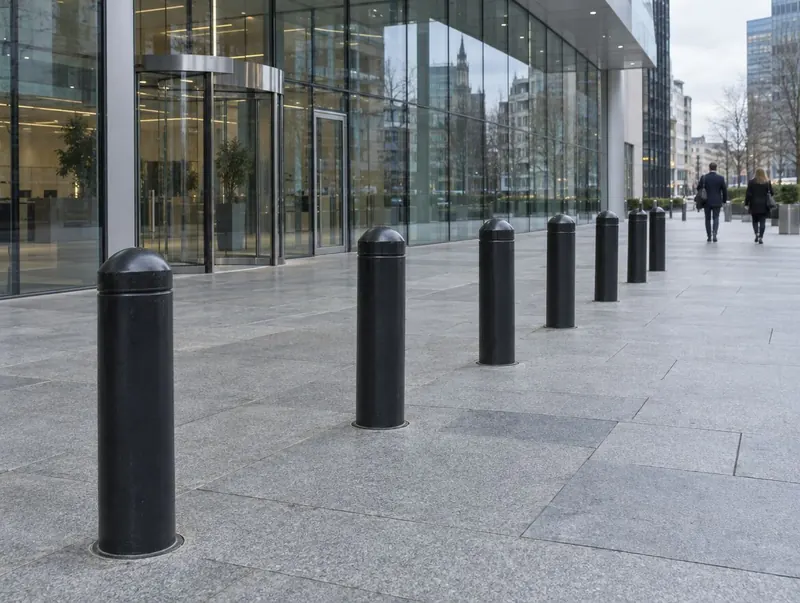 Computer-generated image
About crash-rated bollards in Carlisle
In the city of Carlisle, crash-rated bollards tend to go in at town-centre streets, retail parks and industrial estates. The rating only holds when the bollard is installed to the same foundation design that was tested.
We work across CA2, CA3, CA1, CA5 and CA4 — Carlisle itself and places including Durdar, Cummersdale, Whiteclosegate and Rickerby. Carlisle is fairly self-contained, with no other large town within about 20 miles.
Local details
- Area
- Cumbria, England
- Highway authority
- Cumberland Council (local roads)
- Planning authority
- Cumberland Council
- Postcodes
- CA2, CA3, CA1, CA5 and CA4
- Guide price
- Typically £1,945–£9,795 per bollard + VAT; minimum job £3,895
- Survey
- Free, with a fixed written quote
Typical crash-rated bollards jobs in Carlisle
Common uses in a place like Carlisle:
- Transport interchanges, taxi ranks and drop-off zones
- Pedestrianised streets, plazas and crowded public spaces
- Data centres, utilities and critical infrastructure perimeters
Carlisle: typical crash-rated bollard prices
| Specification | Guide price | Includes |
|---|---|---|
| Standard | £1,945–£5,245 + VAT | Rated for a 7.5 t vehicle at 30 mph (48 km/h), tested foundation |
| Upgraded | £4,295–£7,595 + VAT | Rated for 7.5 t at 40 mph (64 km/h), tested foundation |
| Premium | £6,645–£9,795 + VAT | Rated for 7.5 t at 50 mph (80 km/h), or a specialist foundation |
Per bollard, supplied and installed on a standard tested foundation; -2% for North West. Guide only — the fixed price follows a survey.
Consents, ground and services in Carlisle
In Carlisle, work on adopted pavements and verges needs consent from Cumberland Council, the local highway authority. Car parks, forecourts and other private land only need the owner's permission.
Many private-land installations in Carlisle need no planning application, but the rules don't clearly cover bollards, so listed buildings, conservation areas and prominent frontages are worth raising with the planning team at Cumberland Council before posts go in.
Rated foundations are large, and excavation is often where projects run into trouble. Utility records, radar scanning and hand-dug trial holes come before any machine work, and service diversions can take longer than the bollard installation itself.
- Check that the test certificate matches the exact model, configuration and foundation being installed, and keep it with the site records.
- Agree how emergency vehicles will get through, and refer to guidance on selecting and installing vehicle security barriers such as PAS 69 or ISO 22343-2.
What happens on site
Start from the specification
We work from the specification issued by your security adviser or the manufacturer: product, rating, positions and foundation drawing. If no specification exists yet, we can put you in touch with the manufacturer's technical team, but we do not set the threat level ourselves.
Fix reinforcement and set the posts
The reinforcement cage is built to the drawing and the bollards are held to line and level in templates. Concrete is poured to the specified grade, with samples taken for testing if the specification calls for them.
Hand over a build record
You receive photographs of the reinforcement and excavation before each pour, concrete delivery tickets, as-built positions and the manufacturer's product certification, ready for your adviser and insurers.
Specification choices
| Option | Detail |
|---|---|
| Decorative covers | Stainless steel, cast or polymer sleeves can be fitted over the steel core to suit a streetscape. Use covers supplied or approved by the manufacturer so the tested product is not altered. |
| Finishes and visibility bands | Galvanised and powder-coated finishes in RAL colours, with contrasting or reflective bands near the top so the posts are visible to pedestrians and drivers. |
| Rated removable or automatic posts | Where an entrance must open for deliveries or emergency vehicles, rated removable, retractable or automatic models are available. Check that the rating stated is for the exact model and position you are buying. |
What moves the price in Carlisle
Our North West guide prices are a starting point; the survey in Carlisle firms them up. What tends to move them:
- Depth and volume of excavation, reinforcement and concrete
- Traffic management, restricted working hours or night work in occupied sites
- The rating required and the product range that achieves it
Keeping them working
Movable rated bollards need a planned servicing schedule. A rated bollard that has stopped a vehicle has done its job and should be assessed with the manufacturer; in most cases the post, and sometimes the foundation insert, is replaced rather than straightened.
For damaged or loose posts in Carlisle, repairs and replacements are priced in writing first.
Common questions
Which parts of Carlisle do you cover for crash-rated bollards?
We cover all of Carlisle (CA2, CA3, CA1, CA5 and CA4) and the rest of Cumbria.
Who gives permission for bollards on the pavement in Carlisle?
In Carlisle, work on adopted pavements and verges needs consent from Cumberland Council, the local highway authority. Car parks, forecourts and other private land only need the owner's permission.
What's a typical price for crash-rated bollards in Carlisle?
In Carlisle, typically £1,945–£9,795 per bollard, supplied and installed on a standard tested foundation, plus VAT, with a minimum job of £3,895 plus VAT, using our North West guide prices. The fixed figure comes in writing after we've seen the site.
When can we rely on the new bollards?
Only once the concrete has reached the strength set in the specification. The posts are physically in place as soon as the pour is finished, but the rated performance depends on the foundation, and full design strength is commonly taken at around 28 days. Your adviser may arrange temporary measures to cover the gap.
Why can't the foundation be adjusted to suit our ground?
Because the rating belongs to the bollard and foundation as tested together. Making the hole shallower, narrower or lighter on steel changes how the system behaves on impact. If site conditions force a change, the manufacturer has to approve it in writing, and some changes mean choosing a different product such as a shallow-mount system.