Norfolk · England
Flexible bollard installation in Norwich
Local installation of flexible bollards in Norwich — free survey, fixed written price, and posts set to the right spacing for people and vehicles.
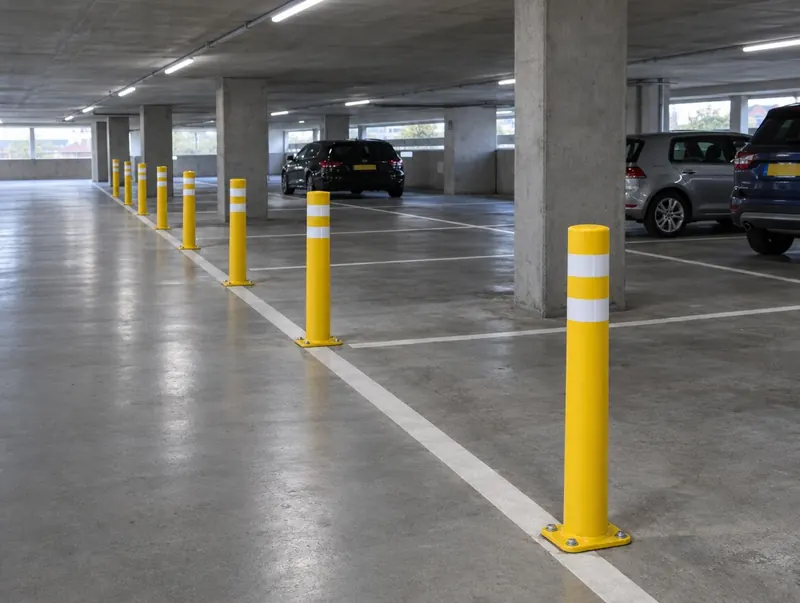 Computer-generated image
About flexible bollards in Norwich
Flexible bollards are traffic management products, not barriers, and will not stop a vehicle that is driven at them. In Norwich, that tends to mean sites such as college campuses, housing association car parks and leisure centres.
We cover Norwich's NR1, NR2, NR3, NR7, NR4 and NR6 postcode districts, including places such as Colney. Nearby, we also work in Great Yarmouth (18.2 miles) and Lowestoft (21.8 miles), measured as the crow flies.
Norwich at a glance
- Area
- Norfolk, England
- Highway authority
- Norfolk County Council (local roads)
- Planning authority
- the council for Norwich
- Postcodes
- NR1, NR2, NR3, NR7, NR4, NR6 and NR5
- Guide price
- Typically £205–£615 per bollard + VAT; minimum job £455
- Survey
- Free, with a fixed written quote
- Nearby
- Great Yarmouth (18.2 mi), Lowestoft (21.8 mi)
Flexible bollards in Norwich: common uses
Common uses in a place like Norwich:
- Lane separation at car park entrances and exits
- Depot and yard routes where vehicles knock posts daily
- Temporary or trial layouts before permanent kerbs
Norwich: typical flexible bollard prices
| Specification | Guide price | Includes |
|---|---|---|
| Standard | £205–£375 + VAT | Standard post, foundation, reinstatement |
| Upgraded | £325–£495 + VAT | Upgraded finish or fittings, reflective band, matched keys |
| Premium | £445–£615 + VAT | Heavy-duty or architectural spec, premium finish |
Per bollard, supplied and fixed; +3% for East of England. Guide only — the fixed price follows a survey.
Permissions and groundwork in Norwich
The highway authority for local roads in Norwich is Norfolk County Council; motorways and trunk roads sit with National Highways. Flexible bollards on the adopted footway are a matter for the highway authority, so we only install there with its written agreement.
Many private-land installations in Norwich need no planning application, but the rules don't clearly cover bollards, so listed buildings, conservation areas and prominent frontages are worth raising with the planning team at the council for Norwich before posts go in.
On tarmac, a small concrete pad or a socket base cast in concrete is the reliable option. Flexible bollards put repeated load on their fixings, because every knock rocks the base.
- Keep pedestrian gaps and routes clear, referring to Inclusive Mobility guidance where people walk through the line.
- Check drilling into car park decks or podium slabs with the building owner before fixing.
From survey to handover
Survey traffic movements
The free site survey looks at vehicle sizes, turning paths and where drivers currently clip posts or kerbs. You receive a fixed written quote with post type and fixing.
Set out the line
Posts are set out to guide vehicles along the intended path, with spacing that reads as a line to drivers.
Fix the bases
Holes are drilled and cleaned, resin anchors or bolts are set and the bases fixed and torqued once cured. Socket bases are set flush in concrete.
Choosing the right spec
| Option | Detail |
|---|---|
| Bolt-down or socket bases | Bolt-down for existing slabs; socket bases allow posts to be replaced without new fixings. |
| Sprung-base bollards | A rigid post on a heavy spring or elastomer base that tilts and returns. Looks like a conventional bollard. |
| Polyurethane posts | Flex along their length and return to shape. Gentle on vehicles and common in car parks and on forecourts. |
What affects the quote
Our East of England guide prices are a starting point; the survey in Norwich firms them up. What tends to move them:
- Deck scanning and restrictions on drilling
- Bolt-down or socket base
- Number of posts and length of line
Keeping them working
Clean reflective sleeves so they stay visible, and replace them when they fade or peel. After resurfacing or line repainting, check that the bases were not disturbed or painted over, and that posts still line up with the new markings.
If posts in Norwich are later hit or damaged, we can repair or replace them — see bollard repairs.
Flexible bollards in Norwich: FAQs
Which parts of Norwich do you cover for flexible bollards?
We cover all of Norwich (NR1, NR2, NR3, NR7, NR4 and NR6) and the rest of Norfolk. We also work in Great Yarmouth and Lowestoft.
Do I need consent for flexible bollards on a public footway in Norwich?
The highway authority for local roads in Norwich is Norfolk County Council; motorways and trunk roads sit with National Highways. Flexible bollards on the adopted footway are a matter for the highway authority, so we only install there with its written agreement.
How much do flexible bollards cost in Norwich?
In Norwich, typically £205–£615 per bollard, supplied and fixed, plus VAT, with a minimum job of £455 plus VAT, using our East of England guide prices. The fixed figure comes in writing after we've seen the site.
Do flexible bollards damage vehicles?
Typically very little in a low-speed knock, which is a large part of their appeal. They may leave a scuff on paintwork. A rigid post in the same position would usually dent the vehicle and bend itself.
Do flexible bollards work in cold weather?
They do, but polymers become stiffer in cold conditions and recover more slowly after a knock. Sprung-base designs are less affected. Neither type is damaged by normal UK winter temperatures.