Guide
Do bollards need planning permission?
When bollards on private land may be permitted development, why the rule isn't settled, and the checks for listed buildings and conservation areas.
 Computer-generated image
Often not, but it isn't guaranteed. In England, permitted development covers a gate, fence, wall or other means of enclosure up to 1 m high next to a road used by vehicles and 2 m elsewhere, but the rules don't say whether a bollard is a means of enclosure and councils take different views. Listed buildings, conservation areas and Article 4 areas need checking, and if in doubt you can ask the council or apply for a lawful development certificate.
What does permitted development allow in England?
Permitted development lets you put up a gate, fence, wall or other means of enclosure without a planning application, within limits. Class A of Part 2 of the General Permitted Development Order 2015 allows:
- up to 1 m high next to a highway used by vehicular traffic, or 2 m for schools, subject to visibility
- up to 2 m high elsewhere
- nothing within the curtilage of a listed building
Class A is not limited to houses, as the allowance for schools shows, so the same question arises for car parks and business premises.
Does a bollard count as a 'means of enclosure'?
The Order doesn't say, and that is the source of the uncertainty. A supplier reports a lawful development certificate appeal, reference APP/P1940/X/21/3287314, in which six retractable driveway bollards about 500 mm high were found not to be a means of enclosure, so they were not permitted development. We haven't been able to read the decision itself. The same supplier says some councils do accept bollards under Class A.
In practice, bollards on private land often don't need planning permission, but it depends on the council's view, the height and the location. What counts is your council's view of your particular layout, not a general rule.
Do listed buildings and conservation areas need permission?
Listed buildings always need checking, because Class A does not apply within the curtilage of a listed building. Talk to the council before ordering and choose a design that suits the building; cast iron heritage bollards are a common choice in period settings.
In conservation areas, supplier guidance says Class A rights still apply in England, but an Article 4 direction can remove them. An Article 4 direction is made by the council to withdraw some permitted development rights in an area, so work that would otherwise be allowed needs an application. Your council can tell you whether one covers your property.
What is a lawful development certificate, and should I get one?
It is a formal decision from the council confirming that proposed works are lawful without a planning application. If the council's view on bollards is unclear, or you want certainty before spending money, an application with a plan of positions, heights above ground and product drawings settles the question for that proposal. It was through this route that the appeal above reached a decision. For a single post on a private drive it is often more than you need, but for a row of posts on a front boundary, or at a property with any heritage status, it can be worth the time.
What are the rules in Wales, Scotland and Northern Ireland?
Each nation has its own permitted development order. In Scotland, West Lothian Council summarises the limits for gates, walls, fences and other enclosures as 1 m where fronting a road and 2 m elsewhere, with permission needed if the house is listed or in a conservation area. Wales has its own order (the 1995 Order as amended in Wales), and Northern Ireland has the Planning (General Permitted Development) Order (Northern Ireland) 2015. We haven't checked their enclosure limits in detail, so ask the local planning authority. The question of whether a bollard is an enclosure arises everywhere. See our rules pages for England, Wales, Scotland and Northern Ireland.
Do commercial and automatic bollards need planning permission?
The same test applies, but an automatic entrance brings other items with it. Control cabinets, camera posts, signs and signal heads are separate pieces of equipment, so ask the council about the whole entrance, not just the bollards. Planning is also separate from highway consent: a bollard on the pavement needs the highway authority's agreement whatever its planning status, as our guide to bollards on the pavement explains.
How do we handle planning on your job?
We flag it at the survey and give you what you need to ask the council. If the site looks like a listed building, a conservation area or a front boundary next to a road, we say so, and we can provide product data sheets, heights and a marked-up plan of positions for your enquiry or application. The decision rests with the council, and we don't give legal or planning advice. Installation goes ahead once you are satisfied on consent, on a fixed written quote after a free survey.
Prepared by the Bollard Installers team · Last reviewed 01 November 2026 · Prices and rules change; check the rules pages and your written quote.
Questions
Do driveway security posts need planning permission?
Often not for a single post on a private drive, but the reported appeal on retractable driveway bollards shows it isn't guaranteed. Check first if the property is listed, in a conservation area or covered by an Article 4 direction.
Does the height of the bollard matter?
It can. If your council treats bollards as a means of enclosure, the Class A limits apply in England: 1 m next to a road used by vehicles and 2 m elsewhere. Most bollards stand around 1 m above ground or lower.
Is planning permission the same as highway permission?
No. Planning controls development, while highway consent controls what goes on the pavement, verge or road. A bollard on the highway needs the highway authority's agreement even if no planning permission is needed.
What is an Article 4 direction?
A direction made by the council that removes certain permitted development rights in a defined area. Where one applies, works that would otherwise be permitted, such as some enclosures, need a planning application.
Related services
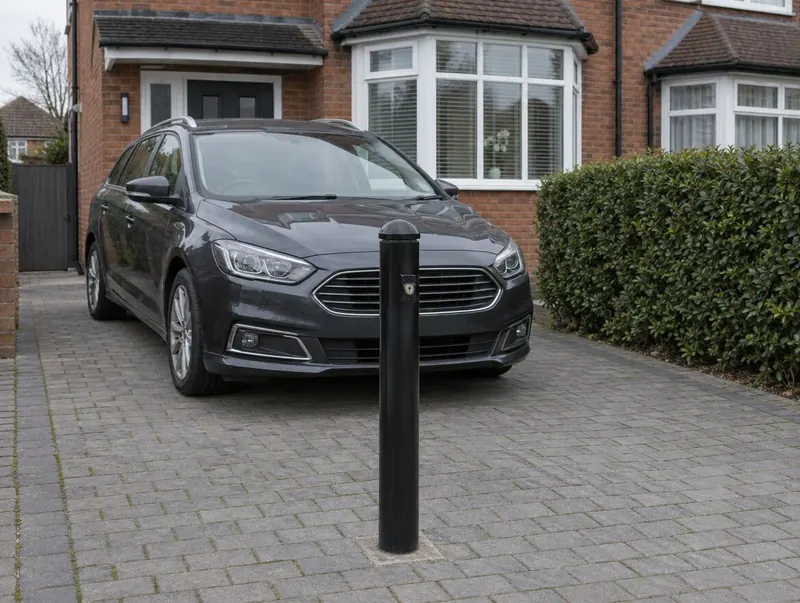
Driveway security posts
Telescopic, fold-down and removable security posts for home driveways, to deter car theft and stop unwanted parking.
Learn more →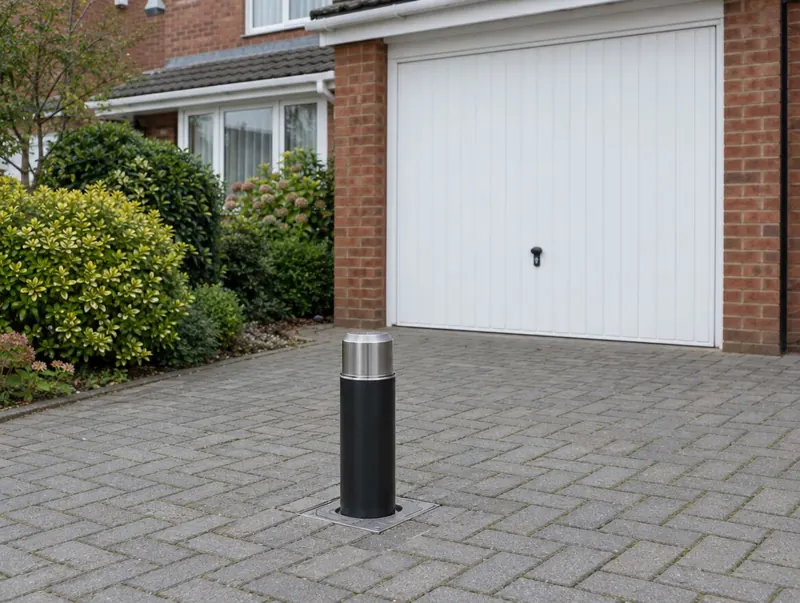
Telescopic bollards
Key-locked telescopic bollards that retract into a ground cassette, for driveways, private bays and access roads.
Learn more →Cast iron and heritage bollards
Traditional cast and ductile iron bollards for conservation areas, period streets and historic estates, installed and reset.
Learn more →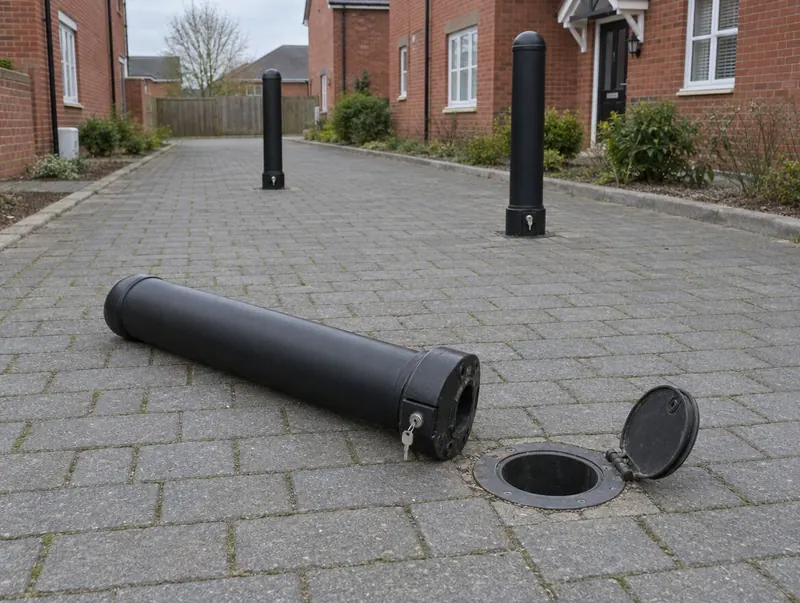
Removable bollards
Lift-out bollards in lockable ground sockets for driveways, delivery routes, access roads and emergency access points.
Learn more →