Guide
Does Martyn's Law mean you need bollards?
What the Terrorism (Protection of Premises) Act 2025 asks of standard and enhanced tier premises, when it starts, and where bollards and HVM fit in.
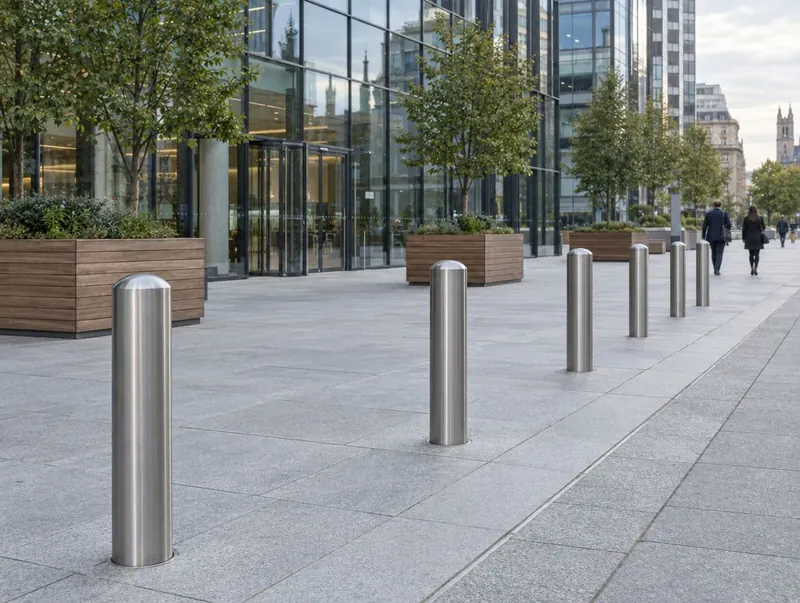 Computer-generated image
No. Martyn's Law, the Terrorism (Protection of Premises) Act 2025, does not require bollards or any specific equipment. Standard tier premises, where 200 to 799 people may be present, need procedures rather than physical works. Enhanced tier premises and qualifying events, with 800 or more, must have appropriate public protection measures so far as reasonably practicable, and hostile vehicle mitigation is one example the government gives. The duties are expected to come into force in spring 2027, with the SIA to confirm the date.
What is Martyn's Law and when does it start?
It is the Terrorism (Protection of Premises) Act 2025, which received Royal Assent on 3 April 2025 with an implementation period of at least 24 months. The main duties are not yet in force. Government guidance on the SIA's new regulatory role says "it is expected that the Act will come into force in spring 2027", with the Security Industry Authority confirming the exact date, so treat spring 2027 as expected rather than fixed. So far, the Commencement No. 1 Regulations have brought only section 27, on statutory guidance, into force, from 10 April 2026.
The protective security duties in Parts 1 and 3 apply across England, Wales, Scotland and Northern Ireland; the licensing changes in Part 2 cover England, Wales and Scotland only (Explanatory Notes).
Which premises and events are covered?
That depends on how many people may reasonably be expected on site at the same time, staff included. According to the government factsheet:
- Standard tier: premises where 200 to 799 people may be present.
- Enhanced tier: premises where 800 or more may be present.
- Qualifying events: events with 800 or more at the same time.
The Act also sets which kinds of premises qualify, so check the factsheets for your own situation. The Security Industry Authority (SIA) is the regulator, with a role covering advice, assessment, inspection and penalties.
What does the standard duty require?
Notifying the SIA and having public protection procedures, not buying equipment. Standard tier premises must have procedures for evacuation, invacuation, lockdown and communication, so far as reasonably practicable. The standard duty factsheet is explicit: "The Act does not require physical alterations or the purchase [of] specific equipment." A standard tier site may still choose bollards for other reasons, such as ram raids or car park safety, but Martyn's Law isn't one of them.
Where do bollards fit in the enhanced duty?
As one possible measure, not a requirement. Enhanced tier premises and qualifying events must also have "appropriate public protection measures … so far as is reasonably practicable" in four categories: monitoring, movement, physical safety and security, and security of information. The enhanced duty factsheet names hostile vehicle mitigation as an example under physical safety and security, but no specific measure is mandated. Reasonable practicability weighs the objective against cost, time and difficulty. Measures must be documented and given to the SIA, and a senior individual designated.
So Martyn's Law does not require bollards, but enhanced tier sites must consider physical measures such as HVM where reasonably practicable. A venue with crowds queuing beside a road may conclude HVM is reasonable; one set well back behind its own car park may not.
Do the pavement and road outside my venue count?
Generally not. The statutory guidance says areas with no entry checks, such as pavements and open roads, are outside the Act's scope, and that there is no statutory requirement to adopt NaCTSO or NPSA recommendations. That matters for bollards, because the space a vehicle would cross is often public highway, where any bollards need the highway authority's agreement anyway (see bollards on the pavement). Restrictions on the road itself are for the traffic authority; in England, Wales and Scotland they can include Anti-Terrorism Traffic Regulation Orders, made under the Road Traffic Regulation Act 1984 on a Chief Officer of Police's recommendation (TAL 1/11).
If HVM is reasonably practicable, what should we do next?
Get qualified advice before choosing products. NPSA points to Counter Terrorism Security Advisers, NaCTSO, members of the Register of Security Engineers and Specialists and Chartered Security Professionals, and the Counter Terrorism Policing-endorsed Security Specialists Register opened on 27 April 2026. An adviser can write an operational requirement, as ISO 22343-2 describes, setting the vehicle, speed and approach the barrier must resist. Then choose rated products listed in the NPSA catalogue, installed to their tested foundations. Static rated bollards typically cost £1,995–£9,995 per position plus VAT before design fees, utility diversions and permits; see crash-rated bollards explained.
What do we do, and what don't we do?
We install; we don't design HVM schemes or advise on compliance with the Act. We are not NPSA- or RSES-registered and don't claim to be. Our role is to survey the site, locate buried services and install rated bollards, shallow-mount systems or automatic units to the manufacturer's tested foundation and your adviser's specification, with a fixed written quote after a free survey. Installation crews work under our management. On whether your premises are in scope, or what is reasonably practicable, use the SIA's published guidance or ask your security adviser.
Prepared by the Bollard Installers team · Last reviewed 01 November 2026 · Prices and rules change; check the rules pages and your written quote.
Questions
Is Martyn's Law in force yet?
Not the main duties. Only section 27, on statutory guidance, has been brought into force, from 10 April 2026; the rest is expected in spring 2027, with the SIA to confirm the date.
Does Martyn's Law apply in Scotland and Northern Ireland?
Yes. The protective security duties in Parts 1 and 3 extend across the UK; only the Part 2 licensing changes are limited to England, Wales and Scotland.
Will the SIA penalise us for not having bollards?
No duty in the Act names bollards. The SIA can assess, inspect and penalise failures to meet the duties, which for enhanced tier sites means having appropriate measures so far as reasonably practicable, and those may or may not include HVM.
We are a standard tier venue. Should we fit bollards anyway?
Martyn's Law doesn't ask you to. Standard tier duties are about notification and procedures, though you might still fit bollards for other reasons, such as protecting a shopfront or pedestrian area from vehicles.
Who can advise on hostile vehicle mitigation?
Counter Terrorism Security Advisers, NaCTSO, RSES-registered HVM specialists and Chartered Security Professionals, as NPSA suggests. The Counter Terrorism Policing-endorsed Security Specialists Register, launched in April 2026, is another place to look.
Related services
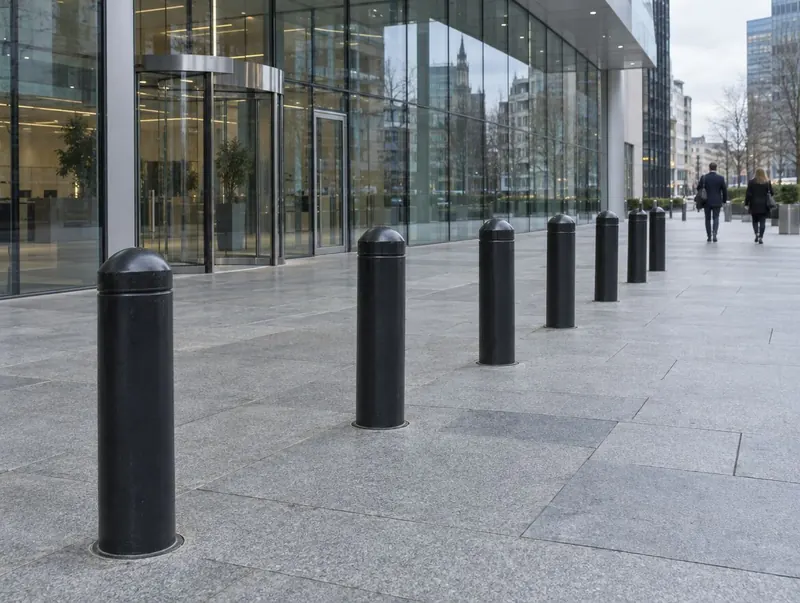
Crash-rated (HVM) bollards
Installation of impact-tested HVM bollards rated to ISO 22343-1 (or the superseded, still-accepted PAS 68 / IWA 14-1) on the tested foundation.
Learn more →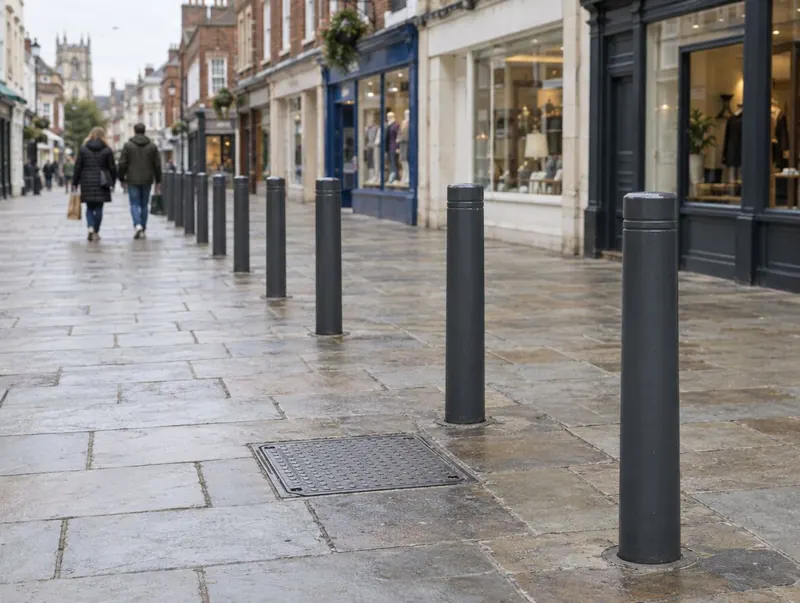
Shallow-mount security bollards
Rated shallow-foundation bollard systems installed where buried services, basements or slabs rule out deep excavation.
Learn more →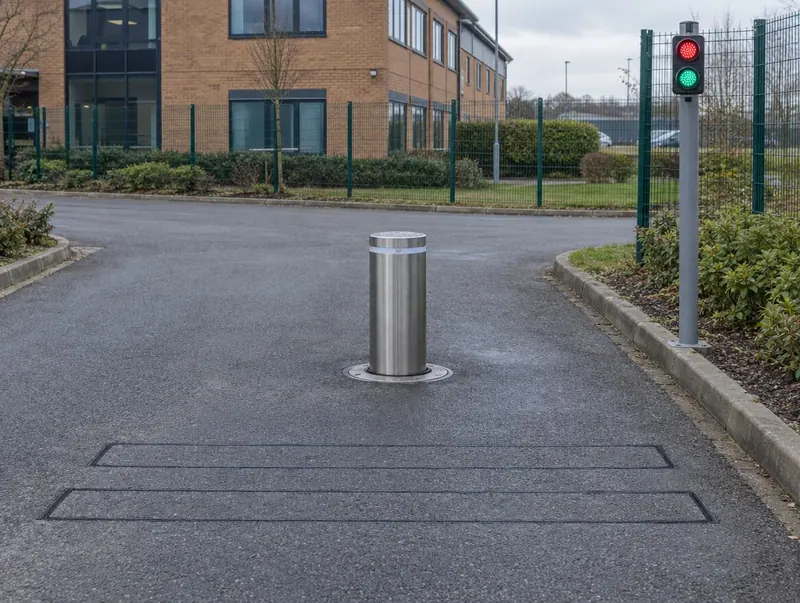
Automatic rising bollards
Hydraulic and electro-mechanical rising bollards installed with controls, safety loops, signals and power, for managed vehicle access.
Learn more →
Pedestrian and shopfront protection bollards
Bollards that separate people from vehicles at car parks, forecourts, walkways, drive-thrus and shop entrances.
Learn more →