Kent · England
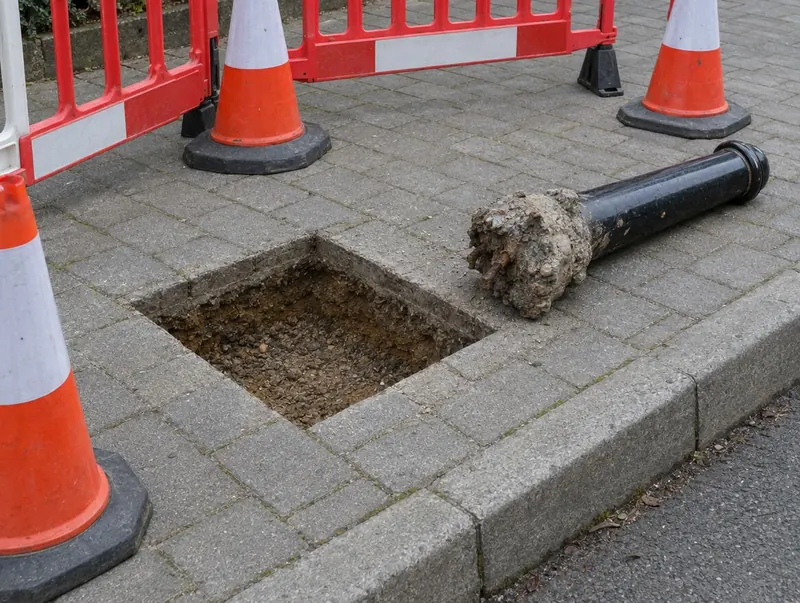
Bollard removal in Gravesend
Bollard removal jobs supplied and fitted in Gravesend, Kent: surveyed, scanned for services, set in proper foundations and finished to match the ground.
 Computer-generated image
Bollard removal in Gravesend
We supply and fit bollard removal jobs throughout Gravesend, typically for sites such as filling-station forecourts, schools and residential driveways. Automatic and lighting bollards also need their electrical supply made safe by a qualified electrician.
Coverage in Gravesend takes in the DA12, DA11 and DA13 postcode districts and nearby places like Shorne, Shorne Ridgeway, Sole Street and Gold Street. Nearby, we also work in Strood (5.7 miles), Dartford (6.8 miles), Rochester (6.9 miles) and Chatham (8 miles), measured as the crow flies.
Key facts for this area
- Area
- Kent, England
- Highway authority
- Kent County Council (local roads)
- Planning authority
- the council for Gravesham
- Postcodes
- DA12, DA11 and DA13
- Guide price
- Typically £85–£365 per post + VAT (£95–£435 inc VAT for homes); minimum job £305
- Survey
- Free, with a fixed written quote
Common reasons for bollard removal jobs in Gravesend
What bollard removal jobs usually sort out in Gravesend:
- Clearing old bollards before resurfacing
- Decommissioning automatic bollards that are no longer used
- Moving bollards to new positions on the same site
Guide prices for Gravesend
| Specification | Guide price | Includes |
|---|---|---|
| Standard | £85–£205 + VAT · £95–£245 inc VAT | Post out, hole backfilled, simple surface |
| Upgraded | £165–£285 + VAT · £195–£335 inc VAT | Footing removed, tarmac or block paving reinstated |
| Premium | £255–£365 + VAT · £305–£435 inc VAT | Large footing, concrete or natural stone reinstated |
Per post removed with footing, surface made good; +6% for South East. Guide only — the fixed price follows a survey.
What we check first in Gravesend
In Gravesend, work on adopted pavements and verges needs consent from Kent County Council, the local highway authority. Car parks, forecourts and other private land only need the owner's permission.
Bollards on private land often don't need planning permission, but it depends on the council's view, the height and the location; in a conservation area, next to a listed building or under an Article 4 direction, ask the local planning authority (the council for Gravesham) first — we flag this at survey.
Cables and pipes are often laid close to existing posts after they were installed, so breaking out is done carefully and services are traced first. Foundations are rarely the size anyone expects.
- In conservation areas, check before removing historic bollards, as consent may be needed or retention expected.
- Check whether the bollards were required by a planning condition, lease, security plan or the highway authority before removing them.
What happens on site
Make supplies safe
For automatic and lighting bollards, a qualified electrician isolates and disconnects the supply, and hydraulic units are drained.
Remove posts and foundations
Posts are cut off or extracted, foundations broken out where agreed, and sockets, cassettes and ducts removed or capped.
Backfill and reinstate
Holes are backfilled in compacted layers and the surface reinstated to match, so there is no settlement or trip edge.
Options to consider
| Option | Detail |
|---|---|
| Full extraction | Post and foundation broken out, leaving clear ground for resurfacing or new works. |
| Automatic bollard decommissioning | Electrical isolation, hydraulic drain-down, cassette removal and capping of ducts. |
| Relocation | Careful removal of reusable posts and reinstallation in new positions on the same site. |
What affects the quote
When we price bollard removal jobs in Gravesend, these make the biggest difference:
- Electrical isolation and hydraulic drain-down
- Surface type and reinstatement
- Cutting off or full foundation extraction
Keeping them working
Where cables were terminated rather than removed, record where they are and confirm with the electrician that they are dead and labelled. If foundations were left in place, record their positions on site drawings so future contractors are not surprised by buried concrete.
If posts in Gravesend are later hit or damaged, we can repair or replace them — see bollard repairs.
Bollard removal in Gravesend: FAQs
Do you carry out bollard removal jobs in Gravesend?
We cover all of Gravesend (DA12, DA11 and DA13) and the rest of Kent. We also work in Strood, Dartford and Rochester.
Do I need consent for bollards on a public footway in Gravesend?
In Gravesend, work on adopted pavements and verges needs consent from Kent County Council, the local highway authority. Car parks, forecourts and other private land only need the owner's permission.
How much do bollard removal jobs cost in Gravesend?
In Gravesend, typically £85–£365 per post removed with footing, surface made good, plus VAT (£95–£435 including VAT for homeowners), with a minimum job of £305 plus VAT, using our South East guide prices. The fixed figure comes in writing after we've seen the site.
Can removed bollards be reused elsewhere on site?
Often, if they come out undamaged. Steel posts and removable bollards relocate well. New foundations are formed at the new positions.
Do we need permission to remove bollards?
Sometimes. Bollards required by a planning condition, lease, security plan or the highway authority should not be removed without checking. Historic bollards in conservation areas may also be protected.