Lisburn and Castlereagh · Northern Ireland
Bollard removal in Dundonald
Local installation of bollard removal jobs in Dundonald — free survey, fixed written price, and posts set to the right spacing for people and vehicles.
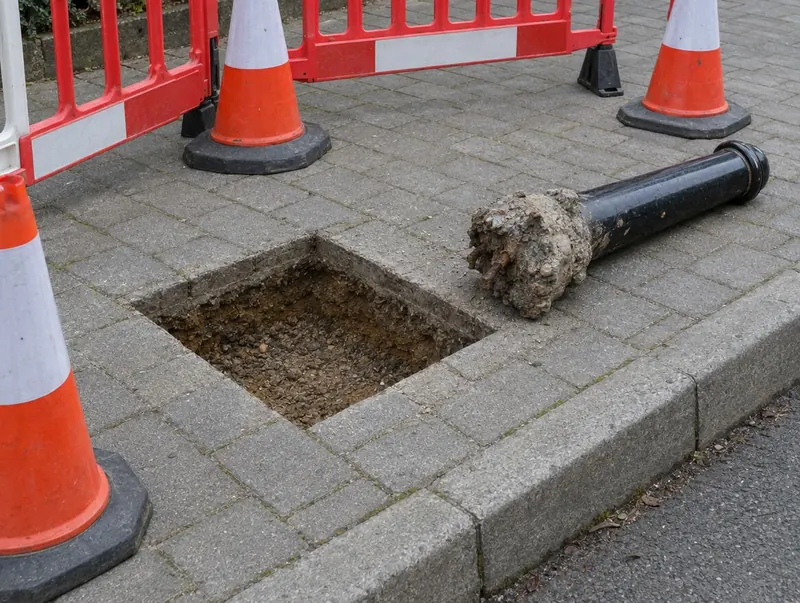 Computer-generated image
Dundonald bollard removal jobs
Automatic and lighting bollards also need their electrical supply made safe by a qualified electrician. In Dundonald, that tends to mean sites such as schools, filling-station forecourts and small industrial units.
We cover the BT16 postcode district in Dundonald. Nearby, we also work in Holywood (3.4 miles), Newtownards (4.3 miles), Belfast (5.1 miles) and Bangor, Ards and North Down (7 miles), measured as the crow flies. It sits roughly 5 miles from Belfast as the crow flies.
Local details
- Area
- Lisburn and Castlereagh, Northern Ireland
- Roads authority
- the Department for Infrastructure (DfI Roads)
- Planning authority
- Lisburn and Castlereagh City Council
- Postcodes
- BT16
- Guide price
- Typically £80–£335 per post + VAT (£95–£395 inc VAT for homes); minimum job £285
- Survey
- Free, with a fixed written quote
- Nearby
- Holywood (3.4 mi), Newtownards (4.3 mi), Belfast (5.1 mi), Bangor, Ards and North Down (7 mi)
Dundonald: typical bollard removal prices
| Specification | Guide price | Includes |
|---|---|---|
| Standard | £80–£185 + VAT · £95–£215 inc VAT | Post out, hole backfilled, simple surface |
| Upgraded | £155–£265 + VAT · £185–£315 inc VAT | Footing removed, tarmac or block paving reinstated |
| Premium | £235–£335 + VAT · £275–£395 inc VAT | Large footing, concrete or natural stone reinstated |
Per post removed with footing, surface made good; -2% for Northern Ireland. Guide only — the fixed price follows a survey.
Why Dundonald sites book bollard removal jobs
What bollard removal jobs usually sort out in Dundonald:
- Decommissioning automatic bollards that are no longer used
- Removing redundant lighting bollards
- Clearing old bollards before resurfacing
What we check first in Dundonald
Kerbside work in Dundonald is a DfI Roads question: the Department for Infrastructure is the roads authority for Northern Ireland, and its permission is needed for anything placed in the public road or footway.
Planning in Northern Ireland sits with the councils, so for a listed building or conservation area in Dundonald the planning team at Lisburn and Castlereagh City Council is the one to ask before posts go in.
Backfilling in compacted layers stops later settlement, which otherwise shows as a dip in the new surface. Older bollards may sit in large blocks of concrete, and rated bollards in very large reinforced bases, so full extraction can mean substantial breaking out and spoil removal.
- In conservation areas, check before removing historic bollards, as consent may be needed or retention expected.
- Have automatic and lighting bollard supplies isolated and made safe by a qualified electrician.
From survey to handover
Survey what is in the ground
The free site survey identifies bollard types, likely foundation sizes, any power or ducts, and what the area will be used for next. You receive a fixed written quote for the agreed level of removal.
Make supplies safe
For automatic and lighting bollards, a qualified electrician isolates and disconnects the supply, and hydraulic units are drained.
Backfill and reinstate
Holes are backfilled in compacted layers and the surface reinstated to match, so there is no settlement or trip edge.
Options to consider
| Option | Detail |
|---|---|
| Relocation | Careful removal of reusable posts and reinstallation in new positions on the same site. |
| Automatic bollard decommissioning | Electrical isolation, hydraulic drain-down, cassette removal and capping of ducts. |
| Cut off below surface | Post removed at or below finished level, foundation left in place and the surface patched. Quick and low-disruption. |
Pricing bollard removal jobs in Dundonald
When we price bollard removal jobs in Dundonald, these make the biggest difference:
- Number and type of bollards
- Surface type and reinstatement
- Access, working hours and waste disposal
Looking after them
Keep any keys, manuals and records from removed automatic bollards until the controller and cabling have also been dealt with, as they help an electrician confirm what was connected. After removal, keep an eye on reinstated areas for settlement over the following months, particularly where large foundations were broken out.
We can also service, repair or replace existing posts anywhere in Dundonald.
Bollard removal in Dundonald: FAQs
Do you carry out bollard removal jobs in Dundonald?
We cover all of Dundonald (BT16) and the rest of Lisburn and Castlereagh. We also work in Holywood, Newtownards and Belfast.
Do I need consent for bollards on a public footway in Dundonald?
Kerbside work in Dundonald is a DfI Roads question: the Department for Infrastructure is the roads authority for Northern Ireland, and its permission is needed for anything placed in the public road or footway.
How much do bollard removal jobs cost in Dundonald?
In Dundonald, typically £80–£335 per post removed with footing, surface made good, plus VAT (£95–£395 including VAT for homeowners), with a minimum job of £285 plus VAT, using our Northern Ireland guide prices. The fixed figure comes in writing after we've seen the site.
Will the surface look patched after removal?
On block paving it can be nearly invisible, as the blocks are relaid. Tarmac, resin and concrete usually show a patch, especially on older weathered surfaces. Timing removal before resurfacing avoids that.
Can automatic bollards be removed safely?
Yes, once the supply has been isolated and disconnected by a qualified electrician and any hydraulic fluid drained. The cassette is then lifted and the pit backfilled. Ducts are capped or removed.
Bollard removal near Dundonald
- Holywood (3.4 mi)
- Newtownards (4.3 mi)
- Belfast (5.1 mi)
- Bangor, Ards and North Down (7 mi)
- Lisburn (10.6 mi)
- Downpatrick (18.5 mi)