England · 7 towns
Bollard removal in North Yorkshire
Bollard removal for sites across North Yorkshire: surveyed, quoted in writing and installed by our crews.
 Computer-generated image
Bollard removal in North Yorkshire
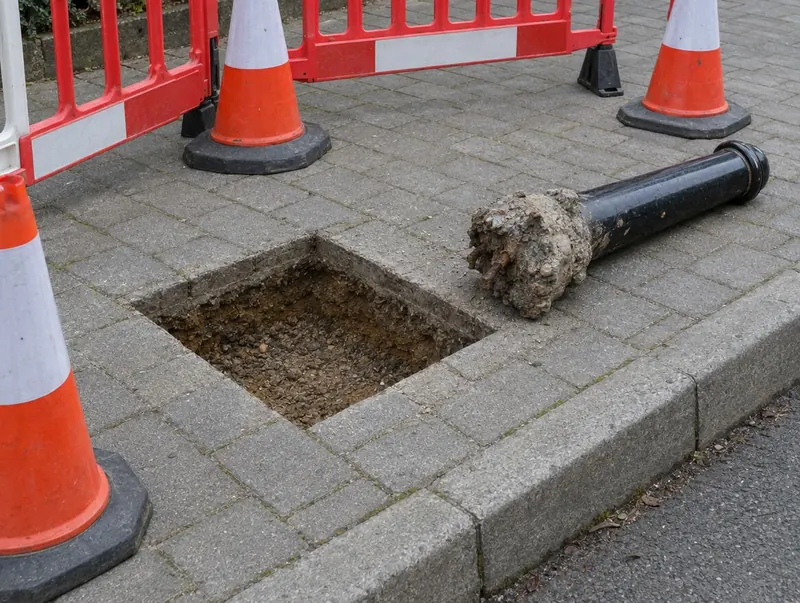
We supply and install bollard removal jobs across North Yorkshire, with local pages for 7 towns below. Removal of fixed, removable, telescopic and automatic bollards, including foundations, with the surface made good to match.
Highway authorities for local roads in North Yorkshire: City of York Council, Middlesbrough Council, North Yorkshire Council, Redcar and Cleveland Council and Stockton-on-Tees Council.
Choose your town in North Yorkshire
Guide prices in North Yorkshire
| Specification | Guide price | Includes |
|---|---|---|
| Standard | £80–£185 + VAT · £95–£215 inc VAT | Post out, hole backfilled, simple surface |
| Upgraded | £155–£265 + VAT · £185–£315 inc VAT | Footing removed, tarmac or block paving reinstated |
| Premium | £225–£335 + VAT · £265–£395 inc VAT | Large footing, concrete or natural stone reinstated |
Per post removed with footing, surface made good; -3% for Yorkshire and the Humber. Guide only — the fixed price follows a survey.
Who looks after the roads in North Yorkshire
| Town | Highway / roads authority | Planning authority |
|---|---|---|
| York | City of York Council | City of York Council |
| Middlesbrough | Middlesbrough Council | Middlesbrough Council |
| Harrogate | North Yorkshire Council | North Yorkshire Council |
| Scarborough | North Yorkshire Council | North Yorkshire Council |
| Redcar | Redcar and Cleveland Council | Redcar and Cleveland Council |
| Selby | North Yorkshire Council | North Yorkshire Council |
| Thornaby-on-Tees | Stockton-on-Tees Council | Stockton-on-Tees Council |
Rules for bollard removal jobs in England
Bollards on adopted highway are a matter for the highway authority under the Highways Act 1980, so they need its written agreement. On private land the owner's agreement is what matters; listed buildings and conservation areas need a word with the planning team first.
Details and sources: bollard rules in England.
How installation works
Survey what is in the ground
The free site survey identifies bollard types, likely foundation sizes, any power or ducts, and what the area will be used for next. You receive a fixed written quote for the agreed level of removal.
Check consents and reasons
Before removal, check whether the bollards were required by a planning condition, a lease, a security plan or the highway authority, and whether they protect something such as a meter or a building corner.
Make supplies safe
For automatic and lighting bollards, a qualified electrician isolates and disconnects the supply, and hydraulic units are drained.
Remove posts and foundations
Posts are cut off or extracted, foundations broken out where agreed, and sockets, cassettes and ducts removed or capped.
Bollard removal in North Yorkshire: FAQs
Do you cover all of North Yorkshire for bollard removal jobs?
Yes — including York, Middlesbrough, Harrogate, Scarborough, Redcar, Selby and Thornaby-on-Tees. Enter your postcode in the price calculator to confirm.
How much do bollard removal jobs cost in North Yorkshire?
In North Yorkshire, typically £80–£335 per post removed with footing, surface made good, plus VAT (£95–£395 including VAT for homeowners), with a minimum job of £285 plus VAT, using our Yorkshire and the Humber guide prices. The fixed figure comes in writing after we've seen the site.
Who do I ask about bollards on public land in North Yorkshire?
For local roads, City of York Council, Middlesbrough Council, North Yorkshire Council, Redcar and Cleveland Council and Stockton-on-Tees Council; National Highways covers motorways and trunk roads. Bollards on adopted highway need the highway authority's written agreement.
Can automatic bollards be removed safely?
Yes, once the supply has been isolated and disconnected by a qualified electrician and any hydraulic fluid drained. The cassette is then lifted and the pit backfilled. Ducts are capped or removed.
Will the surface look patched after removal?
On block paving it can be nearly invisible, as the blocks are relaid. Tarmac, resin and concrete usually show a patch, especially on older weathered surfaces. Timing removal before resurfacing avoids that.