Tyne and Wear · England
Crash-rated bollard installation in Felling
Crash-rated bollards supplied and fitted in Felling, Tyne and Wear: surveyed, scanned for services, set in proper foundations and finished to match the ground.
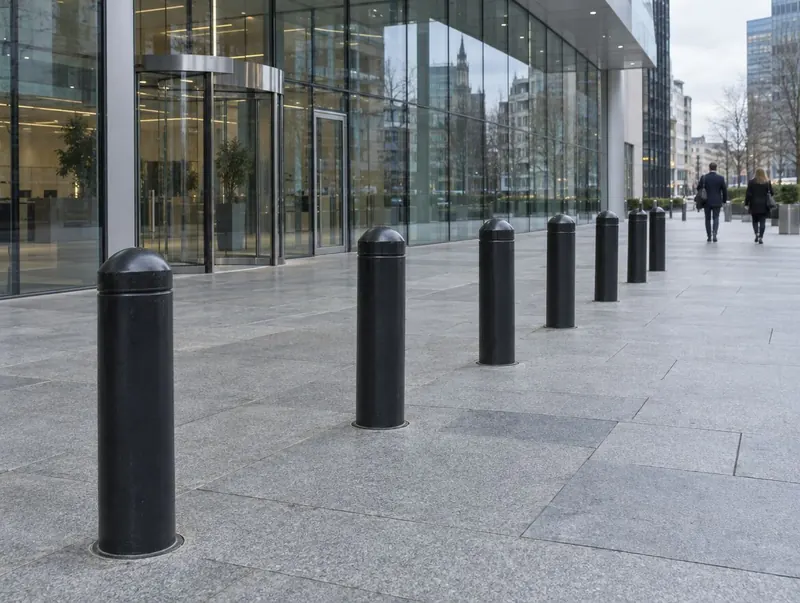 Computer-generated image
About crash-rated bollards in Felling
From schools, filling-station forecourts and small industrial units, Felling has plenty of places where crash-rated bollards earn their keep. Installation of impact-tested HVM bollards rated to ISO 22343-1 (or the superseded, still-accepted PAS 68 / IWA 14-1) on the tested foundation.
We cover Felling's NE10 postcode district, including places such as Follingsby. Nearby, we also work in Gateshead (1.4 miles), Newcastle upon Tyne (2.2 miles), Hebburn (2.6 miles) and Wallsend (3 miles), measured as the crow flies.
Local details
- Area
- Tyne and Wear, England
- Highway authority
- Gateshead Council (local roads)
- Planning authority
- Gateshead Council
- Postcodes
- NE10
- Guide price
- Typically £1,895–£9,595 per bollard + VAT; minimum job £3,845
- Survey
- Free, with a fixed written quote
- Nearby
- Gateshead (1.4 mi), Newcastle upon Tyne (2.2 mi), Hebburn (2.6 mi), Wallsend (3 mi)
Crash-rated bollards in Felling: common uses
Around Felling, crash-rated bollards usually solve one of these:
- Stadiums, arenas and event venues with predictable crowd flows
- Data centres, utilities and critical infrastructure perimeters
- Pedestrianised streets, plazas and crowded public spaces
What crash-rated bollards cost in Felling
| Specification | Guide price | Includes |
|---|---|---|
| Standard | £1,895–£5,145 + VAT | Rated for a 7.5 t vehicle at 30 mph (48 km/h), tested foundation |
| Upgraded | £4,195–£7,445 + VAT | Rated for 7.5 t at 40 mph (64 km/h), tested foundation |
| Premium | £6,545–£9,595 + VAT | Rated for 7.5 t at 50 mph (80 km/h), or a specialist foundation |
Per bollard, supplied and installed on a standard tested foundation; -4% for North East. Guide only — the fixed price follows a survey.
Consents, ground and services in Felling
Gateshead Council is the highway authority covering Felling's local roads. If any post would stand on adopted highway rather than your land, that consent is the first thing we sort out.
Bollards on private land often don't need planning permission, but it depends on the council's view, the height and the location; in a conservation area, next to a listed building or under an Article 4 direction, ask the local planning authority (Gateshead Council) first — we flag this at survey.
Reinstatement matches paving, tactile surfaces and kerbs. Footways and forecourts in towns are usually crowded with cables, gas mains, water pipes and old drainage, and a single unexpected duct can stop a bollard position.
- Confirm who owns the land: works on public highway usually need the highway authority's agreement, and permanent street furniture there may need a licence.
- Agree how emergency vehicles will get through, and refer to guidance on selecting and installing vehicle security barriers such as PAS 69 or ISO 22343-2.
From survey to handover
Start from the specification
We work from the specification issued by your security adviser or the manufacturer: product, rating, positions and foundation drawing. If no specification exists yet, we can put you in touch with the manufacturer's technical team, but we do not set the threat level ourselves.
Fix reinforcement and set the posts
The reinforcement cage is built to the drawing and the bollards are held to line and level in templates. Concrete is poured to the specified grade, with samples taken for testing if the specification calls for them.
Hand over a build record
You receive photographs of the reinforcement and excavation before each pour, concrete delivery tickets, as-built positions and the manufacturer's product certification, ready for your adviser and insurers.
Specification choices
| Option | Detail |
|---|---|
| Heights and diameters | Exposed heights are commonly around 800 to 1,000 mm, with core diameters varying by model and rating. Larger diameters are not always needed to achieve a given rating. |
| Static rated bollards | Fixed posts for permanent lines where vehicles never need to pass. They are a straightforward rated option to install and maintain. |
| Finishes and visibility bands | Galvanised and powder-coated finishes in RAL colours, with contrasting or reflective bands near the top so the posts are visible to pedestrians and drivers. |
What affects the quote
When we price crash-rated bollards in Felling, these make the biggest difference:
- Depth and volume of excavation, reinforcement and concrete
- Reinstatement of natural stone, tactile paving or specialist surfaces
- Traffic management, restricted working hours or night work in occupied sites
Keeping them working
Keep inspection records with the original test certificate so the line's condition can be shown to insurers or a security adviser. Look for cracked surfacing at the base, movement, damaged covers and faded bands.
We can also service, repair or replace existing posts anywhere in Felling.
Common questions
Do you install crash-rated bollards in Felling?
We cover all of Felling (NE10) and the rest of Tyne and Wear. We also work in Gateshead, Newcastle upon Tyne and Hebburn.
Do I need consent for crash-rated bollards on a public footway in Felling?
The highway authority for local roads in Felling is Gateshead Council; motorways and trunk roads sit with National Highways. Crash-rated bollards on the adopted footway are a matter for the highway authority, so we only install there with its written agreement.
How much do crash-rated bollards cost in Felling?
In Felling, typically £1,895–£9,595 per bollard, supplied and installed on a standard tested foundation, plus VAT, with a minimum job of £3,845 plus VAT, using our North East guide prices. The fixed figure comes in writing after we've seen the site.
When can we rely on the new bollards?
Only once the concrete has reached the strength set in the specification. The posts are physically in place as soon as the pour is finished, but the rated performance depends on the foundation, and full design strength is commonly taken at around 28 days. Your adviser may arrange temporary measures to cover the gap.
What does a crash rating code actually tell me?
It tells you the vehicle used in the test, how fast it was travelling, the angle it hit at and how far it got past the bollard line. Your security adviser compares those figures with the vehicle and speed achievable on your approach. A rating that does not match the site's real risk is either more than you need or not enough.
Crash-rated bollards near Felling
- Gateshead (1.4 mi)
- Newcastle upon Tyne (2.2 mi)
- Hebburn (2.6 mi)
- Wallsend (3 mi)
- Jarrow (3.9 mi)
- Washington (4.3 mi)