Highland · Scotland
Lighting bollard installation in Fort William
Lighting bollards for sites across Fort William and the rest of Highland, from the first measurement to the last relaid paving block.
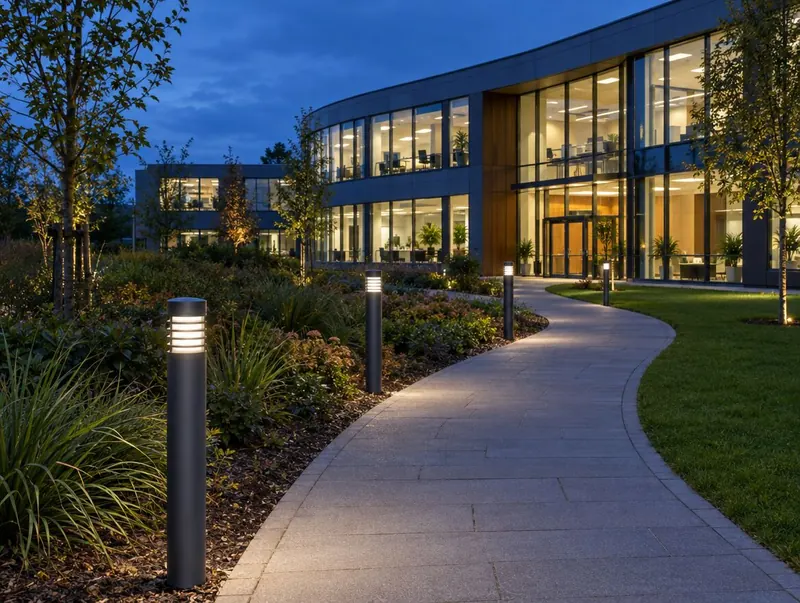 Computer-generated image
Fort William lighting bollards
Outdoor lighting bollards need weatherproof and impact-resistant construction and must be connected and tested by a qualified electrician. In Fort William, that tends to mean sites such as community car parks, filling-station forecourts and local parades.
Coverage in Fort William takes in the PH33 postcode district and nearby places like Caol, Inchree, Torlundy and Blarmachfoldach. Fort William is fairly self-contained, with no other large town within about 20 miles.
Local details
- Area
- Highland, Scotland
- Roads authority
- The Highland Council (local roads)
- Planning authority
- The Highland Council
- Postcodes
- PH33
- Guide price
- Typically £345–£1,195 per bollard + VAT (£405–£1,445 inc VAT for homes); minimum job £845
- Survey
- Free, with a fixed written quote
Lighting bollards in Fort William: common uses
Typical reasons Fort William sites choose lighting bollards:
- Car park walkways and pedestrian crossings
- Footpaths through housing developments and campuses
- Steps, ramps and changes in level
What lighting bollards cost in Fort William
| Specification | Guide price | Includes |
|---|---|---|
| Standard | £345–£705 + VAT · £405–£845 inc VAT | Standard post, foundation, reinstatement |
| Upgraded | £605–£955 + VAT · £725–£1,145 inc VAT | Upgraded finish or fittings, reflective band, matched keys |
| Premium | £855–£1,195 + VAT · £1,045–£1,445 inc VAT | Heavy-duty or architectural spec, premium finish |
Per bollard, installed with a qualified electrician (supply run extra); no regional adjustment. Guide only — the fixed price follows a survey.
Permissions and groundwork in Fort William
Fort William falls under The Highland Council as roads authority. If the line of posts crosses onto adopted road or pavement, permission comes before excavation; on private land it does not.
If your site in Fort William is listed or inside a conservation area, check with the local planning authority (The Highland Council) before choosing a finish — heritage settings often favour cast iron or painted steel over stainless.
Cable is protected by armour or duct, buried deep enough to avoid garden tools and future paving works, and marked with warning tape. Bases are set in firm ground with the cable entry facing the right way, and on paved routes the bollards are positioned so cables can be pulled through ducts rather than requiring surfaces to be lifted again later.
- Limit glare and upward light, and check for any planning or ecology conditions on lighting near sensitive habitats.
- In homes, new outdoor circuits are often notifiable building work; a registered electrician can usually self-certify it.
How the job runs
Electrical connection
A qualified electrician installs the circuit protection, makes the connections in weatherproof enclosures and fits controls such as a photocell or timer.
Test, aim and certify
The circuit is tested and certified, bollards are checked at night for coverage and glare, and asymmetric heads are turned to face the path.
Reinstate
Trenches are backfilled and surfaces made good, whether paving, tarmac, gravel or turf.
Options to consider
| Option | Detail |
|---|---|
| Solar bollards | Self-contained with panel and battery; no cabling. Suited to markers and low-use routes where lower output is acceptable. |
| Body materials and finishes | Powder-coated aluminium or steel, or stainless steel, in colours to suit the building. |
| Fixings | Anchor cages cast in concrete, base plates on existing slabs, or ground spikes for garden models. |
What affects the quote
When we price lighting bollards in Fort William, these make the biggest difference:
- Number of bollards and their specification
- Length of cable routes and surfaces to be cut
- Mains or solar bollards
After installation
Clean diffusers so dirt and algae do not dim the light, check seals and fixings, and look for impact damage, especially in car parks. Photocells and timers need resetting when the clocks change unless they adjust automatically.
If posts in Fort William are later hit or damaged, we can repair or replace them — see bollard repairs.
Questions about lighting bollards in Fort William
Do you install lighting bollards in Fort William?
We cover all of Fort William (PH33) and the rest of Highland.
Who gives permission for bollards on the pavement in Fort William?
For anything on the public footway in Fort William we check with the roads authority first — The Highland Council for local roads, Transport Scotland on trunk routes. Private ground such as a car park or forecourt only needs the owner's go-ahead.
How much do lighting bollards cost in Fort William?
In Fort William, typically £345–£1,195 per bollard, installed with a qualified electrician (supply run extra), plus VAT (£405–£1,445 including VAT for homeowners), with a minimum job of £845 plus VAT, using our Scotland guide prices. The fixed figure comes in writing after we've seen the site.
Can bollard lights work on a timer or motion sensor?
Yes. Photocells switch them on at dusk, timers switch them off or dim them late at night and motion sensors bring them up when someone approaches. Combining controls saves energy and reduces light pollution.
Do lighting bollards need an electrician to install?
Yes, mains lighting bollards must be connected by a qualified electrician, who tests and certifies the circuit. We arrange that as part of the job. Solar bollards avoid mains work but provide less light.