Dundee City · Scotland
Pedestrian protection bollards in Dundee
Pedestrian protection bollards for sites across Dundee and the rest of Dundee City, from the first measurement to the last relaid paving block.
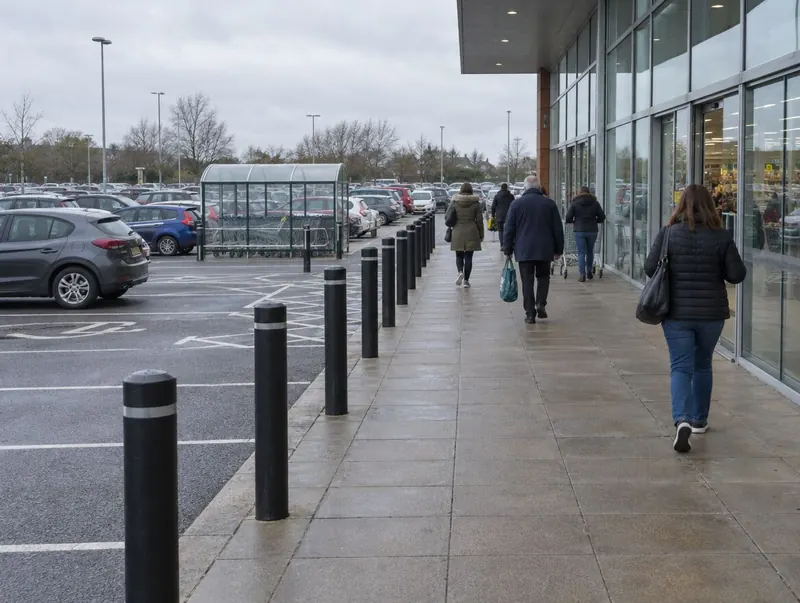 Computer-generated image
Dundee pedestrian protection bollards
We supply and fit pedestrian protection bollards throughout Dundee, typically for sites such as leisure centres, retail parks and high streets. Products range from unrated steel posts to bollards tested against low-speed impacts under PAS 170-1.
We cover Dundee's DD1, DD3, DD4, DD2 and DD5 postcode districts, including places such as Barns of Claverhouse, Broughty Ferry, Invergowrie and Liff. Nearby, we also work in Carnoustie (10.5 miles), Forfar (12.5 miles), Arbroath (16.1 miles) and Blairgowrie (16.3 miles), measured as the crow flies.
Dundee at a glance
- Area
- Dundee City, Scotland
- Roads authority
- Dundee City Council (local roads)
- Planning authority
- Dundee City Council
- Postcodes
- DD1, DD3, DD4, DD2 and DD5
- Guide price
- Typically £245–£1,195 per bollard + VAT; minimum job £595
- Survey
- Free, with a fixed written quote
- Nearby
- Carnoustie (10.5 mi), Forfar (12.5 mi), Arbroath (16.1 mi), Blairgowrie (16.3 mi)
Pedestrian protection bollard prices in Dundee
| Specification | Guide price | Includes |
|---|---|---|
| Standard | £245–£645 + VAT | Standard post, foundation, reinstatement |
| Upgraded | £535–£925 + VAT | Upgraded finish or fittings, reflective band, matched keys |
| Premium | £815–£1,195 + VAT | Heavy-duty or architectural spec, premium finish |
Per bollard, supplied and installed; no regional adjustment. Guide only — the fixed price follows a survey.
Pedestrian protection bollards in Dundee: common uses
Typical reasons Dundee sites choose pedestrian protection bollards:
- Outdoor seating at cafes, pubs and restaurants
- Petrol station forecourts and kiosk frontages
- Walkways through supermarket and retail park car parks
What we check first in Dundee
In Scotland the council is the roads authority for local roads, which in Dundee means Dundee City Council. Pedestrian protection bollards on an adopted footway need its consent; trunk roads sit with Transport Scotland.
Bollards on private land often need no planning application, but listed buildings and conservation areas are different; the planning service at Dundee City Council can confirm before anything is ordered.
Where bollards protect a shopfront, the building's own foundations and any canopy columns may sit close to the line, which limits how deep and wide each base can go. Raised kerbs also change the picture: a high kerb slows a wheel but does not stop a bumper, so the post still needs to sit within reach of the overhang rather than behind it.
- Keep clear gaps of typically at least 1,000–1,200 mm and keep main walkways wide enough, referring to Inclusive Mobility guidance.
- Use contrasting bands so posts are visible to partially sighted people, and avoid linking chains across routes.
Installation, step by step
Set out the line
Posts are set out allowing for bumper overhang and keeping clear routes for pedestrians, trolleys and wheelchairs.
Excavate and set
Each position is cut, dug and checked for services, and the posts are set plumb in concrete to a consistent height.
Add bands and markings
Reflective bands are fitted and any wheel stops or line markings agreed in the scheme are installed.
Specification choices
| Option | Detail |
|---|---|
| Concrete-filled steel posts | Root-fixed galvanised and powder-coated steel, the standard unrated choice for walkways and frontages. |
| Wheel stops and kerbs | Used with bollards to stop cars before they reach the posts, reducing daily knocks. |
| Visibility bands | Reflective and contrasting bands help drivers and partially sighted pedestrians see posts. |
What moves the price in Dundee
When we price pedestrian protection bollards in Dundee, these make the biggest difference:
- Number of posts and length of line
- Unrated steel or PAS 170-1 tested products
- Working around trading hours and live car parks
After installation
Touch up chipped coatings, renew faded bands, and check the surface around each base for cracks that suggest movement. Damaged posts near entrances should be dealt with quickly, as a bent post with a torn edge is a hazard in its own right.
For damaged or loose posts in Dundee, repairs and replacements are priced in writing first.
Questions about pedestrian protection bollards in Dundee
Can you install pedestrian protection bollards anywhere in Dundee?
We cover all of Dundee (DD1, DD3, DD4, DD2 and DD5) and the rest of Dundee City. We also work in Carnoustie, Forfar and Arbroath.
Who gives permission for bollards on the pavement in Dundee?
In Scotland the council is the roads authority for local roads, which in Dundee means Dundee City Council. Pedestrian protection bollards on an adopted footway need its consent; trunk roads sit with Transport Scotland.
What's a typical price for pedestrian protection bollards in Dundee?
In Dundee, typically £245–£1,195 per bollard, supplied and installed, plus VAT, with a minimum job of £595 plus VAT, using our Scotland guide prices. The fixed figure comes in writing after we've seen the site.
Our outdoor seating faces the car park: what should we do?
Put a line of posts between the seating and the nearest parking or driving lane, with gaps narrow enough to stop a car. Positions should allow for cars that overshoot a bay. It is worth recording the decision in your risk assessment.
Should bollards be added at a drive-thru order point?
Often, yes, where people queue or sit beside the lane. Posts should follow the curve of the lane and be closest together at corners, where drivers tend to misjudge the turn. The positions are agreed on site with the operator.