Flintshire · Wales
Warehouse and loading-bay bollards in Mold
Planning warehouse impact bollards in Mold? We check ownership, consents and buried services first, then quote a fixed price.
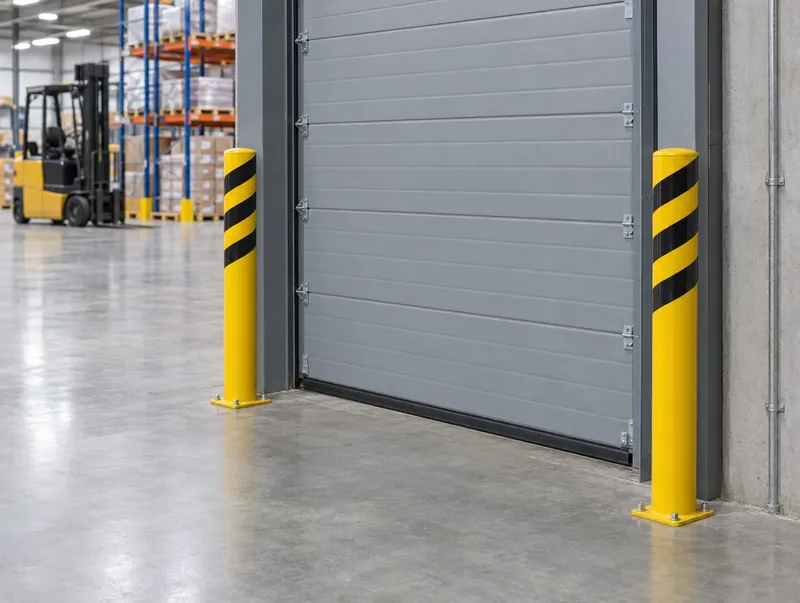 Computer-generated image
About warehouse impact bollards in Mold
In the town of Mold, warehouse impact bollards tend to go in at small industrial units, local parades and high street shopfronts. Yellow steel and polymer impact bollards for forklift zones, loading bays, doors, columns and racking inside warehouses.
Coverage in Mold takes in the CH7 postcode district and nearby places like Mynydd Isa, Northop Hall, Drury and Treuddyn. Nearby, we also work in Deeside (4.9 miles), Flint (5.4 miles), Coedpoeth (8.5 miles) and Wrexham (10.4 miles), measured as the crow flies.
Key facts for this area
- Area
- Flintshire, Wales
- Highway authority
- Flintshire County Council (local roads)
- Planning authority
- Flintshire County Council
- Postcodes
- CH7
- Guide price
- Typically £165–£1,145 per bollard + VAT; minimum job £425
- Survey
- Free, with a fixed written quote
Guide prices for Mold
| Specification | Guide price | Includes |
|---|---|---|
| Standard | £165–£585 + VAT | Standard post, foundation, reinstatement |
| Upgraded | £465–£885 + VAT | Upgraded finish or fittings, reflective band, matched keys |
| Premium | £765–£1,145 + VAT | Heavy-duty or architectural spec, premium finish |
Per bollard, supplied and fixed; -3% for Wales. Guide only — the fixed price follows a survey.
What Mold sites use warehouse impact bollards for
Around Mold, warehouse impact bollards usually solve one of these:
- Pedestrian crossings and the ends of walkways
- Sprinkler risers, electrical panels and gas meters
- Building columns in forklift aisles and turning areas
Consents, ground and services in Mold
Local roads and pavements in Mold are the responsibility of Flintshire County Council as highway authority, with the Welsh Government's trunk road agents handling trunk roads. Posts on the public highway need that authority's consent; private land does not.
If your site in Mold is listed or inside a conservation area, check with the local planning authority (Flintshire County Council) before choosing a finish — heritage settings often favour cast iron or painted steel over stainless.
Anchors need enough edge distance from slab joints and cracks or they will split the concrete on first impact. Where a slab is too thin or poor, the options include through-bolting, a larger base plate to spread load, a polymer bollard that reduces anchor forces, or breaking out and casting a new local foundation.
- Check with the building owner before drilling into slabs with underfloor heating, guidance wires or post-tensioned reinforcement.
- Keep fire exits, escape routes and fire equipment accessible; bollards must not narrow escape routes below their required width.
How the job runs
Check the slab
Slab thickness, joints, cracks and any underfloor services or heating are checked, and anchors are chosen for the floor rather than taken from a standard list.
Plan around operations
Work is phased by aisle or zone, or done out of hours, with each area barriered off while drilling. Dust is controlled with extraction where products are stored nearby.
Fix, torque and mark
Bollards and guards are fixed and torqued, then any associated floor markings are applied so drivers can see protected zones.
Choosing the right spec
| Option | Detail |
|---|---|
| Cast-in or base-plated | Base plates suit existing slabs. External yard posts can be cast into concrete foundations for heavier duty. |
| Door frame protection | Bollards or low barriers either side of dock doors and roller shutters to protect frames and guides. |
| Steel bollards | Yellow-coated steel tube on a base plate, often concrete-filled. Robust and economical, but they pass impact loads straight into the slab. |
What moves the price in Mold
Two Mold jobs with the same number of posts can price quite differently. The usual reasons:
- Removal of damaged existing protection
- Slab condition and the anchors or foundations it needs
- Steel or polymer bollards and the impact performance needed
Keeping them working
Inspect warehouse bollards regularly as part of routine site checks, and after any reported impact. On steel bollards look for bending, cracked welds, loose or sheared anchors and cracked concrete around the base plate.
For damaged or loose posts in Mold, repairs and replacements are priced in writing first.
Questions about warehouse impact bollards in Mold
Which parts of Mold do you cover for warehouse impact bollards?
We cover all of Mold (CH7) and the rest of Flintshire. We also work in Deeside, Flint and Coedpoeth.
Do I need consent for warehouse impact bollards on a public footway in Mold?
Local roads and pavements in Mold are the responsibility of Flintshire County Council as highway authority, with the Welsh Government's trunk road agents handling trunk roads. Posts on the public highway need that authority's consent; private land does not.
What's a typical price for warehouse impact bollards in Mold?
In Mold, typically £165–£1,145 per bollard, supplied and fixed, plus VAT, with a minimum job of £425 plus VAT, using our Wales guide prices. The fixed figure comes in writing after we've seen the site.
How close to a column should a bollard sit?
Close enough that a vehicle cannot reach the column around it, but with enough gap that the bollard does not hit the column when struck. Polymer bollards need more clearance than steel because they deflect. The gap is set from the product data.
What size bollard do we need for forklifts?
That depends on the forklift's weight with load and how fast it travels near the asset, not just the post diameter. Tested products state their impact performance, which can be compared with your fleet. We size from your vehicles at the survey.