Guide
Which driveway security post should you buy for your home?
Telescopic, removable, fold-down and automatic driveway posts compared for homeowners, with surfaces, fitting, care and typical prices including VAT.
 Computer-generated image
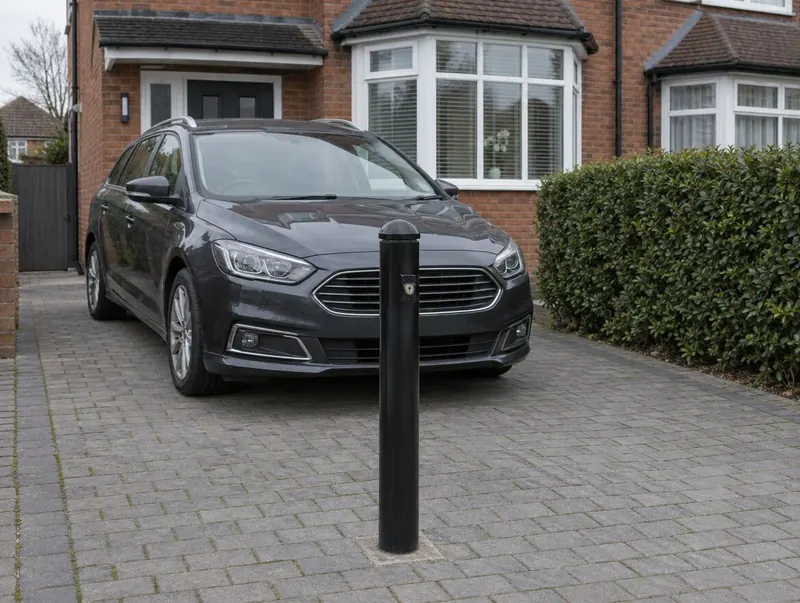
A driveway security post is a lockable bollard fixed in or on your drive to stop a car being driven away or someone parking in your space. Telescopic posts that lower into the ground are the usual choice for daily use, removable and fold-down posts suit occasional use or a tighter budget, and semi-automatic or automatic posts suit people who want the least effort. A single post typically costs £385–£845 fitted, including VAT.
What types of driveway security post are there?
There are five main types, and they differ mostly in effort and price.
- Telescopic: unlocks and lowers into a cassette in the drive, leaving a flush lid. The usual choice for daily use.
- Removable: lifts out of a locking socket and is stored in the garage or on a wall bracket.
- Fold-down: hinged at the base and padlocked or key-locked upright. The cheapest option.
- Semi-automatic: rises on a gas strut once unlocked and is pushed down by foot.
- Automatic: powered and worked by remote control, at several times the price, with servicing to budget for.
Our comparison of removable, telescopic and fold-down posts goes into more detail.
Will a driveway post stop my car being stolen?
It stops the car being driven off the drive until the post is unlocked, which is the point. A locked post is a physical obstacle that takes time and noise to deal with. It can't stop a thief opening or starting the car electronically, and it isn't crash-rated, so use it alongside the car's own security. Position matters: close in front of the car, or between it and the road, so the car can't be steered round it. If you tell your insurer you've fitted one, they can say whether it makes any difference to your cover; we can't promise that it will.
Which post works on my drive's surface?
Most posts can go in most drives, but the surface changes the method.
- Block paving: the blocks are lifted and relaid round the post, so the repair is hard to spot.
- Tarmac, resin-bound and imprinted concrete: cut neatly and patched; some patching will show, so we keep cuts tight.
- Concrete: core drilled, which is clean and quick.
- Gravel and soft ground: the post is set in a concrete surround.
Fold-down posts need sound concrete beneath them, because tarmac and blocks won't hold anchors, so a small concrete pad is usually cut in. Telescopic and semi-automatic posts need a cassette around a metre deep that drains: on clay soils that means a soakaway or a connection to a surface water drain, never the foul drain.
How is a driveway post installed?
Usually in a single visit, once the position and buried services have been checked.
- At the free survey we mark the position with your car in place and give you a fixed written quote.
- We locate buried services, because drives often hide the water supply pipe, gas service and electric cable at shallow depth. We use a locator and signal generator and hand-dig before cutting deep, as HSE's HSG47 recommends.
- The surface is cut, the hole excavated and the socket or cassette set level in concrete with its drainage.
- The surface is reinstated to match, and the post is fitted once the concrete is ready.
- We hand over the keys and show you how to use and look after the post.
Our installation crews work under our management. When the work is on your own home, the CDM client duties pass to the contractor, so you don't take them on yourself (HSE); the Northern Ireland regulations work the same way.
Do I need permission to fit a driveway post?
Not usually, if the post is on your own drive. A post on the pavement, the dropped kerb or a verge is on the highway and needs the highway authority's agreement, so make sure the position is inside your boundary (see bollards on the pavement). Planning permission is often not needed for posts on private land, but it isn't guaranteed, and listed buildings, conservation areas and Article 4 areas need checking (see our planning guide). If the drive is shared or someone has a right of way over it, agree the position with them first.
How do I look after a driveway post?
Use it, keep it clean and keep the lock lubricated. Raise and lower a telescopic post regularly even when you don't need to, clear leaves and grit from the lid, and every few months lift it fully and check the cassette for water or silt. Oil a fold-down hinge and check the anchors are tight. Lubricate locks before winter, and keep a spare key somewhere safe, away from the car keys. If a post becomes stiff, deal with it early, because debris or a blocked drain is easier to fix before the post seizes. Lock changes and damaged parts are bollard repairs, typically £115–£445 per visit plus VAT, priced in writing before we visit.
What does a driveway security post cost?
A single fitted post typically costs £385–£845 including VAT, depending on the type, finish and surface. Fold-down posts sit at the lower end and telescopic posts with stainless finishes towards the top. On the Upgraded specification in our price calculator, one post comes to about £525–£715 including VAT at the UK base rate. Automatic posts cost several times more and need power and servicing; see automatic rising bollards. Try the price calculator, then book a free survey for a fixed written quote.
Prepared by the Bollard Installers team · Last reviewed 01 November 2026 · Prices and rules change; check the rules pages and your written quote.
Questions
Which driveway post is best for daily use?
A telescopic post, for most households, because there's nothing to lift or store. If bending to a lock twice a day is a problem, a semi-automatic post rises on its own once unlocked.
What if I lose the key?
Keep a spare away from your car keys. If both are lost, a lock change is a standard repair, though sometimes the lock has to be drilled, and the visit is priced in writing beforehand.
Can a driveway post go on a shared drive?
Yes, if everyone with a right to use the drive agrees the position. Check your title plan and talk to your neighbour before ordering, and consider keyed-alike locks so each household has a key.
What happens if I drive into the post by mistake?
The post is designed to stop a car, so expect damage to the car and possibly the post. A reflective band and a habit of lowering the post before you get in both help.
Do driveway posts affect home or car insurance?
Some insurers ask about security measures, so tell yours when you fit one. Whether it changes your premium is up to the insurer, and we can't promise it will.
Related services
Driveway security posts
Telescopic, fold-down and removable security posts for home driveways, to deter car theft and stop unwanted parking.
Learn more →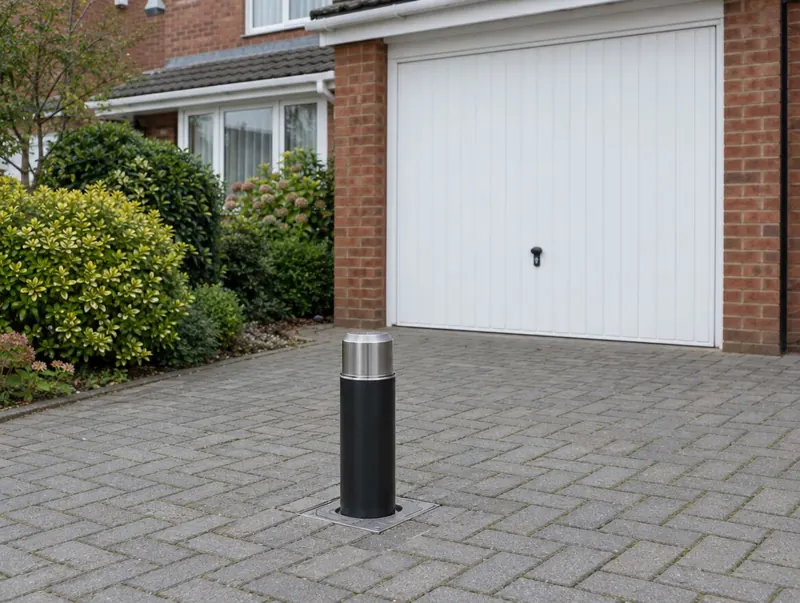
Telescopic bollards
Key-locked telescopic bollards that retract into a ground cassette, for driveways, private bays and access roads.
Learn more →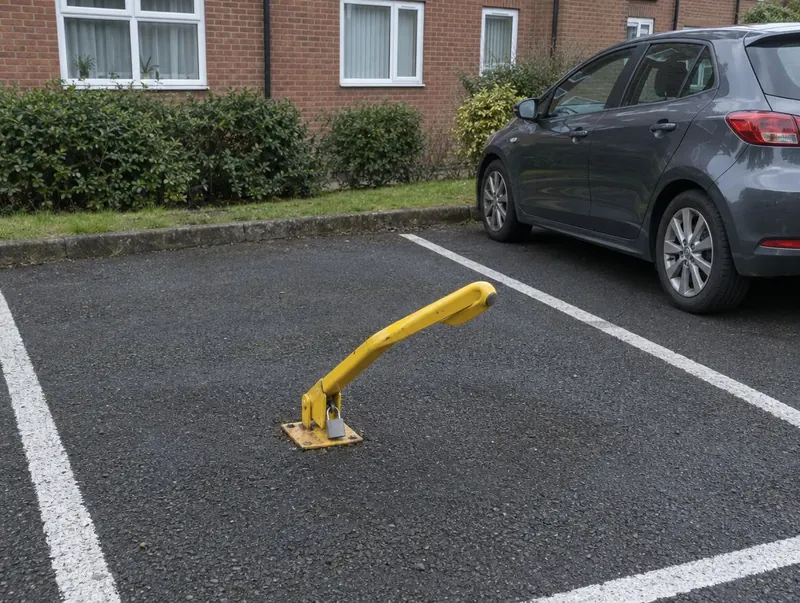
Fold-down parking posts
Hinged fold-down parking posts with padlock or integral key locks, bolted down to protect private and allocated bays.
Learn more →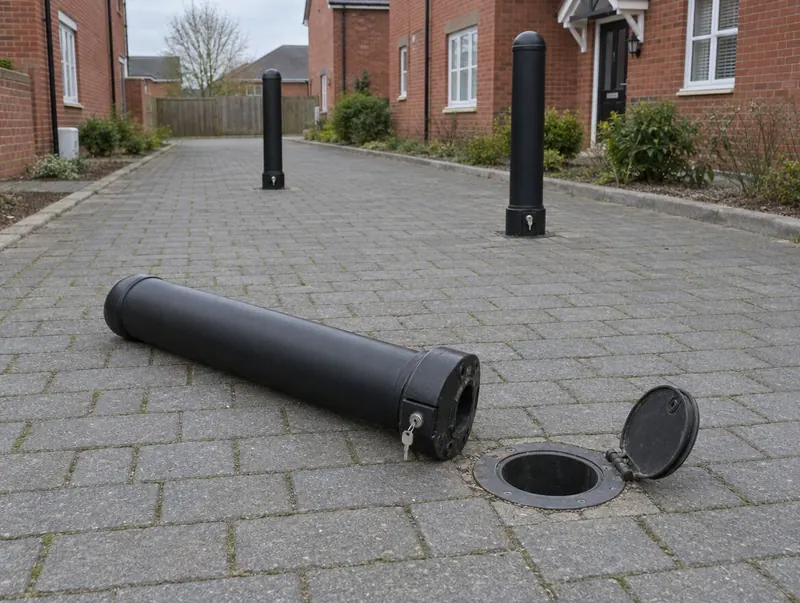
Removable bollards
Lift-out bollards in lockable ground sockets for driveways, delivery routes, access roads and emergency access points.
Learn more →