West Dunbartonshire · Scotland
Bollard removal in Clydebank
Local installation of bollard removal jobs in Clydebank — free survey, fixed written price, and posts set to the right spacing for people and vehicles.
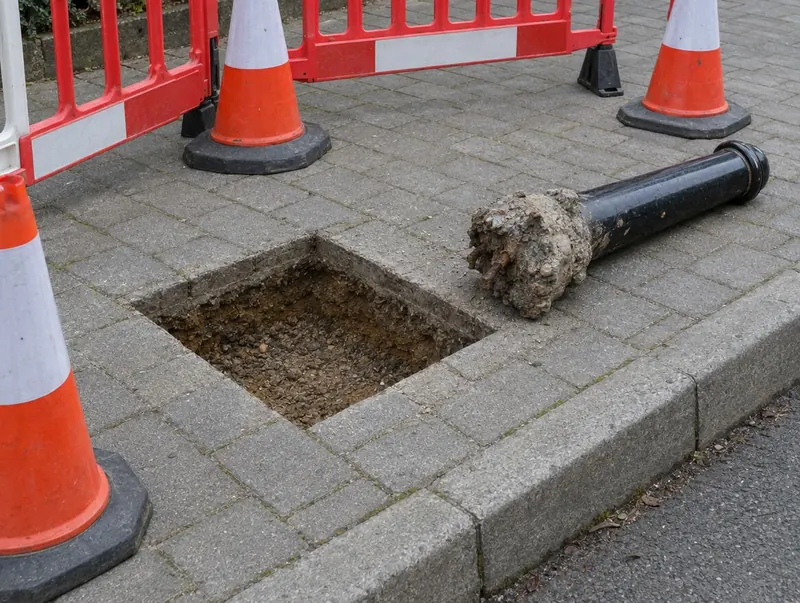 Computer-generated image
Clydebank bollard removal jobs
From filling-station forecourts, high street shopfronts and residential driveways, Clydebank has plenty of places where bollard removal jobs earn their keep. Automatic and lighting bollards also need their electrical supply made safe by a qualified electrician.
Coverage in Clydebank takes in the G81 and G60 postcode districts and nearby places like Bowling. Nearby, we also work in Erskine (1.7 miles), Renfrew (2.1 miles), Bearsden (3 miles) and Milngavie (4.2 miles), measured as the crow flies. Clydebank is about 6 miles from Glasgow.
Clydebank at a glance
- Area
- West Dunbartonshire, Scotland
- Roads authority
- West Dunbartonshire Council (local roads)
- Planning authority
- West Dunbartonshire Council
- Postcodes
- G81 and G60
- Guide price
- Typically £80–£345 per post + VAT (£95–£405 inc VAT for homes); minimum job £295
- Survey
- Free, with a fixed written quote
Common reasons for bollard removal jobs in Clydebank
Typical reasons for bollard removal jobs in Clydebank:
- Access routes no longer needing control
- Taking out broken stubs and empty sockets
- Moving bollards to new positions on the same site
What bollard removal jobs cost in Clydebank
| Specification | Guide price | Includes |
|---|---|---|
| Standard | £80–£185 + VAT · £95–£215 inc VAT | Post out, hole backfilled, simple surface |
| Upgraded | £155–£265 + VAT · £185–£315 inc VAT | Footing removed, tarmac or block paving reinstated |
| Premium | £235–£345 + VAT · £275–£405 inc VAT | Large footing, concrete or natural stone reinstated |
Per post removed with footing, surface made good; no regional adjustment. Guide only — the fixed price follows a survey.
Permissions and groundwork in Clydebank
Clydebank falls under West Dunbartonshire Council as roads authority. If the line of posts crosses onto adopted road or pavement, permission comes before excavation; on private land it does not.
Many private-land installations in Clydebank need no planning application, but the rules don't clearly cover bollards, so listed buildings, conservation areas and prominent frontages are worth raising with the planning team at West Dunbartonshire Council before posts go in.
Older bollards may sit in large blocks of concrete, and rated bollards in very large reinforced bases, so full extraction can mean substantial breaking out and spoil removal. Cables and pipes are often laid close to existing posts after they were installed, so breaking out is done carefully and services are traced first.
- Consider whether removal leaves an asset or route unprotected and record the decision in your risk assessment.
- In conservation areas, check before removing historic bollards, as consent may be needed or retention expected.
How the job runs
Survey what is in the ground
The free site survey identifies bollard types, likely foundation sizes, any power or ducts, and what the area will be used for next. You receive a fixed written quote for the agreed level of removal.
Check consents and reasons
Before removal, check whether the bollards were required by a planning condition, a lease, a security plan or the highway authority, and whether they protect something such as a meter or a building corner.
Remove posts and foundations
Posts are cut off or extracted, foundations broken out where agreed, and sockets, cassettes and ducts removed or capped.
Specification choices
| Option | Detail |
|---|---|
| Lighting bollard removal | Supply made dead and cables terminated or removed by a qualified electrician before posts are lifted. |
| Relocation | Careful removal of reusable posts and reinstallation in new positions on the same site. |
| Automatic bollard decommissioning | Electrical isolation, hydraulic drain-down, cassette removal and capping of ducts. |
Pricing bollard removal jobs in Clydebank
Our Scotland guide prices are a starting point; the survey in Clydebank firms them up. What tends to move them:
- Electrical isolation and hydraulic drain-down
- Access, working hours and waste disposal
- Cutting off or full foundation extraction
Keeping them working
Keep any keys, manuals and records from removed automatic bollards until the controller and cabling have also been dealt with, as they help an electrician confirm what was connected. Where cables were terminated rather than removed, record where they are and confirm with the electrician that they are dead and labelled.
For damaged or loose posts in Clydebank, repairs and replacements are priced in writing first.
Bollard removal in Clydebank: FAQs
Which parts of Clydebank do you cover for bollard removal jobs?
We cover all of Clydebank (G81 and G60) and the rest of West Dunbartonshire. We also work in Erskine, Renfrew and Bearsden.
Who gives permission for bollards on the pavement in Clydebank?
Clydebank falls under West Dunbartonshire Council as roads authority. If the line of posts crosses onto adopted road or pavement, permission comes before excavation; on private land it does not.
How much do bollard removal jobs cost in Clydebank?
In Clydebank, typically £80–£345 per post removed with footing, surface made good, plus VAT (£95–£405 including VAT for homeowners), with a minimum job of £295 plus VAT, using our Scotland guide prices. The fixed figure comes in writing after we've seen the site.
Can automatic bollards be removed safely?
Yes, once the supply has been isolated and disconnected by a qualified electrician and any hydraulic fluid drained. The cassette is then lifted and the pit backfilled. Ducts are capped or removed.
Can removed bollards be reused elsewhere on site?
Often, if they come out undamaged. Steel posts and removable bollards relocate well. New foundations are formed at the new positions.