West Sussex · England
Semi-automatic bollard installation in Worthing
Local installation of semi-automatic bollards in Worthing — free survey, fixed written price, and posts set to the right spacing for people and vehicles.
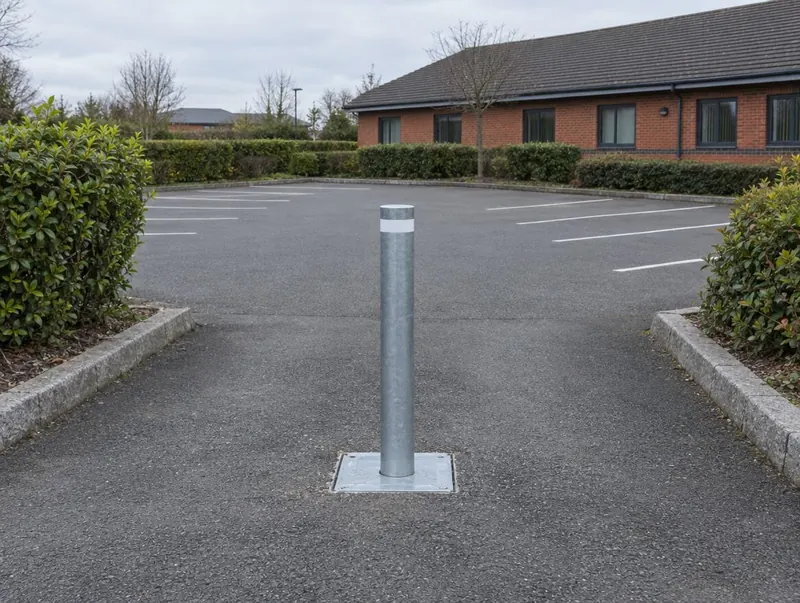 Computer-generated image
About semi-automatic bollards in Worthing
Across Worthing, typical sites for semi-automatic bollards include high streets, housing association car parks and retail parks. Gas-strut assisted bollards that rise on their own when unlocked and lower by hand, with no mains power needed.
We work across BN11, BN14, BN13 and BN12 — Worthing itself and places including Cote. Jobs in Worthing can be combined with work in Littlehampton (7.2 miles), Portslade (7.2 miles), Hove (9.1 miles) and Brighton (10.3 miles) (straight-line distances). Worthing is about 10 miles from Brighton.
Local details
- Area
- West Sussex, England
- Highway authority
- West Sussex County Council (local roads)
- Planning authority
- the council for Worthing
- Postcodes
- BN11, BN14, BN13 and BN12
- Guide price
- Typically £1,145–£3,695 per bollard + VAT (£1,345–£4,445 inc VAT for homes); minimum job £1,245
- Survey
- Free, with a fixed written quote
- Nearby
- Littlehampton (7.2 mi), Portslade (7.2 mi), Hove (9.1 mi), Brighton (10.3 mi)
Semi-automatic bollard prices in Worthing
| Specification | Guide price | Includes |
|---|---|---|
| Standard | £1,145–£2,245 + VAT · £1,345–£2,695 inc VAT | Standard post, foundation, reinstatement |
| Upgraded | £1,945–£2,995 + VAT · £2,345–£3,595 inc VAT | Upgraded finish or fittings, reflective band, matched keys |
| Premium | £2,695–£3,695 + VAT · £3,245–£4,445 inc VAT | Heavy-duty or architectural spec, premium finish |
Per bollard, supplied and installed; +6% for South East. Guide only — the fixed price follows a survey.
What Worthing sites use semi-automatic bollards for
Around Worthing, semi-automatic bollards usually solve one of these:
- Locations where automatic bollards are not justified
- Delivery entrances without a power supply nearby
- Private roads and courtyards with a small number of key holders
Before we dig in Worthing
In Worthing, work on adopted pavements and verges needs consent from West Sussex County Council, the local highway authority. Car parks, forecourts and other private land only need the owner's permission.
If your site in Worthing is listed or inside a conservation area, check with the local planning authority (the council for Worthing) before choosing a finish — heritage settings often favour cast iron or painted steel over stainless.
On sandy or gravel ground a soakaway beneath the cassette often drains it adequately; on clay, chalk with poor drainage or where groundwater rises, a pipe to a surface water drain or a dedicated soakaway is needed. Because the cassette houses both the post and its strut mechanism, the pit is deep and must stay dry.
- Warn users and passers-by that the post rises on its own; fit reflective bands and consider a sign at busy sites.
- Agree how emergency services will gain access if the post is locked up.
What happens on site
Excavate the pit
The surface is cut and the pit dug to the cassette depth plus a drainage layer, by hand near services.
Set the cassette
The cassette is set plumb and flush with the finished surface, connected to drainage and concreted in. The strut is fitted or released only as the manufacturer instructs.
Reinstate the surface
Paving or surfacing is made good tight to the cassette collar so there is no lip for tyres or feet to catch.
Specification choices
| Option | Detail |
|---|---|
| Height and diameter | Raised heights commonly around 500–900 mm and diameters around 100–200 mm, depending on model and duty. |
| Lock types | Keyed cylinder locks, typically operating at ground level, with keyed-alike options for multi-post sites. |
| Duty level | Light-duty domestic models and heavier commercial versions with stronger cassettes and posts. |
Pricing semi-automatic bollards in Worthing
Two Worthing jobs with the same number of posts can price quite differently. The usual reasons:
- Excavation depth and services in the way
- Surface reinstatement
- Number of posts and keyed-alike locks
After installation
In winter, keep an eye on the lid after frost or snow; ice around the head can stop the post rising, and forcing the key or the post at that point damages the latch. Operate the bollard regularly and keep the head and lid clear of grit.
For damaged or loose posts in Worthing, repairs and replacements are priced in writing first.
Semi-automatic bollards in Worthing: FAQs
Do you install semi-automatic bollards in Worthing?
We cover all of Worthing (BN11, BN14, BN13 and BN12) and the rest of West Sussex. We also work in Littlehampton, Portslade and Hove.
Who gives permission for bollards on the pavement in Worthing?
In Worthing, work on adopted pavements and verges needs consent from West Sussex County Council, the local highway authority. Car parks, forecourts and other private land only need the owner's permission.
How much do semi-automatic bollards cost in Worthing?
In Worthing, typically £1,145–£3,695 per bollard, supplied and installed, plus VAT (£1,345–£4,445 including VAT for homeowners), with a minimum job of £1,245 plus VAT, using our South East guide prices. The fixed figure comes in writing after we've seen the site.
Can a semi-automatic bollard injure someone as it rises?
It rises with some force, so nobody should stand over it or put a hand on the head when releasing it. Users should be shown how to operate it safely. On busy sites, a sign and reflective bands help.
Do semi-automatic bollards suit domestic driveways?
Yes, if the owner wants less lifting than a telescopic post. The same depth and drainage checks apply. Domestic models are lighter duty than commercial ones.
Semi-automatic bollards near Worthing
- Littlehampton (7.2 mi)
- Portslade (7.2 mi)
- Hove (9.1 mi)
- Brighton (10.3 mi)
- Bognor Regis (13.5 mi)
- Rottingdean (13.8 mi)