Swansea · Wales
Warehouse and loading-bay bollards in Clydach
Warehouse impact bollards supplied and fitted in Clydach, Swansea: surveyed, scanned for services, set in proper foundations and finished to match the ground.
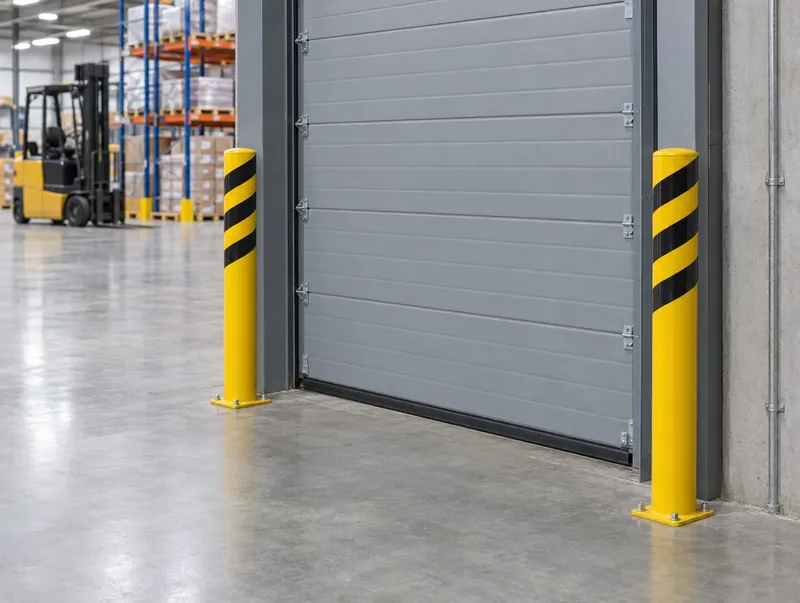 Computer-generated image
Clydach warehouse impact bollards
From high street shopfronts, schools and community buildings, Clydach has plenty of places where warehouse impact bollards earn their keep. Yellow steel and polymer impact bollards for forklift zones, loading bays, doors, columns and racking inside warehouses.
We cover Clydach's SA6 postcode district, including places such as Craig-cefn-parc and Rhyd-y-gwin. We also cover neighbouring Neath (4.3 miles), Swansea (4.7 miles), Gorseinon (6.1 miles) and Port Talbot (7.7 miles) — distances are straight-line. It sits roughly 5 miles from Swansea as the crow flies.
Clydach at a glance
- Area
- Swansea, Wales
- Highway authority
- Swansea Council (local roads)
- Planning authority
- Swansea Council
- Postcodes
- SA6
- Guide price
- Typically £165–£1,145 per bollard + VAT; minimum job £425
- Survey
- Free, with a fixed written quote
- Nearby
- Neath (4.3 mi), Swansea (4.7 mi), Gorseinon (6.1 mi), Port Talbot (7.7 mi)
What Clydach sites use warehouse impact bollards for
Around Clydach, warehouse impact bollards usually solve one of these:
- Building columns in forklift aisles and turning areas
- Charging stations for forklifts and pallet trucks
- Sprinkler risers, electrical panels and gas meters
Warehouse impact bollard prices in Clydach
| Specification | Guide price | Includes |
|---|---|---|
| Standard | £165–£585 + VAT | Standard post, foundation, reinstatement |
| Upgraded | £465–£885 + VAT | Upgraded finish or fittings, reflective band, matched keys |
| Premium | £765–£1,145 + VAT | Heavy-duty or architectural spec, premium finish |
Per bollard, supplied and fixed; -3% for Wales. Guide only — the fixed price follows a survey.
Before we dig in Clydach
Before digging near the kerb in Clydach we establish who owns the ground: adopted footways are Swansea Council's responsibility, trunk roads the Welsh Government's, and everything else belongs to the site owner.
Many private-land installations in Clydach need no planning application, but the rules don't clearly cover bollards, so listed buildings, conservation areas and prominent frontages are worth raising with the planning team at Swansea Council before posts go in.
Anchors need enough edge distance from slab joints and cracks or they will split the concrete on first impact. Where a slab is too thin or poor, the options include through-bolting, a larger base plate to spread load, a polymer bollard that reduces anchor forces, or breaking out and casting a new local foundation.
- Check with the building owner before drilling into slabs with underfloor heating, guidance wires or post-tensioned reinforcement.
- Use your workplace transport risk assessment to decide where protection is needed, in line with HSE guidance on workplace transport.
What happens on site
Check the slab
Slab thickness, joints, cracks and any underfloor services or heating are checked, and anchors are chosen for the floor rather than taken from a standard list.
Plan around operations
Work is phased by aisle or zone, or done out of hours, with each area barriered off while drilling. Dust is controlled with extraction where products are stored nearby.
Drill and anchor
Holes are drilled, cleaned and anchors installed to the maker's instructions. Chemical anchors are left to cure before the bollard is loaded.
Options to consider
| Option | Detail |
|---|---|
| Steel bollards | Yellow-coated steel tube on a base plate, often concrete-filled. Robust and economical, but they pass impact loads straight into the slab. |
| Cast-in or base-plated | Base plates suit existing slabs. External yard posts can be cast into concrete foundations for heavier duty. |
| Door frame protection | Bollards or low barriers either side of dock doors and roller shutters to protect frames and guides. |
What affects the quote
Two Clydach jobs with the same number of posts can price quite differently. The usual reasons:
- Out-of-hours or phased working around operations
- Steel or polymer bollards and the impact performance needed
- Floor marking and associated signage
Looking after them
Persistent strikes in one place often mean the route or turning space needs changing rather than heavier protection. Inspect warehouse bollards regularly as part of routine site checks, and after any reported impact.
For damaged or loose posts in Clydach, repairs and replacements are priced in writing first.
Questions about warehouse impact bollards in Clydach
Which parts of Clydach do you cover for warehouse impact bollards?
We cover all of Clydach (SA6) and the rest of Swansea. We also work in Neath, Swansea and Gorseinon.
Who gives permission for bollards on the pavement in Clydach?
Local roads and pavements in Clydach are the responsibility of Swansea Council as highway authority, with the Welsh Government's trunk road agents handling trunk roads. Posts on the public highway need that authority's consent; private land does not.
How much do warehouse impact bollards cost in Clydach?
In Clydach, typically £165–£1,145 per bollard, supplied and fixed, plus VAT, with a minimum job of £425 plus VAT, using our Wales guide prices. The fixed figure comes in writing after we've seen the site.
What size bollard do we need for forklifts?
That depends on the forklift's weight with load and how fast it travels near the asset, not just the post diameter. Tested products state their impact performance, which can be compared with your fleet. We size from your vehicles at the survey.
Can you install while the warehouse is operating?
Usually yes, by working zone by zone with each area barriered off, or by working nights or weekends. Drilling dust is controlled near stored goods. We agree the phasing with your site manager.
Warehouse bollards in nearby towns
- Neath (4.3 mi)
- Swansea (4.7 mi)
- Gorseinon (6.1 mi)
- Port Talbot (7.7 mi)
- Ystalyfera (7.7 mi)
- Ammanford (8.5 mi)